
Louisville Closes FY26 With $148,868 Surplus, Warns of Leaner Years
Budget Committee • LouisvilleNovember 19, 2026
Locunity is an independent informational service and is not an official government page for this commission. All information is sourced from public footage and an analysis of official agendas with the aid of responsible, fact-checked AI. to report an error or omission.
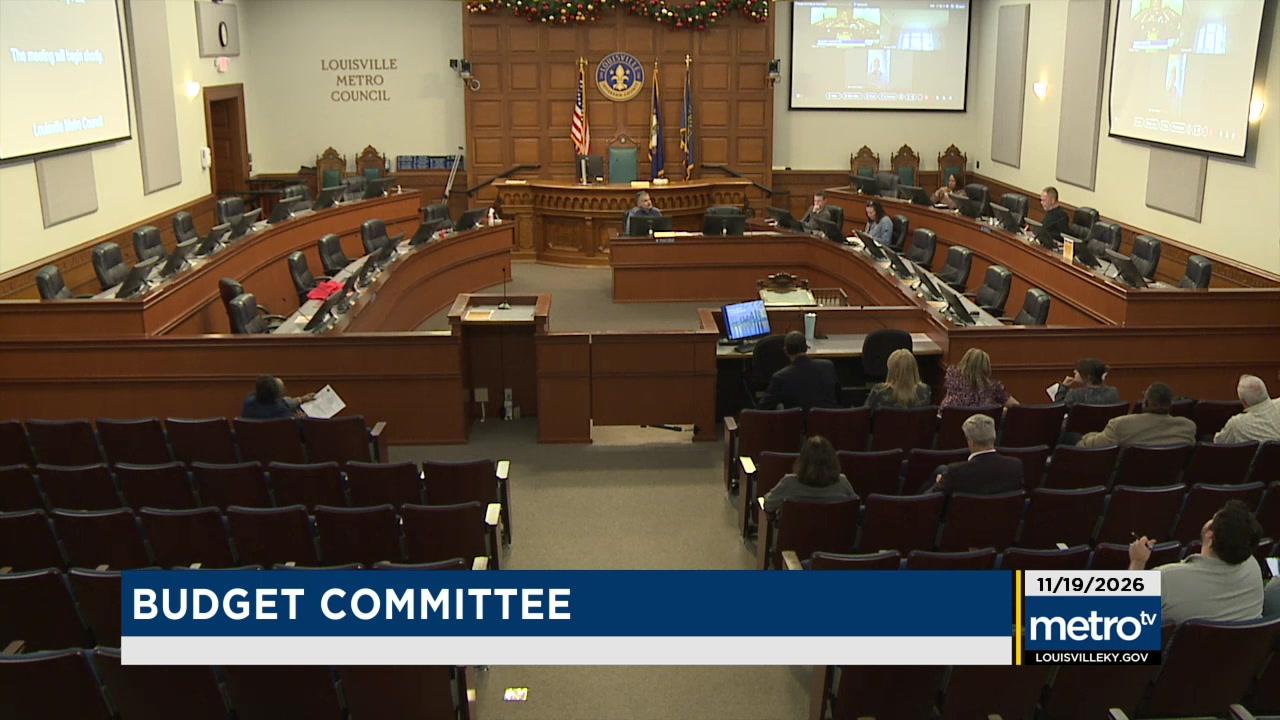
Louisville Metro squeezed out a $148,868 surplus for fiscal year 2026, and finance officials used the close-out to deliver a blunt message: recurring costs are outpacing revenue. The Metro Council Budget Committee advanced the year-end ordinance on Nov. 19, 2026, then approved outgoing Sheriff David James' 2027 budget on a split vote driven by questions about what his successor will inherit.
- FY26 close-out advances with 9 yes votes; reserves rise $648,000 to about $92.7M
- LMPD overtime ran about $7M over budget, and officials say several million more could follow
- Library materials amendment may surface as the year-end ordinance returns as old business
- Sheriff's 2027 budget clears 6-1-1 after praise for a new traffic unit and worries over long-term contracts
Thin Margin, Big Warning on FY26 Close-Out
Why it matters: The fiscal 2026 close-out ordinance, O-324-26, shows Louisville roughly broke even. Officials framed it as the end of surplus years, with fading one-time money and rising personnel costs pointing to tougher choices in FY27.
Where things stand: Chief Financial Officer Angela Dunn said general fund revenues beat the budget by about $4.8M. Investment income and the water company dividend ran ahead of projections. The occupational license tax, a payroll and business-profits tax, fell about $6M short.
On the spending side, agencies ran about $4M over budget, mostly on overtime and personnel. Dunn tied Housing overages to emergency demolitions and Emergency Services overages to personnel.
After adjustments, $148,868 goes to the unassigned fund balance, often called the rainy day fund. Combined with $500,000 already budgeted, the balance rises by $648,000 to about $92.7M. "The amount that we had extra is $148,000 and some change," said Dunn.
Dunn cautioned that Metro is under audit, so the figures could shift. She closed with a warning: "the narrow year-end margin and the difference between revenue and expenditure growth indicate that future budgets will require continued attention to recurring costs, personnel expenses, overtime, and the declining availability of one-time funding."
Councilmember Piacentini said revenue is not keeping pace with expenses. "Those days are over and the decisions are going to get more difficult moving forward," he said.
Overtime: Savings Real, Gap Persists
Vice Chair Markus Winkler, who ran the meeting, pressed staff on whether the police overtime problem will repeat this year.
Aaron Jackson, Executive Director of Budget for the Office of Management and Budget, said the city budgeted about $20M for LMPD non-scheduled overtime. The roughly $7M overage includes related CERS and FICA costs, meaning state pension contributions and federal payroll taxes that rise with every overtime dollar.
LMPD Deputy Chief Ryan Bates said tighter overtime controls are working. "We're about $1.44 million in savings compared to where we were at last year," he said, citing figures through October.
Winkler argued the current-year budget was set below actual spending, so savings may not close the gap. He warned "we still may need an adjustment upwards of several million dollars." Jackson conceded the point in part: "It may be several million dollars — a little less than that, probably, but not to the tune of $6 million."
Fuel is another pressure point. Jackson said fuel costs sit mostly in Fleet and Facilities, with some in the Louisville Zoo and Louisville Fire, and that about $7.6M is budgeted. First-quarter reports will show the trend.
Library Books Wait in the Wings
Winkler said the June budget named library materials as the next priority for any surplus, provided the materials budget had been spent down. He declined to offer an amendment without full answers from the administration and without Budget Committee Chair Kramer present.
"We made the commitment in June. It is my belief we should follow through on that," said Winkler.
Decisions and stakeholder impacts: The ordinance passed (For: 9; individual votes were not announced). The close-out locks in modest reserve growth, a cushion for bond ratings and emergencies. LMPD's overtime trajectory now looms as the biggest variable in the FY27 budget. Library patrons and advocates have a narrow opening if surplus dollars are directed to materials.
What's next: At Winkler's request, O-324-26 will go to old business, keeping a library materials amendment possible at the next meeting. Watch first-quarter reports for overtime and fuel trends.
Sheriff's Final Budget Passes Amid Transition Questions
Why it matters: R-160-26 sets 2027 spending for the Jefferson County Sheriff's Office just before a change in leadership. A popular traffic enforcement push and several multi-year commitments now pass to Sheriff-elect Yancey.
Where things stand: Sheriff David James made his case with numbers. His office wrote 493 citations and 675 courtesy notices in 2025, compared with 3,663 citations and 1,371 courtesy notices this year. "Of those citations, the traffic unit that we started did 2,775 of those citations," he said.
James also cited fuel pressures: "The average cost since April, however, has been $4 a gallon, and that's due to the war in Iran."
He listed operational changes:
- A better banking contract and vehicle auctions on GovDeals
- Electronic payroll and a new fleet facility
- 39 new Tahoes and body cameras
- An RFP to replace a 28-year-old tax collection system
Members praised the traffic work. "The stepped-up traffic enforcement really has been a fantastic shift in direction from your office," said Winkler.
Piacentini called traffic enforcement "easily one of the most visible ways that you deliver value to constituents" and asked whether it would continue under Yancey. James said he had not discussed it with the sheriff-elect but had received a letter requesting a meeting.
The other side: Councilmember Parrish Wright questioned contracts that would outlast the sheriff, including Axon. "I'm really concerned about us making those decisions that would extend well beyond your tenure," she said.
James responded: "So the Axon contract has a cancellation clause. The sheriff can utilize it if he chooses to." He added that a $2M bond-funded system is needed regardless.
Parrish Wright said her objection was not about the sheriff's work. "My vote isn't based on what the sheriff presented. I think what he presented is solid," she said.
Decisions and stakeholder impacts: The resolution passed on a roll call (For: 6, Against: 1, Abstain: 1). Parrish Wright voted no. Councilmember Mulvey Woolridge abstained, citing her husband's employment at the sheriff's office. Residents who value traffic enforcement have no commitment yet that the unit survives the transition. The incoming sheriff inherits equipment and technology commitments, with at least one exit option.
What's next: Because of the split vote and abstention, R-160-26 goes to old business. The open question: whether Yancey keeps the traffic unit.
Minor Items
- District 5 infrastructure: O-326-26 moves $28,000 from neighborhood to capital funds for sidewalk repairs and speed humps; passed with 6 announced yes votes.
- District 5 office costs: O-327-26 shifts $5,000 in neighborhood funds to council operations; passed with 7 announced yes votes.
- District 8 transfer: O-319-26 moves $100,000 from capital to neighborhood development funds for operational needs; passed with 8 announced yes votes.
- Traffic sign money to sidewalks: O-325-26 splits $65,000 in traffic feedback sign funds between LMPD and Public Works, sending excess to FY27 sidewalk repairs; passed with 8 announced yes votes.
- County Clerk budget held: R-159-26, the Jefferson County Clerk's 2027 budget, was held at the clerk's request without discussion.
Looking Ahead
The four district and capital transfers head to the consent calendar. The year-end close-out and the sheriff's budget return as old business, where a library materials amendment may still surface.