
Board Approves Unlicensed Transitional Home, Denies Short-Term Rental in Marathon Zoning Session
Board of Zoning Adjustment • LouisvilleJune 1, 2026
Locunity is an independent informational service and is not an official government page for this commission. All information is sourced from public footage and an analysis of official agendas with the aid of responsible, fact-checked AI. to report an error or omission.
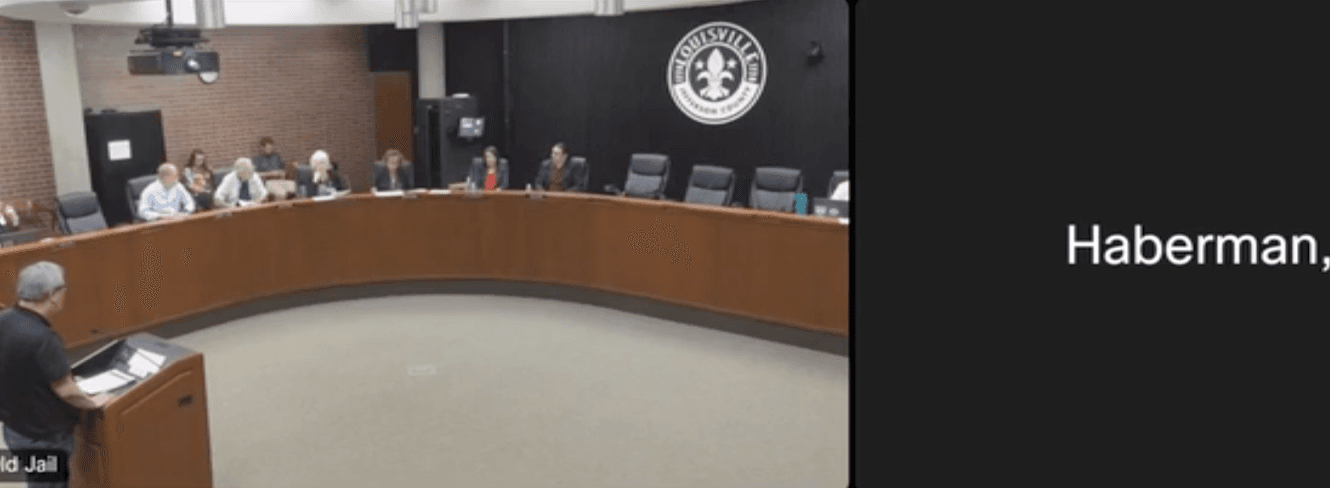
Louisville's Board of Zoning Adjustment powered through 13 items on June 1, approving a substance recovery home already operating illegally on Robinhood Lane, green-lighting a 309-bed downtown student housing conversion, and denying a short-term rental whose applicant says a case manager's email typo cost him his spot in line. The meeting exposed fault lines in the city's enforcement of group housing rules and illustrated how procedural timing can determine property rights under the 600-foot short-term rental separation rule.
- Transitional home at 6014 Robinhood Ln approved 4-1 despite operating without a license or permit; operator must begin licensing within 30 days
- 309-bed JCTC student dorm conversion approved unanimously for downtown office building at 200 W Broadway, replacing a structurally deficient parking garage
- Short-term rental denied on S 3rd Street after a competing application 155 feet away won approval minutes earlier — applicant blames email error for the timing gap
- Three of four short-term rental applications approved, highlighting ongoing tension between property owner rights and affordable housing preservation
- BOZA shifts meeting days from 1st and 3rd Mondays to 2nd and 4th Wednesdays, effective 2027
Robinhood Lane Transitional Home: Approved, but Questions Linger
The board's longest and most contentious debate centered on a conditional use permit for Our House of Favor, a six-resident substance recovery transitional home at 6014 Robinhood Ln in an R-4 single-family district. The case had already been continued twice — from April 20 and May 18 hearings — and drew sustained scrutiny over the operator's lack of both a CUP and a required group housing license.
Why it matters: The home was already operating when the application came before the board, and none of the operator's other locations have completed the licensing process. The approval, with a new condition requiring licensing initiation within 30 days, tests whether the city's enforcement apparatus can catch up with operators who begin housing vulnerable residents before obtaining permission.
Where things stand: District Manager Lawrence Massacoy described a pre-screening process, curfews, transportation assistance through TARC, and partnerships with Goodwill and Peace Hospital for a 3-to-6-month Medicaid-funded program. General Manager Jeff Angel shared his own recovery story in support of the model: "I came in as a sober living. I came in from Lexington, Kentucky. And if it wasn't for a place like this to save my life, I wouldn't be where I am today."
Property owner John Flynn testified he is not involved in day-to-day management. Staff confirmed a 2-to-6-hour daily gap in on-site staffing — roughly midnight to 6 a.m. — and board members questioned whether parking is sufficient for six residents.
The other side: Public commenter Ann Ramser raised pointed concerns about the operator's credibility, noting she could not find the organization registered with the Kentucky Secretary of State: "I looked up Our House of Favor. I could only find an address on Barry. It's not listed with the Secretary of State at all. That concerns me." She also flagged the crudely drawn floor plan and the recurring waiver of the 30-foot setback standard for existing residential structures.
Board members wrestled openly with the limits of their authority. Board Member Marilyn Lewis pressed on enforcement: "I'm always mystified how you can run a business and you don't know you need to do those things." She then asked where the board's obligation begins and ends — whether service quality is a land use issue or a licensing issue.
Board Member Jan Horton Sr. voiced similar ambivalence, acknowledging residents "at least probably being taken care of better than being on the street," but adding: "I'm just not convinced that they can provide those things. I haven't heard here that they can actually provide those."
Planning Supervisor Rachel Casey steered the board back to its lane: "What you're really here to consider is what's in the standard of review. Is it consistent with the comprehensive plan? Is it compatible with surrounding land uses?" She noted the Land Development Code defines the land use type broadly — transitional homes can serve youth in crisis, women in crisis, or other populations — and does not regulate service quality.
Decisions: The board approved the CUP 4-1 with relief from Standard F and five conditions of approval, including the new requirement to initiate licensing within 30 days. Chair Sharon Bond cast the lone dissenting vote. Board Member Miguel Rodriguez was absent.
What's next: The operator must begin the group housing licensing process through Codes and Regulations within 30 days. The case could set a precedent for how BOZA handles future applicants already running unlicensed transitional homes.
309-Bed JCTC Dorm Conversion Approved Downtown
The board unanimously approved a modified CUP to convert an existing office building at 200 W Broadway — the SoBro PDD site with a Barnes & Noble on the ground floor — from 62 dwelling units to 309 student dorm rooms for Jefferson Community and Technical College.
Why it matters: A market study found JCTC students prefer single dorm-style rooms over apartment-style units with kitchens, prompting the shift from 62 apartments to 309 beds. The original plan already had approximately 250 beds, making this more of an optimization than a dramatic expansion.
Where things stand: The existing parking garage behind the building will be demolished due to structural deficiencies and replaced with a new two-level garage — one level below grade — topped by a five-story tower with dorm rooms, retail space, and a student courtyard. The lower four stories of the Broadway-facing building will remain office space supporting JCTC. No variances or waivers were required.
Architect Julia Odera of Student Success Housing explained the design rationale, noting the market study drove the configuration change. Doug Sellers of Sabak, Wilson & Lingo presented the broader site plan. A copy-and-paste error in condition of approval number two was corrected at the hearing.
Decisions: Approved 5-0 with two conditions of approval. Rodriguez absent.
Short-Term Rental Denied 155 Feet From Just-Approved Competitor
In a sequence that illustrated the high-stakes timing dynamics of Louisville's 600-foot short-term rental separation rule, the board approved a non-owner-occupied STR at 3184 S 3rd St near Churchill Downs (5-0), then minutes later denied a competing application at 3173 S 3rd St — just 155 feet away.
Why it matters: Applicant David Tang argued his application was submitted more than a month before the competitor's but was delayed because his case manager omitted a period in his email address, creating a month-long communication gap. The procedural mishap arguably cost him docketing priority — and, ultimately, his permit.
Tang argued the minor arterial roadway separating the two properties means they don't function as part of the same residential area: "There is an arterial roadway that separates my property from the other short-term rental that was docketed ahead of mine. Because of that roadway division, the two properties do not function as part of the same immediate residential area."
Staff found the property technically met two relief criteria — adjacency to commercial zoning and location on a minor arterial — but did not support relief because it would contribute to over-concentration. Board Counsel clarified that both the relief criteria and the over-concentration finding must be satisfied.
The other side: Board Member Yani Vozos expressed discomfort with the outcome: "This property in my mind seems like a better candidate for short-term rental than the other property. And that's my opinion. But it does create an over-concentration, and that's unfortunate." Ann Ramser spoke in opposition, arguing the rental "affects the affordability of housing in the area. This area of town has affordable houses. Making this a short-term rental takes that away from the affordable housing."
Decisions: The motion to deny passed 4-1. Vozos voted against denial, effectively signaling he would have approved the application. Rodriguez absent.
Restaurant Parking Lot Halved to Create Building Lot
The board approved a modified CUP to reduce the off-street parking area at 1971 Richmond Drive — originally approved in 1987 for a church, now serving the Noche restaurant near Bardstown Road — from 25 spaces to 11. The freed portion fronting Richmond Drive will become a residential building lot through a minor subdivision plat at the Development Review Committee.
Why it matters: Parking minimums have been eliminated for this form district, removing the legal requirement for the spaces. But the change drew opposition from Herbert Delagal, a 46-year neighborhood resident who testified the restaurant already has chronic parking shortages: "I don't know how the restaurant was even approved for zoning because of the lack of parking that they have." He cited delivery trucks blocking the alley and concerns about adding housing without parking.
Attorney Nick Pregliasco rebutted that only a single-family home — not apartments — could be built on the R-5 lot without rezoning, and the applicant is retaining 11 of the original 25 spaces.
Decisions: Approved 5-0 with four conditions of approval. Rodriguez absent.
Mental Health Practice Approved in Residential Home — Hours Restriction Dropped
A two-therapist mental health practice won approval to operate from a converted home at 1203 Larue Ave, at the intersection with Preston Highway in R-5 zoning.
Co-owners Katherine Fiser and Stephanie Kennard of The Bettys LLC / The Zen Den LLC run a part-time private practice treating anxiety, depression, and related conditions — no substance abuse as a primary diagnosis, no serious mental illness, no group therapy. Staff initially proposed restricting hours to Monday through Friday, 9 a.m. to 6 p.m., but after the applicants mentioned occasionally seeing clients in the evening or on Saturdays, Planning Supervisor Rachel Casey recommended removing the condition entirely, reasoning a two-provider office generates less traffic impact than normal residential use. The board agreed.
Three landscape buffer and street tree waivers were also approved, justified by existing utility easements. Both the CUP (with two conditions) and waivers passed 5-0.
Minor Items
- Minutes approved from the May 18 meeting (4-0-1; Lewis abstained, Rodriguez absent).
- Bylaws amendment approved 5-0 shifting BOZA regular meetings from the 1st and 3rd Monday to the 2nd and 4th Wednesday, effective 2027. Assistant Director Julia Williams said the change gives staff more review time and improves public participation.
- Side yard setback variances approved 5-0 at 737 and 739 S 17th St for attached duplex construction on 24-foot-wide lots in the EZ-1 district, where code-required 10-foot setbacks would leave only 14 feet of buildable space.
- Front yard infill setback variance approved 5-0 for a Swig drive-through parking lot at 6402 Bardstown Rd, reducing the 51-foot requirement to 16 feet due to an existing drainage structure.
- Side yard setback variances approved 5-0 for a 6,350 sq ft warehouse at 2421 Bowman Ave in M-1 industrial zoning, despite a written objection from a Crittenden Drive neighbor citing fire safety. Staff noted fire rating and building separation are addressed through the building permit process.
- Short-term rental approved 5-0 at 5710 Southern Pkwy for a family home to be rented selectively during city events; no opposition or 600-foot conflict.
- Owner-occupied short-term rental approved 5-0 at 2014 S Preston St, a duplex where the owner lives on-site. A condition requires maintaining primary residence to satisfy the 600-foot exception. Ann Ramser opposed, raising bedroom safety and egress window concerns: "It is my biggest fear, and it's not if, it's when someone is harmed because our short-term rentals do not require any type of inspections." Staff clarified building code compliance is not within BOZA's purview.