
Buncombe Appeal Board Eyes Monday Hearings as Tax Window Opens
Board of Equalization and Review • Buncombe CountyApril 11, 2025
Locunity is an independent informational service and is not an official government page for this commission. All information is sourced from public footage and an analysis of official agendas with the aid of responsible, fact-checked AI. to report an error or omission.
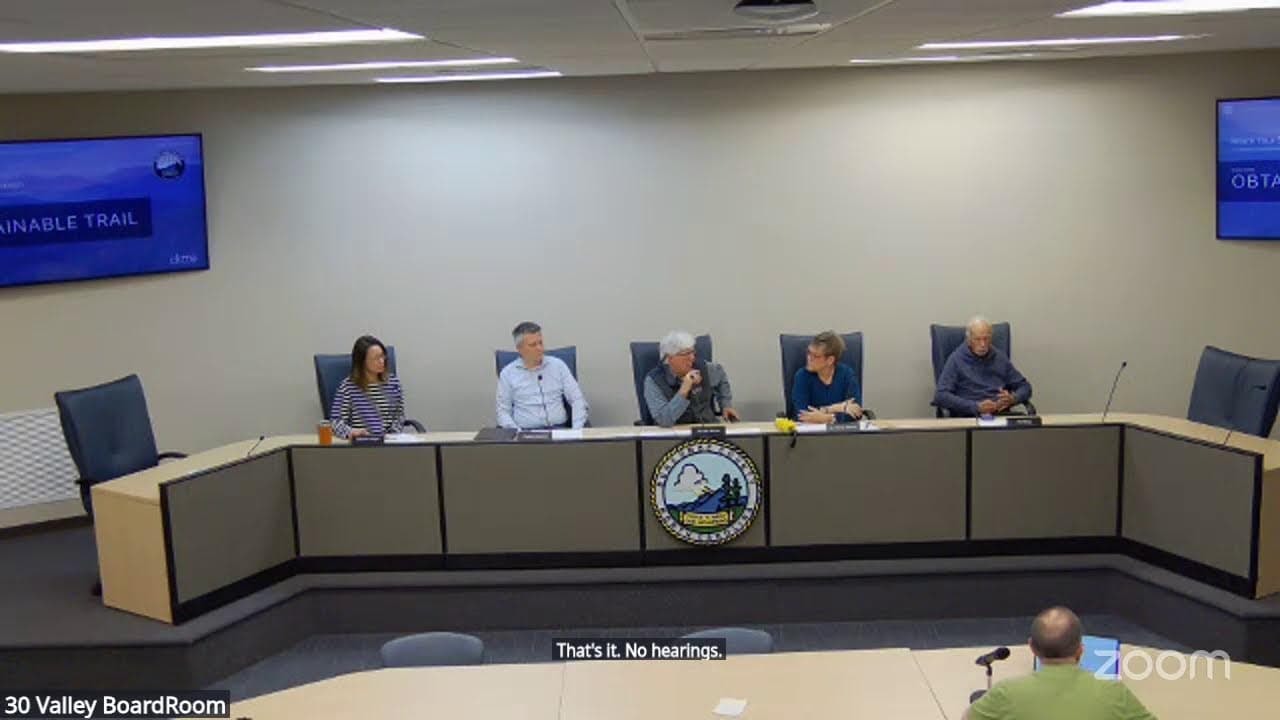
Buncombe County's Board of Equalization and Review spent most of its April 11 meeting working out how and when it will hear property owners who dispute their 2025 tax values. Members leaned toward a fixed afternoon hearing calendar starting in June, earlier evidence deadlines and a possible strict rule on late-listing penalties, with decisions expected May 16. Before that discussion, the board formally opened the appeal window, which runs through May 16, 2025.
- Hearing calendar takes shape: Members lean toward Monday afternoons, with a possible June 9 start.
- Evidence a week early: Appellants will likely have to submit appraisal reports before hearings.
- "Late's late" rule on the table for business late-listing penalty appeals.
- Formal appeal window opens, and owners have until May 16 to file.
- Just over 100 appeals so far in a quiet non-reappraisal year, with a surge expected next year.
1 Big Thing: Picking a Day to Hear Taxpayers
The basics: The Board of Equalization and Review hears residents and businesses who contest their assessed property values. Its duties come from North Carolina General Statute 105-322.
Why it matters: A fixed, published schedule lets appellants plan time off work. It also means the county can publish notices once instead of re-advertising every meeting.
Where things stand: Staff from the Assessor's office opened the discussion by making clear that no decisions were due. "It's recommended by DOR to pick a day of the week and a certain week of the month," said Eric, Assessor's office staff, referring to the state Department of Revenue.
The obvious choice ran into a conflict. One participant noted that Tuesdays overlap with the Board of Commissioners. Kurt, the board attorney, explained that commissioners meet on the first and third Tuesdays and the Board of Adjustment meets on the second Wednesday. To avoid staff and audio-visual conflicts, he advised the second and fourth Tuesdays or the first and third Mondays.
The attorney also warned against open-ended hearing days. "What I think you want to avoid is an indefinite meeting period," he said, pointing to the Board of Adjustment's noon-to-4 p.m. block as a model.
Competing preferences: Board Vice Chair Katerina Leeger preferred Mondays and shorter, more frequent sessions. "My preference would be every 2 weeks for 2 hours each," she said.
A board member put predictability first. "I think it's more critical to have it set and then people can plan accordingly," the member said. The same member suggested a June 9 start, because June 2 falls right after Memorial Day and soon after the May 16 filing deadline.
Board Member Randall Barnett, who presided, summed up the discussion as "Possibly Tuesdays, and always in the afternoon." Most members, however, leaned toward Monday afternoons.
Decisions and stakeholder impacts: No vote was taken. Staff expects roughly four to five cases per meeting and suggested mixing commercial, residential and business personal property cases on each agenda. Staff noted that reappraisal years typically require twice-monthly hearings early in the season.
What's next: Staff will poll members by email. The attorney said that approach complies with the open meetings law as long as members do not deliberate by email. "Then you all vote in an open meeting as to when you're gonna do that," he said. That vote is expected May 16. Staff also still needs to confirm whether appellants must receive 10 or 15 days' notice of a hearing.
Judges, Not Legislators: New Hearing Rules
Why it matters: Proposed advance-filing rules would change how property owners and their appraisers prepare for a hearing. The attorney also reminded members that every deliberation must happen in public.
Where things stand: The attorney explained that when the board hears appeals, it acts in a quasi-judicial capacity, meaning it rules on individual cases based on evidence. "You all are essentially acting as judges," he said.
The main procedural question is who presents first. Typically the appellant goes first, followed by a staff rebuttal and then an appellant rebuttal. Staff said the board's prior practice was for staff to present first, with the board handling all questions.
Evidence up front: The attorney urged members to require evidence, especially expert appraisal reports, before hearings. He said members "probably want to see their opinion report ahead of the meeting so that you're not trying to thumb through it and figure it out at the hearing."
A board member agreed. "I think I would like to see the information prior," the member said. Vice Chair Leeger raised document timing for Monday hearings, and the attorney proposed a deadline one week before each hearing. Exceptions would be decided case by case.
Public by law: "Your deliberations also are public, so you can't call a closed session," the attorney said. Closed sessions are limited to legal advice. The board may postpone a decision to a later hearing, but it must decide in a public meeting.
Math of a quorum: Asked by Vice Chair Leeger whether the board could meet with only four members, staff said three members make a quorum. The attorney added a caution: "It gets a little dicey when you have two to two votes." A tie means a motion fails.
Decisions and stakeholder impacts: Property owners and hired appraisers would need to finish their work earlier. Staff will post the advance-filing requirement on the county website and include it in formal appeal responses.
What's next: The attorney will draft rules of procedure based on the Board of Adjustment's rules for the May 16 meeting.
"Late's Late": Business Penalty Rule Debated
The basics: Businesses that miss the deadline to list their business personal property, such as equipment and furnishings, face late-listing penalties. This year's deadline was Jan. 31, or March 15 with an extension. Appeals of those penalties are expected mostly in the fall.
Why it matters: A strict rule would largely end case-by-case penalty relief for businesses that list late.
Where things stand: Staff said the state Appeals Manual recommends that boards consider rules for these appeals. The Department of Revenue permits such rules but offers no guidance on them. Staff described the approach many North Carolina counties take: "Late's late unless the assessor's office made an error," Eric said. Postmarks or email records can serve as proof of on-time filing.
Other counties have no rule. Staff said Mecklenburg County at one point forgave a first and second late listing but not a third, though staff was unsure whether that policy still applies.
Staff argued that strict rules respect businesses that list on time. "Sometimes that gray area produces inequities in the system," Eric said.
Board Member Barnett asked whether any rules had carried over from last year. Staff said the prior board adopted none but rarely sided with appellants on these penalties.
The other side: The attorney warned that a rule trades flexibility for efficiency. "If you do make a rule or something like that, you're kind of stuck with that," he said.
A second board member acknowledged the tension. "Most of the time we would be just rejecting it, probably just because there wasn't any good reason," the member said. The member did not want to shut out someone with a very good excuse who owes a large sum but concluded that "it seems like it makes sense to make a rule."
Decisions and stakeholder impacts: Local businesses have the most at stake. Staff noted that any board ruling can be appealed to the state Property Tax Commission in Raleigh. The county also mails notices of value to businesses, which gives them a separate appeal opportunity.
What's next: The attorney will survey how peer counties handle these appeals and present proposed rules, possibly at the May 16 meeting.
Appeal Window Opens; Volume Low for Now
Why it matters: Owners who disagree with their 2025 assessed value must file a formal appeal by May 16, 2025, to get a hearing before the board this cycle.
Where things stand: "I now close the informal appeal period as of April 11th, 2025, and open the formal appeal period to extend until May 16th," said Board Member Barnett. He moved to open the period, and Vice Chair Leeger seconded. The motion passed by a show of hands, and no tally was announced.
"This year's a non-reappraisal year, and we currently have a very low number of appeals right now. We have around a little over 100," Eric said. Many of those cases are settling informally, and staff said the office is encouraging owners to appeal. Most remaining cases are residential, and many commercial cases may settle. Staff expects a final count by mid-May.
What's next: Staff forecasts "a significant jump" during next year's countywide reappraisal. The goal is to hear all 2025 appeals before year-end. Staff noted that some counties are still hearing appeals from last year's reappraisal. Unused meeting dates can be canceled.
Minor Items
- March 19, 2025 minutes approved as circulated by show of hands, with no tally announced.
- Members introduced: Glenda Weinert, Phil Blake, Katerina Leeger, Preston Edwards and Randall Barnett.
- Board Member Barnett asked whether appellants may participate by Zoom.
- No members of the public appeared or commented.
Looking ahead: The board meets again May 16 at 1 p.m. to close the formal appeal period, approve minutes and vote on the hearing schedule and rules discussed April 11. No hearings are planned for that meeting.