
Berkeley Keeps Tear Gas Ban as Police Proposal Falls 4-5
City Council • BerkeleySeptember 29, 2026
Locunity is an independent informational service and is not an official government page for this commission. All information is sourced from public footage and an analysis of official agendas with the aid of responsible, fact-checked AI. to report an error or omission.
Berkeley's police Special Response Team will remain barred from using tear gas, smoke and pepper spray, including during hostage and armed-barricade standoffs. At a Sept. 29 special meeting, the City Council voted 4-5 against a resolution that supporters said the Police Accountability Board and the police department had negotiated. Roughly 30 public commenters spoke, and all but one urged the council to keep the ban.
- Tear gas ban survives 4-5. The council rejected narrow carve-outs for hostage, barricade and warrant incidents.
- The COVID-era smoke and OC spray moratorium stays in place.
- About 30 public commenters, including Quakers, the Berkeley Tenants Union and a Portland city councilor, nearly all opposed.
- The Berkeley Police Association offered the lone public case for restoring the tool.
- The council voted 9-0 to take no action on the Peace and Justice Commission's call for a health study.
1 Big Thing: A Narrow Carve-Out Falls One Vote Short
The basics: A June 9, 2020, council direction banned police tear gas. It also imposed a temporary COVID-19 moratorium on smoke and oleoresin capsicum (OC), commonly called pepper spray. The Special Response Team (SRT) is the Berkeley Police Department's tactical unit.
Where things stand: Councilmember Rashi Kesarwani authored the resolution, which included amendments from Councilmember Brent Blackaby. It would have allowed SRT tear gas use in only three situations:
- armed barricaded subjects
- hostage situations
- high-risk warrant service where a subject threatens death or serious injury
The resolution kept the prohibition on crowd-control use and lifted the smoke and OC moratorium. Kesarwani said the tools would remain governed by BPD Policies 300 (use of force), 303 (control devices) and 428 (First Amendment assemblies). Her motion added a reporting clause: BPD would notify the City Manager of any public summary posted under Policy 428.14 or Penal Code 13652.1, and the City Manager would inform the council and the Police Accountability Board (PAB) within 10 days.
Kesarwani noted that tear gas had been used once for a barricaded subject in 40 years. "We shouldn't have to meet a frequency threshold to save somebody's life," said Kesarwani.
Blackaby said the 20 largest California cities allow narrow use of tear gas. He also cited officer recruitment and retention. "We're currently the outlier by not allowing it," said Blackaby.
Vice Mayor Shoshana O'Keefe noted that the text requires a finding that the risks of deploying tear gas outweigh the risks of not deploying it. She compared tear gas to the firearms officers already carry under accountability rules. "If we don't have that trust, we have way bigger problems," said O'Keefe.
Councilmember Mark Humbert said he was the only councilmember who had been tear-gassed at a protest. "Assuming zero trust and presumptive police misconduct is not a reasonable place from which to be making policy," said Humbert.
The other side: Councilmember Igor Tregub credited the PAB's safeguards but said after-the-fact review cannot undo harm. "For me, safeguards are most meaningful when they prevent harm to begin with rather than only allowing us to evaluate it afterward," said Tregub.
Councilmember Ben Bartlett was on the council when the ban passed. He said all of the constituents who contacted him opposed the change. "I just don't feel the burden has been met to justify the rancor, justify the fear, justify the erosion of goodwill," said Bartlett.
Councilmember Cecilia Lunaparra said the gas spreads for blocks and would chill protest amid resistance to the Trump administration. She also rejected the idea that the ban was a pandemic-era policy. "Tear gas is not a precise tool," said Lunaparra.
Councilmember Terry Taplin said the tactical benefit remains unclear to the community. "It needs to be crystal clear to every stakeholder why this is a tactical necessity," said Taplin.
Mayor Adena Ishii acknowledged the PAB-BPD compromise but cited the federal government's use of force against unarmed civilians. "I'm really not seeing the urgency," said Ishii.
Decisions and stakeholder impacts: The motion failed.
- For (4): Kesarwani, O'Keefe, Blackaby, Humbert
- Against (5): Taplin, Bartlett, Tregub, Lunaparra, Ishii
- Absent: 0
The outcome has different effects for each group:
- Police and the union: The SRT loses a tool that the Berkeley Police Association and the department sought.
- The PAB: The compromise it negotiated with BPD goes unused.
- Protesters and health-vulnerable residents: Protesters, people with respiratory conditions and advocates keep the protections they sought.
What's next: Taplin pledged to keep working with the department, the union, the PAB and the community. The narrow split leaves room for the issue to return.
A Wall of Opposition at the Podium
Why it matters: Opponents organized across multiple meetings, and the council's no votes echoed their arguments.
Where things stand: About 30 speakers testified. Every speaker except the Berkeley Police Association's representative opposed the item. Their arguments fell into several themes:
- Health. Janice Schroeder, a health educator of 49 years, invoked the precautionary principle and cited harms to sensitive groups. Leslie Firestone, a District 8 resident with asthma, said she objected to repeatedly having to show up to oppose the item. A 79-year-old resident said he has heart failure and emphysema and that exposure could kill him.
- Protest rights. Avery Arbaugh, chair of the Berkeley Tenants Union, said he was tear-gassed in Washington, D.C., after the Dobbs decision. Laura X recounted tear gassings in Berkeley during the Free Speech Movement and Vietnam-era marches. Derek Rodriguez, a UC Berkeley student and National Guardsman, said students would bear the brunt.
- Accountability. Kelly Hammergren read the PAB's written statement from the packet. It questioned reauthorization for marginal operational benefit and noted three uses in decades, two of them in crowd-control contexts. Mari Mendonça, a District 8 council candidate, said the city does not let the PAB investigate.
- Cost. Sally Nelson and Gordon Gilmore of the Berkeley Outreach Coalition raised the city's $30M deficit.
- Faith and outside voices. Barb Atwell spoke for the Berkeley Friends Meeting (Quakers) in favor of keeping the ban. Samir Khanal, a Portland City Councilor, said federal chemical weapons use near Portland's ICE facility forced a K-8 school to move. He called Berkeley's ban a model for other jurisdictions.
Several other speakers raised further concerns:
- Della Luna cited Uvalde to rebut the police argument that tear gas buys "time and distance."
- A public commenter identified as Kat said the city used smoke and pepper balls on sleeping unhoused people on June 4, 2025.
- Others cited ICE-related clashes in Minneapolis and Los Angeles.
Police Union Makes a Lone Case
Sgt. Derek Rady is a 15-year BPD officer and SRT member. He spoke for the Berkeley Police Association and called tear gas a de-escalation option that beats higher levels of force. He said the policy was crafted with the PAB, would not be used at First Amendment assemblies or encampment abatements, and would cost the city little.
"To my knowledge, BPD is the only department in the nation whose tactical team is prohibited from using this potentially life-saving tool," said Rady.
Why it matters: Rady's testimony was the only public support for the item, and Kesarwani and Blackaby repeated his comparisons to other departments during deliberation.
Peace Commission's Study Request Shelved
Where things stand: The Peace and Justice Commission recommended retaining several existing restrictions:
- the 2020 bans on CS (tear gas) and OC
- the 1982 bans on police dogs and helicopters
- the 1997 pepper spray reporting requirement
The commission also asked the City Manager to engage an academic institution to study health impacts and alternatives. George, speaking for commission chair Pastor Duane, invoked the city's 2006 precautionary principle. "The principle shifts the burden of proof, requiring actions to be proven safe rather than waiting for proof of damage to restrict them," he said.
Zippora Collins, 87, has lived in Berkeley since 1962. "I'm speaking against Item 1A and in favor of Item 1B," said Collins, who backed a study by UC Berkeley, UCSF or Stanford.
Decisions and stakeholder impacts: After Item 1a failed, the council voted to take no action on Item 1b, without deliberation.
- For: 9
- Against: 0
- Absent: 0
The bans remain in place because Item 1a failed. However, no independent health study was ordered, so any future attempt to lift the ban would proceed without that evidence unless someone requests it separately.
Minor Items
- Continued meeting: The item resumed after technical difficulties halted the Sept. 15, 2026, meeting. Presentations were not repeated.
- 4 PM start time: Several speakers attacked the start time. Della Luna demanded disclosure of what caused the technical failure.
- Decorum: Mayor Ishii repeatedly admonished the audience for yelling and booing during deliberation.
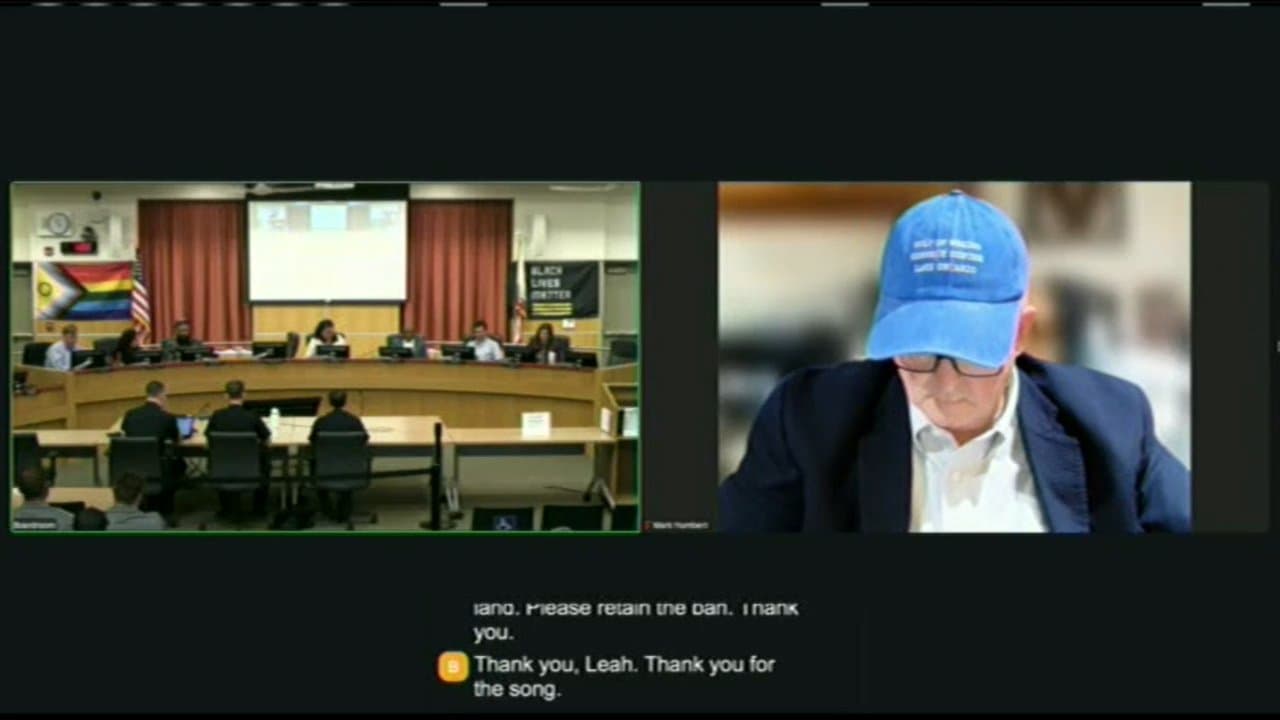
- Remote participation: Humbert participated remotely under the Brown Act's just cause provision because of a cold.
- Adjournment: The special meeting adjourned by roll call ahead of the council's regular 6 p.m. session. The recorded tally was 8-0; the mayor's vote was not recorded.
Looking ahead: Official materials are available in the Item 1a staff report and the Item 1b staff report. Residents tracking the issue should watch for any renewed proposal from Taplin's talks with police, the union and the PAB.