
Berkeley Council Adopts 600-Foot Encampment Buffer Around Preschools, 7-2
City Council • BerkeleyNovember 18, 2026
Locunity is an independent informational service and is not an official government page for this commission. All information is sourced from public footage and an analysis of official agendas with the aid of responsible, fact-checked AI. to report an error or omission.
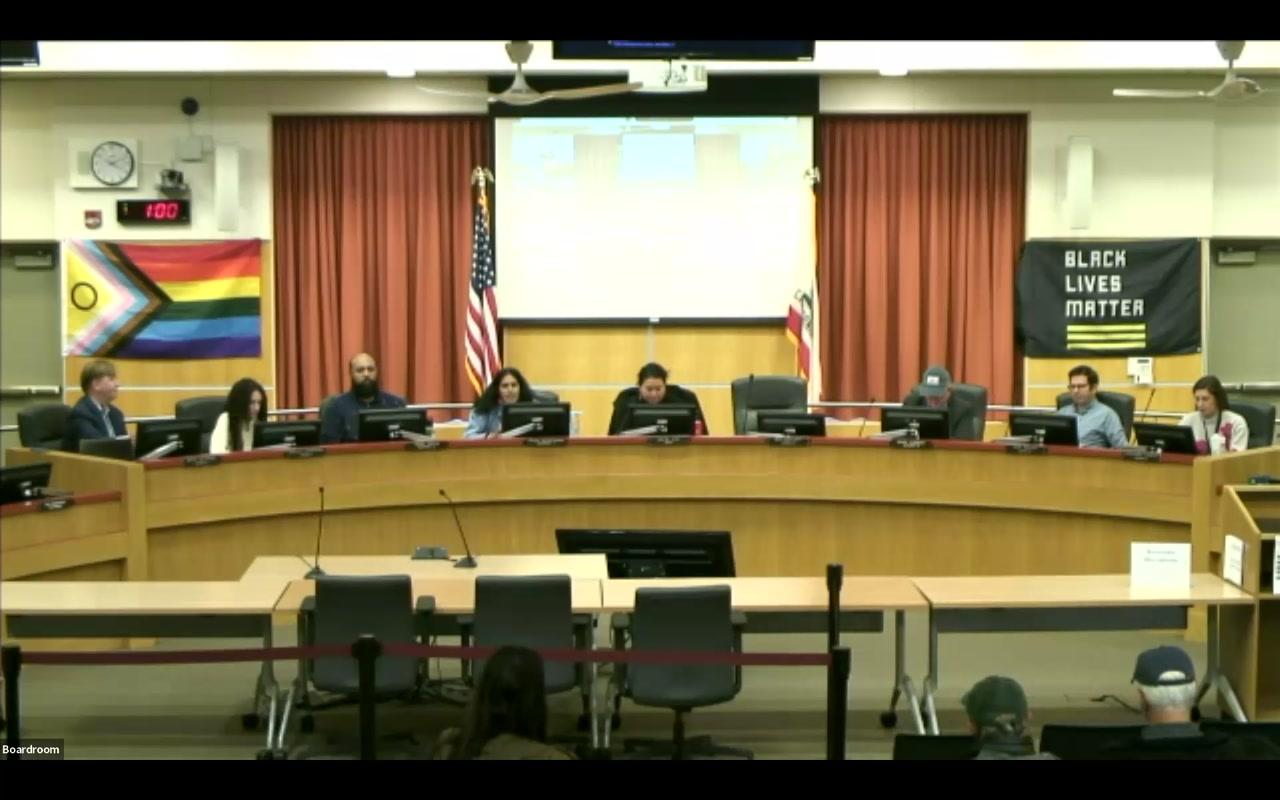
Berkeley now has a new legal basis to clear homeless encampments near licensed preschools and in-home daycares, even without a shelter offer. At a single-item special meeting on Nov. 17, 2026, the City Council approved a 600-foot buffer 7-2 after rejecting a 300-foot alternative 2-7. Parents and business groups packed public comment on one side, and the city's homeless services panel and the Berkeley Homeless Union warned of displacement and continued litigation on the other.
- 600-foot buffer adopted 7-2; Mayor Adena Ishii and Councilmember Cecilia Lunaparra opposed
- 300-foot amendment fails 2-7, backed only by Lunaparra and Igor Tregub
- Parents, Chamber and major employers cite needles, dog attacks and assaults near children and workers
- Homeless panel warns bans failed in four cities; union offers to pause litigation for talks
- Several councilmembers signal appetite for broader citywide encampment limits
A New Closure Tool, With Thin Staff Behind It
Why it matters: The resolution adds proximity to licensed preschools and in-home early childhood daycares as grounds to close an encampment. Staff can act without first offering shelter, in a city where homeless response capacity is limited.
The basics: The measure rescinds and replaces Resolution No. 71,513-N.S., the encampment policy the council adopted in September 2024. A supplemental amendment lets the City Manager prioritize among what are now seven closure criteria. (Staff report)
Where things stand: Councilmember Rashi Kesarwani (District 1) authored the item with co-sponsors Councilmember Brent Blackaby (District 6) and Councilmember Terry Taplin (District 2). Councilmember Shoshana O'Keefe (District 5) joined as a co-sponsor during the meeting. Kesarwani cited the Harrison corridor closure, where the city confronted fires, tampered hydrants and leptospirosis, a bacterial infection often spread by rodents.
She also drew a line around the policy's scope. "Some have called for a citywide encampment ban, and that is not what this is," said Kesarwani.
Enforcement capacity was a central question. Mayor Ishii asked how staff would prioritize closures given limited homeless response staffing. Kesarwani pointed to the new discretion language. "We're giving the city manager discretion to prioritize among the criteria," she said.
Tregub (District 4) noted that homeless response staffing would remain at three full-time positions. O'Keefe said the policy would not be enforced 100% of the time and would target problematic behavior. "It's addressing a very specific problem in a measured and thoughtful way," said O'Keefe.
Decisions and stakeholder impacts: The main motion passed (For: 7, Against: 2, Absent: 0). Voting yes were Kesarwani, Taplin, Bartlett, Tregub, O'Keefe, Blackaby and Humbert. Voting no were Lunaparra and Ishii.
Preschool families and nearby businesses gain a defined, citywide rule instead of block-by-block fights. Unhoused residents near covered sites face closures without a guaranteed shelter alternative. Because staffing is unchanged, the City Manager's priority calls will determine how much changes on the street.
Councilmember Mark Humbert (District 8) framed the vote as straightforward. "Prohibiting encampments near preschools and daycares is a simple, to me, logical step," said Humbert.
What's next: Implementation now rests with the City Manager. No timeline for enforcement or reporting was set at the meeting.
The 300-Foot Fight: Why Distance Decided the Debate
Why it matters: The buffer's size determines how much of Berkeley's non-residential land is covered, and where encampments are likely to move.
Where things stand: Kesarwani said the 600-foot figure borrows from an existing city standard. She also cited a concern about a cul-de-sac near Camellia. "I still think 600 feet is reasonable given that that is the buffer zone around tobacco businesses," said Kesarwani.
Supporters argued a smaller radius would miss the problem entirely. Melanie Trainer, speaking for Duck's Nest, said 300 feet would not help because the block alone is 500 feet long. Taplin echoed her. "We heard tonight that 300 feet wouldn't even cover Duck's Nest," said Taplin.
The other side: Lunaparra (District 7) moved to cut the buffer to 300 feet. She warned about the policy's cumulative reach across the city's many licensed sites. "A 600-foot buffer around each one would cover nearly the entire city," said Lunaparra. She also called the policy largely symbolic.
Tregub seconded the amendment in hopes of a more tailored result. "I seconded the motion to explore a 300-foot buffer," said Tregub.
Public commenters pushed in both directions:
- Nariah Ruble, District 1 councilmember-elect, called 300 feet more humane than 600.
- Beth Shin, a District 4 grandmother, urged rejection outright. If a buffer passed, she wanted 300 feet measured along street routes.
- Some supporters went the other way, urging 1,000 feet or coverage of all schools.
Decisions and stakeholder impacts: The amendment failed (For: 2, Against: 7, Absent: 0). Lunaparra and Tregub voted yes. Kesarwani, Taplin, Bartlett, O'Keefe, Blackaby, Humbert and Ishii voted no. Ruble's position is worth watching: she will soon hold the District 1 seat that Kesarwani holds now.
Parents and Businesses Turn Out in Force
Why it matters: The breadth of supportive testimony, from toddler parents to the city's largest private employer, shows organized pressure for stricter encampment rules beyond preschools.
Where things stand: Parents from Duck's Nest and Centro Vida described needles, loose dogs, drug use and indecent exposure near toddlers. Preschool parent Talia Gavish described an off-leash pit bull near drop-off. "It's not a camping ban," she said.
Sébastien Robert, head of school at École Bilingue de Berkeley, described campus intrusions and drug paraphernalia, and asked that the buffer extend to all K-12 schools. "Compassion and safety are not opposing values," said Robert.
Business voices reinforced that message:
- Beth Rossner of the Berkeley Chamber of Commerce urged extending the buffer to all schools and adopting a clear citywide policy.
- Jennifer Cogley of Bayer said Bayer, the city's largest private employer with 850 workers, has seen conditions on Grayson Street deteriorate. An employee was bitten by a dog.
- Javier Suazo, operations manager at Street Plus, said downtown ambassadors face threats and assaults, including a recent serious assault.
- Julia Katz, a Mercy Housing developer and parent, said affordable housing practice would not place permanent supportive housing alongside nursery schools.
Several supporters also linked their support to more services. Linda Gayden of Biotech Partners backed both the 600-foot buffer and housing for the unhoused.
Homeless Panel and Union Warn of Displacement
Why it matters: Opponents put on the record the city's own advisory body's position, evidence from other cities and an active litigation posture. Together, these define the legal and resource risks Berkeley accepted.
The other side: Carol Morozewicz, chair of the Homeless Services Panel of Experts, recommended against the policy. "The proposed ban is inadvisable because it essentially would utilize excessive city resources that are unavailable to shift unhoused camping to other areas of the city," said Morozewicz.
Anais Shergill, a commissioner on the panel, cited results from Los Angeles, San Jose, Sacramento and Oakland. "The school camping ban has failed in all 4 cities cited in the item proposal," said Shergill. At most, she said, the city should adopt a pilot modeled on San Jose's.
Anthony Prince of the Berkeley Homeless Union asked the council to pause the vote for joint talks. "We're willing to pause all the litigation on both sides and make a filing, a joint administrative filing to do that," said Prince. The council voted that night anyway.
Other critics raised more concerns:
- Caitlin File, director of the Suitcase Clinic, said the policy works as a camping ban that allows closures without shelter heading into cold, rainy weather.
- Union member Darren Webster said police told him housing is no longer offered and there is nowhere compliant to camp.
- Della Luna said the city handled rodent control until July 1, 2026, and called it disingenuous to attach rats to encampments.
Even some supporters conceded the displacement risk. Stacy Blair, who lives near the Dwight encampment, said the buffer could push camps onto blocks like hers that have no preschools.
Council Signals Broader Encampment Rules Ahead
Why it matters: Several members framed the buffer as a first step, previewing future agenda fights over citywide limits and fairness between districts.
Where things stand: Blackaby separated the buffer from the larger crisis. "No one here is saying that a buffer zone for preschool is going to solve the homelessness crisis," he said. He then went further. "I believe we need to ban encampments more comprehensively across Berkeley," said Blackaby.
Taplin said he would support expanding the buffer to all public and private schools, up to 1,000 feet. Councilmember Ben Bartlett (District 3) argued that some districts carry an outsized share of encampment impacts. "It's just not fair that our districts have to bear the brunt of all this," said Bartlett.
What's next: District 2 resident Jason Lawrence, citing a 570-neighbor petition, asked the council to "direct staff to bring back a citywide ordinance based on the governor's model with vehicle rules and a definition of encampment." No such direction was voted on.
Minor Items
- Public comment capped: The council limited comment to two hours, with in-person speakers first (For: 8, Against: 0, Absent: 1, Bartlett).
- Recusal question cleared: An unidentified councilmember who lives next to a preschool raised recusal. City Attorney Farimah Brown said the "public generally" exception applied, and all nine members voted.