
Berkeley Picks SAHA Team for 100% Affordable Ashby BART Housing
City Council • BerkeleyOctober 27, 2026
Locunity is an independent informational service and is not an official government page for this commission. All information is sourced from public footage and an analysis of official agendas with the aid of responsible, fact-checked AI. to report an error or omission.
Berkeley's City Council voted 9-0 on Oct. 27, 2026, to begin exclusive negotiations with a Satellite Affordable Housing Associates-led team for the Ashby BART East Lot. The plan is a 341-bedroom, fully affordable project on city-owned land that city leaders frame as a reparative answer to displacement in South Berkeley. The same night, a single consent vote approved procurement reform, renamed a waterfront park and sent zero waste event rules back to committee over commissioners' objections.
- Council votes 9-0 to pick the SAHA team for Ashby East Lot, with Related California and the Kelsey as backup and $1 million reserved for predevelopment.
- Proposal tops city requirements: 341 bedrooms and 100% affordability, against an RFP minimum of 300 bedrooms and 35% affordability.
- Competitive bidding now required for service contracts over $100,000, responding to the city auditor's findings.
- Waterfront park renamed Si Se Puede Park, though a farmworker union trademark question is unresolved.
- Zero waste rules for special events stalled after the City Manager pulled them, drawing pushback from Zero Waste commissioners.
- Council waives sanctuary contracting rule for Westlaw over objections from public commenters.
Nine Years in the Making: Ashby East Lot Gets a Developer
The basics: An ENRA is an exclusive negotiating agreement. It gives one developer sole rights to negotiate a deal on a public site for a set period.
Why it matters: The East Lot is city-owned land at a South Berkeley BART station. The selected proposal would deliver 341 bedrooms, all affordable, including 12 affordable ownership townhomes. That is rare in a market dominated by rentals.
Where things stand: Housing staff walked the council through the site's long path: state law AB 2923, Measure O, a 2020 memorandum of understanding with BART, a 2025 exchange agreement and an April 2026 request for proposals. City Manager Paul Buddenhagen called it "almost 9 years of public process."
The city received six proposals in July, said Kelly deWolfe, the city's housing development specialist and project manager for the site. An evaluation panel shortlisted two teams. It recommended SAHA, partnered with Habitat for Humanity East Bay Silicon Valley and Deborah Matthews Consulting. Related California and the Kelsey are the alternate.
The RFP set a floor of 300 bedrooms and 35% affordability, with a 50% goal, and required a reparative framework. The winning bid went well past those marks.
"We ended up with 100% affordable, which I think is just a remarkable achievement and so important," said Councilmember Brent Blackaby, District 6.
Councilmember Ben Bartlett, District 3, whose district includes the area, praised the ownership component. He also warned against treating new rentals as full restitution: "Replacing someone's house with a government apartment is not repair."
James Conlon, Associate Director of Real Estate Development at SAHA, thanked the panel. He said the South Berkeley-based team is excited to deliver both rental and ownership housing.
The other side: One public commenter asked whether the city had weighed SAHA's code enforcement and fire department violations and lawsuits. After the vote, a woman who said she rents from SAHA described ceilings caving in, cockroaches, non-permitted work and more than a year of code enforcement visits. "I am a SAHA tenant. I'm also disabled," she said, and asked why the city keeps allowing SAHA to build.
Public commenter Maria Sol said SAHA houses many grateful residents but urged the nonprofit to be open to dialogue on safety and security. No staff response to the allegations was offered at the meeting.
Decisions and stakeholder impacts: Council approved both resolutions (For: 9, Against: 0, Absent: 0). Voting yes were Mayor Adena Ishii and Councilmembers Rashi Kesarwani, Terry Taplin, Bartlett, Igor Tregub, Shoshana O'Keefe, Blackaby, Cecilia Lunaparra and Mark Humbert.
Lower-income South Berkeley households and prospective first-time buyers stand to gain the most. SAHA and its partners secure a major city-owned site. Related California and the Kelsey remain on deck if talks falter. The tenant complaints mean SAHA's property management record will likely follow the project through negotiations.
What's next: Negotiations are expected to last up to 12 months. Construction financing would close no earlier than December 2031.
Si Se Puede Park Approved, Trademark Question Pending
Why it matters: The council renamed the park at the northern end of the Berkeley Waterfront to honor the farmworker movement. But the phrase may not be the city's to use without the union's consent.
Where things stand: Public commenter Natasha Beery described a citywide committee that reached consensus. She said the Parks, Recreation and Waterfront Commission then voted unanimously for the name. Beatriz Leyva-Cutler, a member of the renaming committee, said the United Farm Workers had given provisional approval.
The other side: Martin Nikolaus, CEO of the Chavez Park Conservancy, said the phrase is a federally registered UFW trademark. Citing his correspondence with union attorneys, he said "there is no agreement at this time with the city of Berkeley for the use of the mark." Sol floated "Better Together" as an alternative name.
Decisions and stakeholder impacts: The renaming passed on the consent calendar. Mayor Ishii said staff will confirm with the UFW and report back if there is a problem.
What's next: If the UFW withholds consent, the name could return to the council.
Contracts Over $100,000 Now Must Be Competed
Why it matters: The amendment to Berkeley Municipal Code Chapter 7.18 requires competitive solicitation for professional and other service contracts above $100,000. It responds directly to an audit of noncompetitive contracting, and it adds oversight of outside counsel spending by the City Attorney's office.
Where things stand: The City Auditor said the ordinance addresses two audit recommendations. Councilmember Kesarwani, District 1, said awards turn on demonstrated competence and qualifications at fair prices, not lowest price alone. "We're going to have a transparent process to find the most qualified service provider at the best price," she said. Contract length is left to the city's purchasing manual.
Councilmember Bartlett tied the reform to the city's BINDEX diversity index. Public commenter Kelly Hammergren backed the item but wanted the legal department held to the same procurement rules.
The other side: Zero Waste Commission Chair Steven Sherman supported the item but flagged a risk for recycling services: "The industry standard for contract length is substantially longer than 5 to 7 years." Martin Bork, Executive Director of the Ecology Center, welcomed the change and offered additional safeguards.
Decisions and stakeholder impacts: The ordinance passed on consent. Vendors with long-standing sole-source arrangements now face open competition. Recycling operators and their nonprofit partners will be watching how the purchasing manual sets contract terms.
Audit backdrop: The auditor separately reported that seven of eight recommendations from a 2009 leases audit show no change in status. Councilmember Blackaby pointed to the city's 66 leases, some expired or unrenewed. New property management software is expected in about three months. The next audit update is due in fall 2027.
Commissions Push Back on Delays
Special events stalled: City Manager Buddenhagen removed Item 22B, citing the need to align with stakeholder groups. On Item 22A, he told the council, "I would request that you refer 22A back to the Agenda and Rules Committee to schedule for a future date."
The proposed changes amend rules for block parties, park events and street events, with a focus on zero waste. Commissioners objected to the delay. Zero Waste Commissioner Philip Monrad urged staff to at least consult the commission on what issues justified pulling the item. Zero Waste Commissioner Sandra Curtis said current rules neither advance zero waste goals nor include enforcement. Chair Sherman asked the council to support the items as proposed or revised.
The council referred 22A anyway as part of the consent motion. No new date has been set.
Accessibility timeline questioned: The council also adopted companion report 20B on enforcing the Public Right-of-Way Accessibility Guidelines (PROWAG). These are accessibility standards for sidewalks, crossings and construction zones.
Commission on Disability Chair Rena Fisher said the city's construction zone guidelines now incorporate PROWAG. She called a 6-to-8-month timeline for standard contract language too long. "The city needs proactive inspection, not complaint-driven enforcement," she said. Until that language exists, Measure FF-funded public works contracts could proceed without enforceable PROWAG terms. Hammergren called the delay embarrassing.
Councilmember Tregub, District 4, said "accessibility should be a fundamental consideration in how we design, maintain, and construct our public spaces."
Westlaw Sanctuary Waiver Draws Objections
Why it matters: The waiver tests how Berkeley applies its Sanctuary City Contracting ordinance to widely used vendors that also serve immigration enforcement.
Where things stand: Mayor Ishii said the waiver is needed because Westlaw also serves an immigration enforcement agency. "Westlaw is a program that basically all law firms use to get legal information," she said.
The other side: One public commenter called the waiver inconsistent with sanctuary values. Hammergren asked why another provider could not be used, and speakers contrasted the decision with the city's rejection of Flock.
Decisions and stakeholder impacts: The waiver passed on the consent calendar. The clerk recorded eight yes votes and declared the calendar approved as amended. Councilmember Kesarwani's vote was not recorded.
Minor Items
- Census resolution: Council voted 9-0 to add an urgency resolution opposing proposed federal census rule changes, then approved it on consent.
- Live Free contract: Council added grant funding to Live Free USA's gun violence prevention contract; supporters invited members to a Nov. 7 fundraiser.
- Library board: Charles "Court" Jackson and Hong-Sze Yu were appointed to the Board of Library Trustees, filling two vacancies.
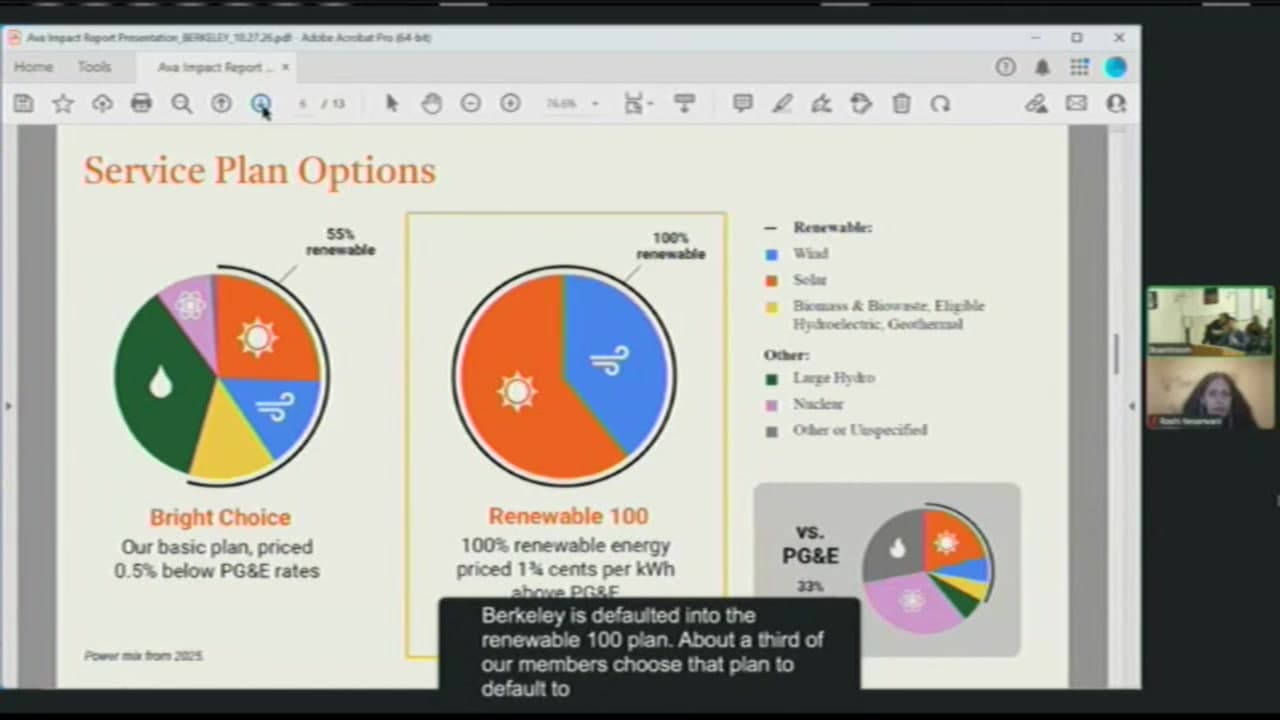
- Ava Community Energy: CEO Howard Chang cited $180M in customer savings and said "we retain about 96% of all customers."
- Nikki Williams honored: Council adjourned in memory of the Berkeley Youth Alternatives leader; her son Kevin Williams spoke.
Looking Ahead
A proposed encampment buffer zone near preschools goes to a special council session at 4 p.m. on Nov. 17. Public commenter David Hoffmeyer, a District 1 parent, said "the delay makes it all the more important that the council pass the resolution on the 17th." Public commenter Jessica Prado countered, "This is another reactionary homeless policy," and said she will request a disability accommodation.