
Benicia Closes Data Center Loophole With 20 MW Cap, Generator Ban
City Council • BeniciaOctober 20, 2026
Locunity is an independent informational service and is not an official government page for this commission. All information is sourced from public footage and an analysis of official agendas with the aid of responsible, fact-checked AI. to report an error or omission.
Until Monday night, a data center could have moved into Benicia's industrial park without a single public hearing. On Oct. 20, the City Council voted 4-1 to introduce an ordinance that requires use permits, caps projects at 20 megawatts and bans combustion backup generators. Earlier in the evening, the council approved a standstill deal with Valero, backed by $5.25M in state funds, that preserves the city's leverage over the refinery site.
- Data center ordinance introduced 4-1 after a two-hour debate. Councilmember Terry Scott voted no.
- Moratorium push falls short. Most of the 11 public commenters wanted a pause, but council chose to adopt rules first.
- Valero standstill agreement approved 5-0, tied to $5.25M in state money. Renewal would require another $7M.
- Five of seven council policy ideas advance to February goal setting. Tourism funding and limits on contract authority were dropped.
Data Centers Lose By-Right Status
The basics: Benicia's 1987 zoning code treats data centers as "technology industry." That means they are permitted by right in industrial zones, with no discretionary review.
Why it matters: "A data center could locate in the industrial park without any public hearing, use standards, or environmental analysis," said Suzanne Thorsen, Assistant City Manager/Development Services Director. The new ordinance replaces that open door with a conditional use permit and California Environmental Quality Act (CEQA) review.
Where things stand: The ordinance covers four industrial districts and sets these rules:
- Projects are capped at 20 MW and must run on renewable or grid power.
- Internal combustion equipment is banned.
- Projects must reduce potable water use, shield their lighting and limit noise.
- Every project needs a fire prevention plan.
Smaller projects (under 5 MW, 50,000 square feet and 30 gallons per minute) get a director-level hearing. Larger projects go to the Planning Commission. The commission recommended approval 6-0 on Sept. 10, adding more renewable backup power options. Staff said the local rules are more stringent than a new seven-bill state package.
Generators and fire risk: Thorsen defended the generator ban. "Diesel generators, especially multiple running at one time, will definitely create noise impacts," she said. Battery backup carries its own risk. Josh Chadwick, Fire Chief, described battery blazes bluntly: "It's the type of fire that you just have to let burn."
Points of contention: Councilmembers questioned several pieces of the ordinance:
- the one-week gap before second reading
- the basis for the 20 MW cap
- cumulative impacts from multiple facilities
- fair-share payments from operators
Mayor Steve Young backed a non-potable water requirement. "I would be in favor of requiring the use of non-potable water," he said. Thorsen declined to add explicit fair-share language. "So I don't recommend doing that," she said.
Decisions and stakeholder impacts: The motion passed. It was moved by Councilmember Kari Birdseye and seconded by Mayor Young. Vote: For: 4 (Birdseye, Largaespada, Macenski, Young), Against: 1 (Scott), Absent: 0. Scott said he preferred more time.
- Residents gain public hearings and environmental review they did not have before.
- Developers face a hard size ceiling and costlier power requirements.
The Mayor also floated sending every application to the Planning Commission. Whether that change made it into the final motion remains unclear.
What's next: Second reading is targeted for Oct. 27. Council directed staff to explore later amendments on:
- drought water rationing
- how many centers can concentrate in one area
- backup power
- site cleanup
- standalone versus mixed-use centers
Moratorium Calls Meet Legal Limits
Why it matters: The ordinance only protects the city once it takes effect. Staff said any application deemed complete before the effective date is governed by the old by-right rules.
Where things stand: Most of the 11 commenters wanted a pause or moratorium:
- Kathy Carriage called for an immediate moratorium of about six months.
- Steve Gottlieb wanted a pause until the rules are right.
- Jack Kolke, a technologist, distinguished hyperscale facilities from small data centers but still urged a pause.
- Nimat Grantham, Ms. Lucas and Ms. Bordet raised concerns about water, cumulative impacts and outcomes in other states.
- Shoshana Deutsch voiced concern about environmental burdens on the city's east side.
Former Vice Mayor Tom Campbell walked through Benicia's water supply limits. He urged that data centers ration water equally with residents during drought.
The other side: Kylie Corral, speaking for the Western Steel Council, supported the zoning update. Courtney Vossack argued the ordinance closes the gap faster than a moratorium. Brett Nelson of the Citizens Oversight Industrial Safety Commission asked about tax revenue. Birdseye later said staff estimated $5M to $10M per year in utility user tax.
Staff explained the legal hurdle: a moratorium requires a four-fifths vote plus formal findings. The city attorney suggested adopting the ordinance now and returning with a moratorium if an application is filed. Mayor Young agreed. "This is probably the fastest, surest way of closing the loophole," he said.
Vice Mayor Trevor Macenski framed the vote as a first step. "I also think that the decision that's before us tonight is to close a loophole, not to say that we can't have a moratorium," he said. Birdseye warned that a moratorium would send the wrong signal to business: "It's saying Benicia's scared."
Scott wanted both tools at once. "I say we take both of them and put them together," he said.
Councilmember Lionel Largaespada pushed from the opposite direction. He proposed replacing the size cap with enhanced review and performance-based generator standards. "I also believe we should be evaluating projects based on actual impacts rather than prohibiting most of them even before we get to see them," he said. Birdseye rejected loosening the core limits.
Decisions and stakeholder impacts: Council concluded a moratorium could not be justified without a pending application. That leaves a window before the ordinance takes effect, which pause advocates flagged as a vulnerability.
Valero Deal Buys Time, Not Concessions
The basics: City code does not permit importing refined fuel to the site without refining crude there. Valero disagrees. Under the standstill agreement, each side respects the other's interpretation while the city holds off on enforcement.
Why it matters: The city keeps its land-use leverage over the 900-acre site. In return, it gets state funding and fire-protection commitments.
Where things stand: The money comes from the state, not the company. "Valero is not paying the city any consideration for this agreement," said Mario Giuliani, City Manager. The state appropriated $5.25M. Renewal for a second year would require $7M.
The agreement has two exit triggers:
- It terminates automatically if milestone payments are missed.
- The city can terminate it if Valero changes the terminal operator.
Mayor Young confirmed the city is not waiving any permit requirement.
Fire protection: Chadwick said the refinery's own fire brigade has been disbanded. "They are gone. They no longer have that," he said. Two stations, a ladder truck, an engine, a foam tender and a large foam supply remain available. A companion memorandum of understanding requires pre-fire plans for every tank. Scott pressed staff on monitoring and foam capacity.
The other side: Ms. Bordet asked for a map of which tanks hold what. She also asked about regulatory oversight and corrosion testing of pipes at the idled refinery. Carriage asked about the agreement's term and exit checkpoints, and warned that refined fuel storage can emit significant pollution. Staff said a site map will be made public once the agreement is executed.
Decisions and stakeholder impacts: The resolution passed. It was moved by Macenski and seconded by Birdseye. Vote: For: 5, Against: 0, Absent: 0. The resolution also authorizes the city manager to implement the state funding and allows budget adjustments.
What's next: Watch for the public site map. The $7M renewal will determine whether the arrangement lasts beyond year one.
Five Ideas Head to Goal Setting
Where things stand: Council reached informal consensus, without a formal vote, to send five requests to February goal setting:
- expanded public counter hours and customer assistance
- a downtown entertainment zone pilot
- a residential sidewalk repair cost-sharing pilot using about $100,000 in gas tax funds
- a downtown off-leash dog park
- a 1% for art program
Largaespada said the top complaint he hears from residents is that "the billing department and the permit desk is closed." Scott championed the park. "We should get a dog park too," he said.
The other side: Birdseye warned that "each one of these proposals are going to cost staff hours that we don't have." Macenski opposed both the new park and a proposal to fund tourism and special events from hotel tax. "You don't get to pull money from something that funds the general fund," he said.
The tourism proposal died. So did a proposal to lower the city manager's contract authority to $100,000. Giuliani said authority above that level applies only to public works contracts, and fewer than five such contracts were signed this year. Public commenter Steve Gottlieb backed the dog park and urged council to reconsider tax proposals given the city's revenue needs.
What's next: All five ideas compete for limited Development Services and Public Works staff time in February.
- Marina fishing ban: Council voted 5-0 to bar fishing at the small boat launch. Laura Grundman objected that notice was inadequate. Scott Tromer, a 26-year slip holder, said damage has stopped since signs went up in May. Staff will add alternate fishing spots to new signs.
- Sidewalk vending fee: An $88 annual permit fee passed 4-1, with Mayor Young opposed. "I voted against this ordinance when it first came forward, so I think to be consistent, I'll vote against this fee issue," he said.
- Consent calendar: Four items passed 5-0. They include an amendment to the Valero redevelopment review on-call agreement, OpenGov grant software and acceptance of the 2026 curb ramp project.
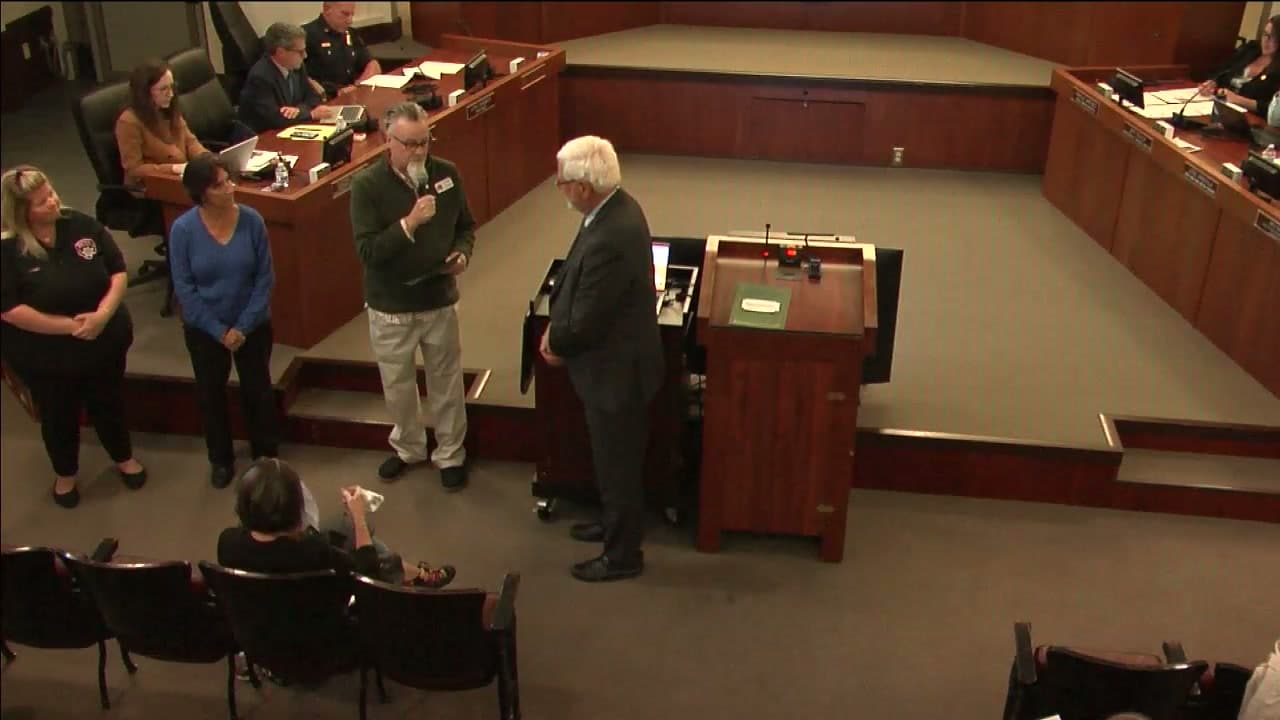
- Proclamations: Council declared Oct. 18-24 United Against Hate Week; Benicia was described as the first Solano County city to sign on. October was proclaimed Domestic Violence Awareness Month, and advocates announced a vigil and progress on a House of Hope safe house.
Looking ahead: In ad hoc reports, members noted a developer application expected in November. They also discussed a $5M Bay Area Air District opportunity grant whose reimbursement terms could strain recipients' cash flow, including the school district. The Air District is scheduled to vote on a gas appliance ban on Nov. 4.