
Nine-Unit Townhouse Fight Carried to Dec. 3 as Neighbors Push Back
Zoning Board of Adjustment • BellevilleNovember 12, 2026
Locunity is an independent informational service and is not an official government page for this commission. All information is sourced from public footage and an analysis of official agendas with the aid of responsible, fact-checked AI. to report an error or omission.
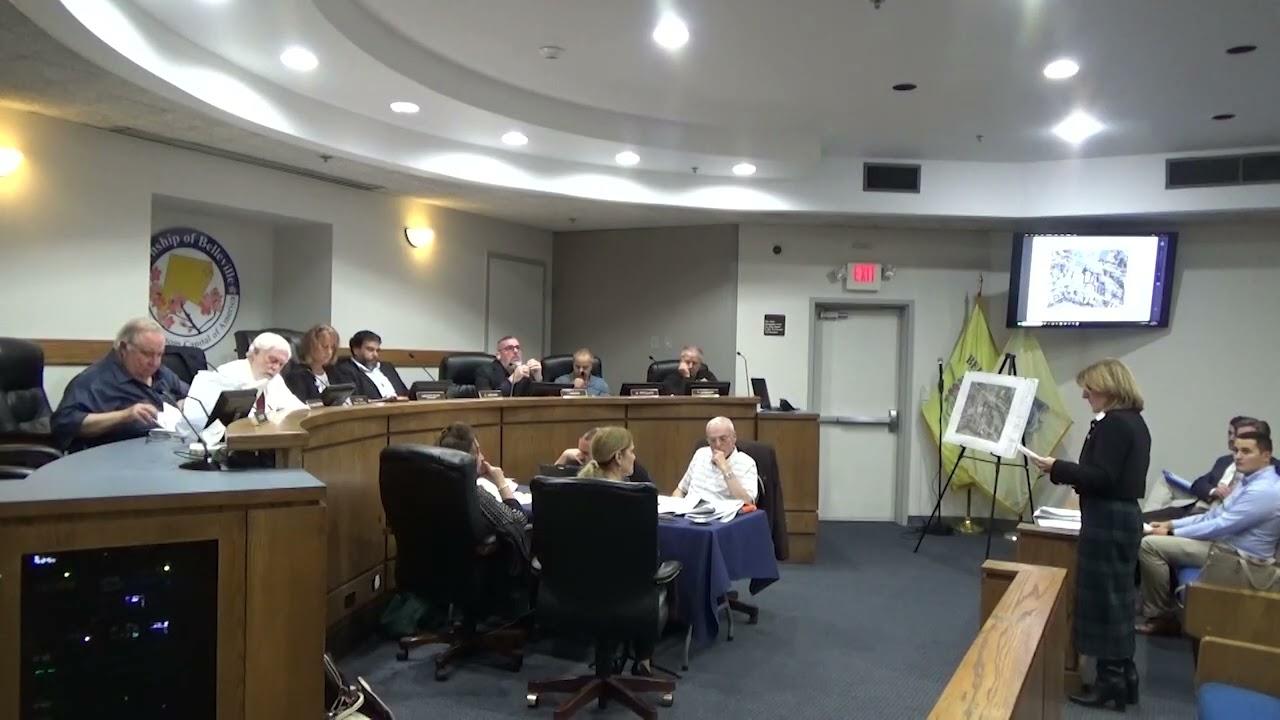
Belleville's Zoning Board of Adjustment spent more than two hours on Nov. 12, 2026, on a proposal to fit nine townhouses into two buildings on a flag lot next to School No. 7. The neighboring condo association arrived with its own lawyer, and the hearing ended without a vote. The board also moved to certify an apartment over a garage on Roosevelt Avenue, even though town records on the property are incomplete, and its attorney said unpaid property taxes cannot stop an applicant from being heard.
- 36 Franklin Avenue LLC's nine-unit townhouse plan is carried to Dec. 3 at 6 p.m. after neighbors contested the easement, parking and stormwater plans.
- Condo association counsel cites a court-ordered 70/30 easement cost split, undercutting the applicant's proposed 50/50 arrangement.
- 20 Roosevelt Avenue certification was moved and seconded. The roll call result was not clearly established.
- Board attorney: unpaid taxes can't bar a hearing, though payment can be a condition of approval.
Franklin Avenue Townhouses Face Organized Opposition
The basics: 36 Franklin Avenue LLC wants to build two townhouse buildings, one with four units and one with five, on a flag lot. A flag lot sits behind other properties and reaches the street through a narrow strip. The site is in the RC zone, which allows townhouses but only one triplex per lot.
That rule drives the need for D variances, also called use variances. The project needs them for two principal structures on one lot and for more than three units. It also needs variances for lot coverage and lot width.
Why it matters: This is a test of how much density the board will allow on a constrained lot beside a school. The answer could shape how nearby residents absorb traffic, construction and stormwater runoff. The case awaits a fuller board, with seven eligible members needed to vote on the use variance.
Where things stand: J. Michael Petrie, the applicant's engineer, architect and planner, walked the board through the site plan. His key figures:
- Lot coverage would reach 71.7%, compared with 60% allowed.
- Permeable pavers would help manage runoff.
- The plan includes rehabilitated sidewalks and driveway, new lighting and landscaping.
- The applicant accepts the town engineer's conditions.
Board members and the applicant's team also debated whether the parking plan complies with requirements. The discussion focused on three issues:
- Tandem spaces, where one car parks behind another
- The number of visitor spaces
- Credits for electric vehicle charging
The other side: William Rodriguez, who said his law firm represents the adjoining condo association, questioned the applicant on the condo structure, the shared easement and traffic. The association's central objection is money. The applicant proposed splitting easement upkeep 50/50, but association counsel said a court order already sets the terms. The order calls for "all repairs and maintenance to be 70% with the association and 30% with Mr. Kovar."
The association also raised:
- A disputed wall and curb
- Possible disruption from utility construction
- Who would maintain the new lighting
Michael Sheldon, a resident of 47 Floyd Street, questioned several of the applicant's calculations:
- The site's buildable area
- Impervious coverage
- Stormwater management
- Parking numbers
- Fire hydrant access
Sheldon noted that the school sits at a lower elevation than the site. That raises the question of where runoff from a mostly paved lot would go.
Decisions and stakeholder impacts: The board took no vote. The applicant requested a continuance to Dec. 3 at 6 p.m. without further notice, which means neighbors will not receive new mailings about the hearing. The developer gains time to build support with a fuller board. The condo association keeps its leverage over the court-ordered cost split. School No. 7 families and nearby residents have the most at stake on drainage and traffic.
What's next: The hearing resumes Dec. 3 at 6 p.m. Residents and the association will have another chance to cross-examine the planner. Anyone with concerns should plan to attend, because no further notice will be sent.
Roosevelt Avenue Carriage House Moves Ahead on Thin Records
The basics: The owner of 20 Roosevelt Avenue asked the board to certify that the property's current use is pre-existing. The property has a two-family house plus an apartment above a garage, often called a carriage house. Under Section 68, a certification confirms that a use existed legally before current zoning rules and can continue.
Where things stand: The applicant's counsel relied on property cards. The cards show a subdivision in 1999 or 2000 and list an "apartment above garage." The zoning officer said the subdivision resolution itself could not be found.
Owner Ivan Gonzalez testified that the apartment already existed when he bought the property in 2006. He said it had separate utility meters at the time.
The other side: One board member argued the board needed records covering 8–20 Roosevelt before acting and asked to adjourn the case.
Decisions and stakeholder impacts: Another member moved to approve, and the motion was seconded. The approval would certify a two-family home with one unit over the garage, not a three-family home. The board attorney is to draft the resolution.
A roll call followed. At least one member could be heard voting "no," but the final tally and result were not clearly established. Approval would legalize a second dwelling structure on the lot. It could also set an example for property owners whose records the town cannot locate.
What's next: The board's minutes and the written resolution should confirm the outcome.
Board Attorney Settles Unpaid-Tax Dispute
Why it matters: The town's ordinance includes a tax-payment requirement for applicants. According to the board's attorney, that requirement cannot be used to block an application from being heard.
Where things stand: The issue had caused disputes at earlier meetings. The board's attorney repeated that "there's no authority for us to not hear an application if the taxes are not current." Instead, the board can make tax payment a condition of approval.
A member of the public had used AI to research the question and earlier disagreed. After reviewing it again, that person agreed that taxes can be a condition of approval. Board members urged decorum during the exchange.
What's next: A board member suggested adding the issue to the board's annual report to the council. That could lead to a recommended change to the ordinance.
Looking ahead: The 36 Franklin Avenue hearing resumes Dec. 3 at 6 p.m. Watch the 20 Roosevelt Avenue resolution for confirmation of the final vote.