Bay Area Air Quality Management District - Jun 03, 2026 - Regular Meeting
Bay Area Air Quality Management District • Bay Area Air Quality Management DistrictJune 3, 2026
Locunity is a independent informational service and is not an official government page for this commission.We use AI-assisted analysis and human editorial review to publish information.
Board Adopts $480M Budget and Overhauls Air Toxics Rule After Industry, Community Clash
The Bay Area Air Quality Management District's Board of Directors pushed through its most consequential meeting of the year on June 3, approving a $480.1 million budget with fee increases that split industry and environmental justice advocates, then overhauling a landmark air toxics rule that has produced zero risk reductions in nine years. The marathon session ended abruptly when too many directors left to maintain quorum, stranding public commenters who had waited to speak on non-agenda items.
$480.1M budget adopted with 5.7% weighted fee increase as refiners warn of over-recovery and community groups say polluters should pay full costs
Air toxics Rule 11-18 overhauled to break a nine-year bottleneck — facilities will now prepare their own health risk assessments under district oversight
Union representatives challenge district bargaining positions on wages and protections ahead of closed session negotiations
Community Advisory Council member warns only 40–45 of roughly 350 district staff are field inspectors
Board adopts language access and broadcast disruption policies under SB 707, with agenda translations into four languages starting July 2026
Multiple board members put staff on notice: expect measurable permitting backlog and cost containment progress by next year's budget cycle
$480M Budget and Fee Hikes Approved Amid Sharp Cost Recovery Debate
The basics: The Board held its second and final public hearing on the proposed FY 2026–2027 budget — $480.1 million — and amendments to Regulation 3 fees. The fee changes carry a weighted 5.7% increase, with under-recovered fee schedules seeing up to 15% hikes and one schedule (Schedule R) decreasing 20%. The budget includes $160 million from the Community Benefit Fund for the Bay Repair Program benefiting Benicia, Richmond and surrounding communities, a 10% assumed vacancy rate reflecting accelerated hiring, 2.5% salary and benefit increases, and $5 million in discretionary pension pre-funding. Director Dionne Adams recused herself due to a PG&E financial interest.
Why it matters: The district has been working toward 100% cost recovery — meaning permit fees cover the full cost of the work staff performs on permits — after years of collecting less than it spent. Industry says the gap is a spending problem; community groups say anything less than full recovery amounts to a public subsidy for polluters. Meanwhile, the Valero refinery closure creates a potential $4 million annual revenue hole, and staff presented five-year financial forecasts both with and without that income.
Industry Pushback
Regulated industry came out in force. Peter Okorowski, representing the California Council for Environmental and Economic Balance (CEEB), argued staff is not focused on cost reduction and urged the Board to cap spending and halt collection of Schedule X fees until a spending plan is presented. Todd Osterberg of Chevron warned that nine fee schedules would exceed 100% cost recovery, totaling more than $5 million in over-collection — which he argued would potentially violate Health and Safety Code Section 42311A. Bob Brown of the Western States Petroleum Association (WSPA) projected nearly $90 million in refinery renewal fees through 2030 and argued expenditures are growing three times faster than revenue. Rena Mansing of Martinez Refining Company requested more transparency in staff time billing and warned that prolonged permitting timelines cause missed emission reduction projects.
Community and Environmental Justice Response
On the other side, Caitlin Alcontin of Communities for a Better Environment (CBE) supported the fee amendments as necessary to fund robust staffing, urging the district to prioritize timely permitting and enforcement in historically underserved communities. Kathy Carriage of the Benicia Community Air Monitoring Program supported more staffing for fence line monitoring oversight, noting the district collects fence line data but rarely analyzes it due to staffing shortfalls.
Jed Holtzman, a former active community stakeholder, was blunt: "If you are not recovering costs from this area, then you are recovering them from the public. And the public is already paying for this pollution with their health."
Patrick Messick of the Community Advisory Council raised a warning about a separate but related threat: CARB's cap-and-invest decision, which he said could strip $2 billion annually from programs supporting AB 617 communities. He asked the district to assess what funding is at risk.
Board Members Put Staff on Notice
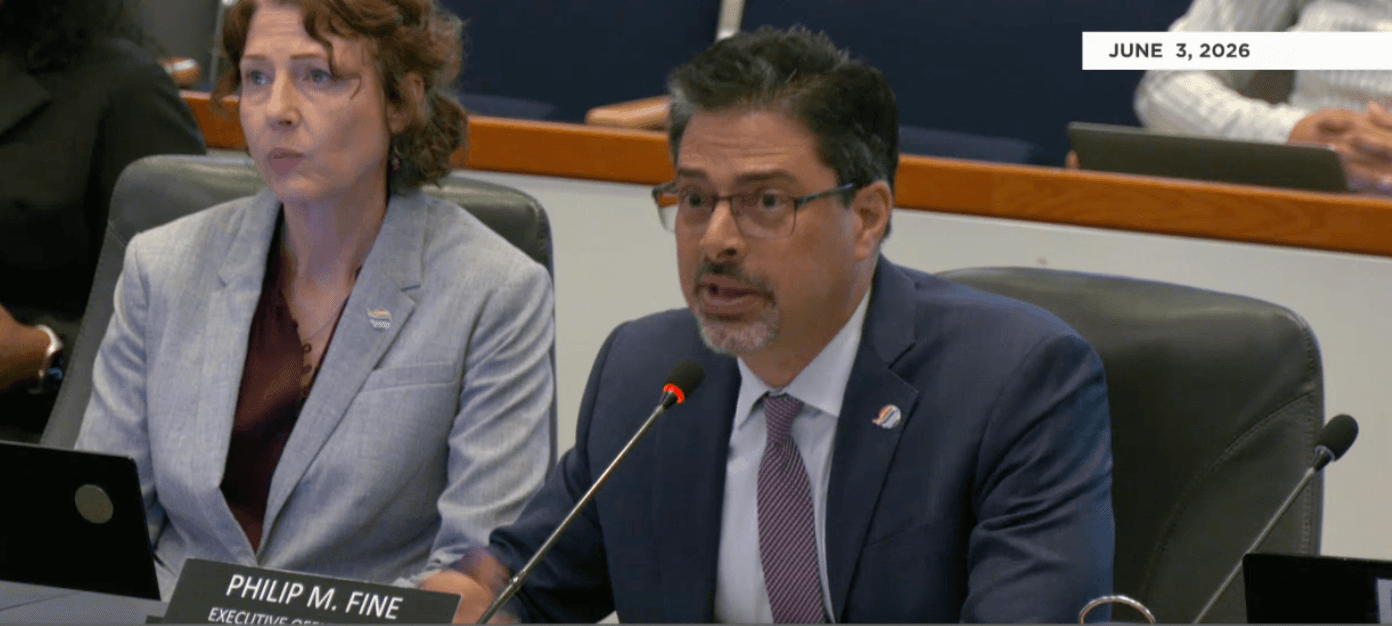
Executive Officer/APCO Dr. Phil Fine defended the budget structure: "These fee increases are not intended to improve levels of service. They are intended to fill the gap between the work that we're doing averaged over the last three years versus what we're collecting." He noted the budget proposes zero new FTEs.
Vice Chair Vicki Veenker acknowledged the district is navigating two transitions simultaneously — pursuing 100% cost recovery while investing in personnel and technology to speed permitting — and expressed confidence staff is acting in good faith.
But several directors issued explicit warnings. Director Juan Gonzalez voted yes but cautioned: "I would not be as supportive approving a similar resolution next year. Let's find a way to get there quickly." Director Rico E. Medina, who also serves as League of Cities president, demanded measurable progress on the permitting backlog: "I truly believe in making sure when it comes to cost containment, we need to do that. But I am very, very hesitant — I want to see the data for next year."
Director John Gioia, who chaired the meeting as pro tem, pushed back on industry's annual complaints: "I've heard the same complaints about fees, and we are working to make them as cost effective as possible. But even when cost recovery was clearly less than 100% to major industry, the same argument was fees are too high." He also noted that CARB's recent cap-and-invest decision gave industry a larger financial benefit than any permit fee reduction under discussion.
Director Steve Young questioned whether the district should continue charging Valero full annual renewal fees given its closure and raised the case of a Benicia coffee shop forced to pay a full year's permit fee with only 30 days remaining.
Decisions: The budget and Regulation 3 fee amendments passed unanimously among voting members present (For: 15, Against: 0, Absent: 8; Director Adams recused). Fees take effect July 1.
What's next: Board members made clear they expect measurable progress on cost containment and the permitting backlog by the next budget cycle. Staff will also assess the potential impact of CARB's cap-and-invest changes on district funding.
Board Overhauls Air Toxics Rule to End Nine-Year HRA Bottleneck
The basics: Rule 11-18, adopted in 2017, was designed to reduce health risks from toxic air contaminant emissions at existing facilities — but in nine years, not a single facility has completed the full process from health risk assessment to risk reduction plan. The Phase 1 amendments adopted June 3 shift the responsibility for preparing preliminary HRAs from district staff to the facilities themselves, using district-approved protocols. The district retains authority to review, correct, approve, and if necessary take over the process. A socioeconomic analysis found the average annual cost per facility would be $11,600, and the district committed to conducting HRAs for all 24 identified small businesses at no cost.
Why it matters: Communities near refineries and industrial facilities have waited nearly a decade for health protections this rule was supposed to deliver. Staff said the amendments should allow four to five HRAs per year — matching South Coast AQMD's pace — a dramatic improvement from near-zero under the current process. Phase 2, addressing stringency and action risk levels, will follow separately.
The Conflict of Interest Debate
The deepest fault line: should facilities prepare their own health risk assessments?
Dr. Phil Fine used a building inspector analogy: "You would never ask the building department inspector to create the plans for the building based on information that was potentially old or different or not even knowing what the purpose of the building is."
Caitlin Alcontin of CBE — speaking on behalf of five organizations — maintained concerns about the inherent conflict of interest and requested the district make its evaluation rubric and criteria publicly available. Kathy Carriage of the Benicia Community Air Monitoring Program echoed the concern, warning based on her experience with fence line monitoring that industry-prepared work requires robust expert staffing to verify.
Industry largely supported the facility-prepared HRA concept but objected to specific provisions. Peter Okorowski of CEEB offered 11 proposed modifications, including requiring agreed emissions inventories before HRA preparation. Todd Osterberg of Chevron argued the proposed rule creates an arbitrary distinction between legacy and non-legacy facilities and may conflict with a 2019 WSPA settlement agreement. Kevin Buchanan of WSPA objected to constraints on the dispute resolution panel. Courtney Mizutani of Bay Area Clean Water Agencies (BACWA) supported the approach but warned that public agencies cannot meet the proposed 60-day deadline due to competitive procurement requirements.
Decisions: The amendments passed (For: 11, Against: 0, Abstain: 1, Absent: 11). Director Steve Young abstained, stating he had missed half the presentation. Director Dionne Adams recused herself due to a PG&E financial interest.
What's next: Phase 2 amendments addressing action risk levels will come before the Board at a future date. Implementation procedures for facility-prepared HRAs are expected to begin taking effect in the coming months.
Union Challenges District's Bargaining Stance Before Closed Session
Two representatives of the BAAQMD Employees Association used public comment ahead of closed session labor negotiations to put their case on the record.
Kenny McKellar, an Employees Association representative, argued the union has made significant movement at the bargaining table — including concrete proposals on filling vacancies and the permitting backlog team — but that the district is treating its growing-our-own requests as hurdles rather than good-faith offers.
John Delarose, also representing the Employees Association, disclosed the union's last wage proposal: 4% in year one and 3.15% in year two — compared to the Executive Officer's contract, which provides up to 5% COLA. Delarose also raised concern that the district is seeking to eliminate longstanding mutual agreement protections without articulating a concrete problem with existing provisions.
No reportable actions were taken in the closed session that followed.
Only 40–45 Field Inspectors for Entire District, Community Member Warns
The Board approved the AB 2561 vacancy report — a state-mandated annual reporting requirement — with minimal discussion. The Employees Association, which has a statutory right to present, withdrew its participation, and the Executive Officer offered to waive the staff presentation.
But Patrick Messick of the Community Advisory Council delivered a pointed message: "Permits only matter if the district has the capacity to independently verify compliance. We have roughly 350 staff, but only around 40 to 45 field inspectors." He recounted accompanying an inspector to an East Oakland facility that had shut down before the 9 a.m. visit, where an apparent unpermitted major polluting operation was identified.
Decisions: Passed unanimously (For: 14, Against: 0, Absent: 9).
Minor Items
Consent calendar (Items 7–21) approved unanimously (For: 16, Against: 0, Absent: 7), including a $1.5 million Robert Half staffing contract, a $250,000 Johns Hopkins health impact research contract, Community Air Protection Program funds, and state legislation positions.
Toxic Air Contaminant Control Program annual report received as informational; presentation waived with no public comment or Board discussion.
Brown Act compliance and language access policies adopted per SB 707, establishing a broadcast technology disruption policy and restricting remote meeting locations to publicly accessible buildings within California. The district will begin translating Board agendas into Spanish, Chinese, Tagalog and Vietnamese starting July 2026. Director Medina questioned the need for Tagalog translation, noting English is widely spoken among Filipino Americans; General Counsel Alexander Crockett noted the requirement is based on American Community Survey data. (For: 10, Against: 0, Absent: 13.)
Meeting adjourned after quorum was lost before non-agenda public comment could be taken. Members of the public were directed to submit written comments or speak at the July 1 meeting.