
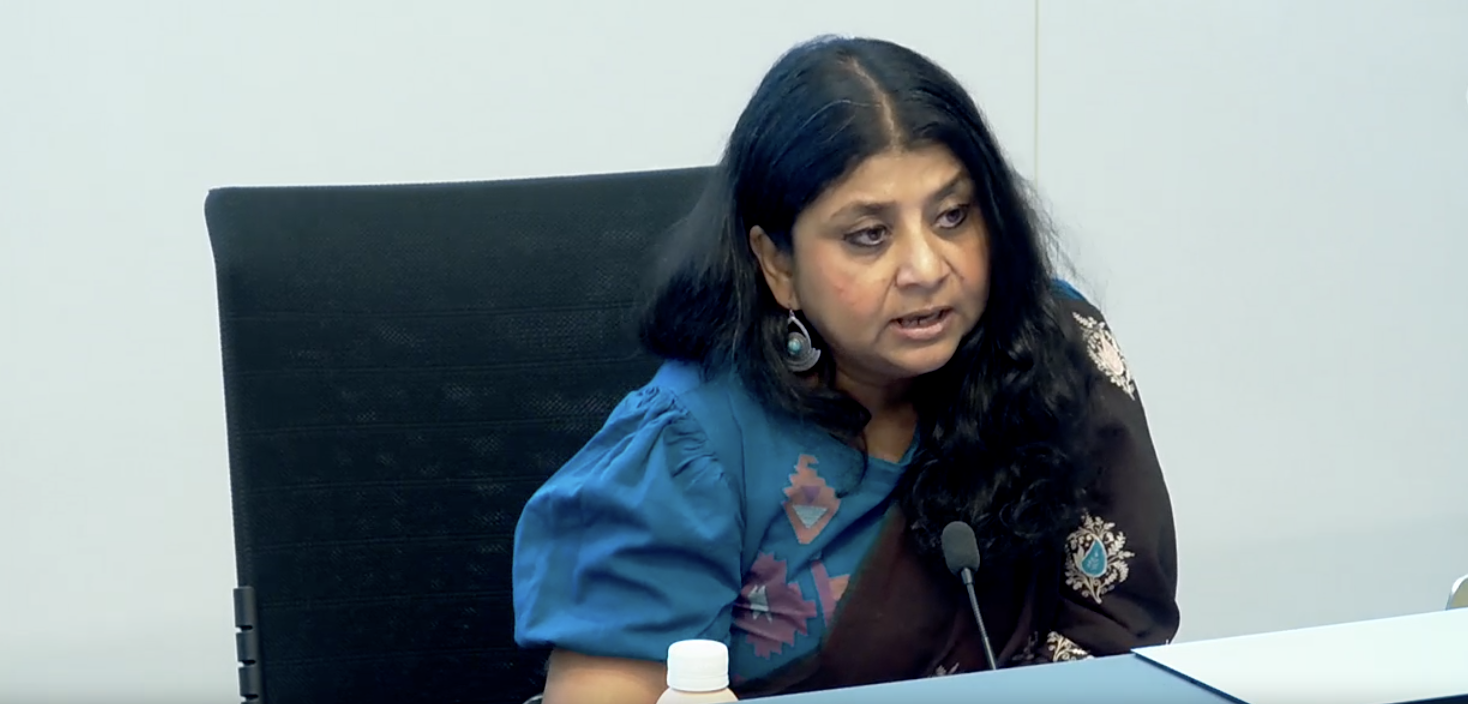
Board of Directors - Apr 09, 2026 - Meeting
Board of Directors • Bay Area Rapid Transit DistrictApril 9, 2026
Locunity is a independent informational service and is not an official government page for this commission.We use AI-assisted analysis and human editorial review to publish information.
BART Board Confronts $375M Deficit With Borrowing, Deferrals and a Bet on Voters
The BART Board of Directors received a sobering preliminary budget for fiscal year 2027 that closes a $375 million structural deficit almost entirely through one-time measures — borrowing, deferred retirement contributions, and accounting shifts — all contingent on a regional sales tax ballot measure passing in November. Directors pushed back on the scale of borrowing, challenged the general manager to find $50 million in expense cuts, and debated how to balance fiscal discipline with the very service investments driving a ridership rebound.
- $375M budget gap papered over with $98M in borrowing and $42M in deferred retiree health payments as staff prepares FY27 spending plan ahead of a June 11 adoption vote
- Board Chair challenges GM to hit $50M in non-labor expense reductions, signaling directors want less reliance on debt before the final budget
- March ridership hits 20% above last year with fewest train delays in a decade, reaching nearly 230,000 riders in a single day
- Board unanimously backs three federal transit bills that could unlock billions for operations, TOD planning, and safety — as the White House proposes cutting existing transit funding
- Metal theft bill tabled after vice president cites recent criminal law expansions and ACLU opposition
- Illegal dumping enforcement bill passes 6-0-1, giving DMV authority to hold vehicle registrations for unpaid fines
A Budget Built on Bridges — and a Bet on November
The basics: BART's FY27 preliminary operating budget faces a $375 million structural deficit. Staff proposes closing the gap almost entirely with one-time measures while the agency waits for a regional operating revenue ballot measure expected before voters in November 2026. Even if that measure passes, new revenue won't flow until approximately April 2027 — creating a nine-month cash chasm.
Why it matters: Three-quarters of the gap is closed with mechanisms that carry real long-term costs: roughly $98 million in borrowing (via TIFIA or a state loan, details still pending), a $42 million deferral of Retiree Health Benefit Trust contributions that will add $6.5 million per year in costs for 30 years starting in FY28, a shift in sales tax accounting from cash to accrual to recognize two additional months of revenue, and significant capital contribution deferrals. Staff is also eliminating 63 vacant operating positions, trimming total FTEs from 4,600 to 4,537.
Budget Director Christopher Simi laid out the stakes plainly: "The preliminary budget assumes new revenue from a regional operating measure expected on the ballot in November. That's a pretty big assumption underlying the budget — I want to be very clear about that."
On the long-term cost of deferred retiree health contributions, Budget Director Simi warned: "That's going to increase costs by about $6.5 million a year for 30 years beginning in FY28."
Even with a successful ballot measure, the five-year outlook still shows a $59 million residual deficit in the first full year of new revenue. Budget Director Simi characterized that as "a lot more manageable than $375 million," noting that "if you look out to FY31, you can see the deficits are steadily declining, which is a positive sign."
Borrowing Sparks 'Credit Card' Warning
The borrowing strategy drew sharp pushback from Director Matthew Rinn, who argued for deeper FTE reductions — as much as 5% rather than the 1% proposed — and warned against the fiscal trajectory: "It's kind of the analogy of living on a credit card. You're getting by, but you're just lading yourself with future debt."
Director Rash Ghosh took the opposite position, defending current staffing levels as essential to service quality. "For me, it's important that we look at the service we're running and the budget we have and what it takes to maintain that service rather than look at our ridership," she said. AGM Pamela Herhold confirmed that the FY27 budget includes no fare increase, adding: "Obviously if the measure fails and we fail to secure funding, all bets are off."
Vice President Edward Wright connected the staffing debate to the board's core strategy: "We as a board have been saying over and over that we want to invest in safety and we want to invest in cleanliness and we want to invest in reliability. And that means investing in people because it's people who do the hard work that make BART safe, clean and reliable."
Clipper Fee Surge and the $50M Challenge
A 92% increase in Clipper and bank fees emerged as a major cost pressure point. AGM Herhold explained the problem traces to Clipper 2 rollout challenges: "Tap and ride — it's the only really reliable form of fare payment we have right now. Individuals are walking up to a fare gate, tapping and paying $3.50 for a single fare, and that's driving up the credit debit fees for BART and for the region."
Board President Melissa Hernandez floated the idea of a BART-branded credit card to reduce per-transaction bank fees, asking staff to explore the concept.
The sharpest directive came from Director Janice Li, who challenged General Manager Bob Powers directly: "Bob, I want to challenge you. Can you get us to 50 million in expense reductions for FY27?" Director Li also pushed the board to make hard choices: "I would say maybe a little counter to what Director Flores said. I want us to make some policy decisions about which options we think as a board make the most sense." She requested a full list of all expiring and renewing external contracts over the next 18 months.
GM Powers acknowledged the challenge but cautioned against the appearance of easy math, pointing to service investments that fuel ridership: "The restroom attendants are an asset to our riders. It's one of those gears that we've used, all nine of us, that drive our ridership up. It makes the service better."
What's next: The board will take up the final budget for adoption at its June 11 meeting. Between now and then, directors signaled they want staff to present deeper non-labor expense reduction options and a clearer picture of which bridge mechanisms carry the least long-term cost. Director Victor Flores requested a 15-year financial independence roadmap.
Ridership Surges, Delays Plummet — and BART Needs Both to Hold
Why it matters: With the November ballot measure as the agency's financial lifeline, BART's case to voters rests on demonstrating that transit investment is working. March's numbers make that case.
General Manager Bob Powers reported that March 2026 ridership ended 13% above budget and 20% above the prior year. The single highest ridership day since the pandemic was March 25 at just under 230,000 riders, coinciding with the Giants' opening night. The second-highest post-pandemic Saturday came three days later at 152,000.
GM Powers drew a direct line between service quality and ridership recovery: "If you couple the two together, the ridership and our reliability, what we're doing is working. Ridership is going up. Folks are feeling better about taking public transportation."
March also recorded the fewest train delays in the past 10 years. GM Powers also highlighted a recent transit ride with Congressman Mark DeSaulnier at Pleasant Hill station, describing the congressman's engagement with frontline employees and continued support for BART.
At roughly 50% of pre-COVID levels, the gains — while encouraging — are far from sufficient to close the structural deficit without new revenue.
Board Backs Three Federal Bills as White House Threatens Transit Cuts
Why it matters: Congress is preparing the next surface transportation reauthorization, and BART is trying to shape it — even as the president's proposed budget would cut existing transit appropriations by ending advance appropriations under the Infrastructure Investment and Jobs Act.
Staff presented three federal bills for board support: HR 3449, the Stronger Communities Through Better Transit Act by Rep. Hank Johnson, which would create a $20 billion-per-year formula grant program for transit operations with nearly 150 House co-sponsors; HR 7298, the Connecting Communities Through Transit Planning Act by Congresswoman Latifah Simon and Rep. Sarah Jacobs, making the FTA transit-oriented development planning pilot permanent at $75 million per year with eligibility expanded to pre-development work; and SB 3455, the Moving Transit Forward Act by Senators Van Hollen and Fetterman, creating formula grants for transit safety, security, and rider experience.
Director Robert Raburn flagged a more urgent threat, noting that the president's April 3 budget "does not request to continue any advance appropriations under the Infrastructure and Investment and Jobs Act, which results in substantial cuts to key public transit and passenger rail investments." He requested staff return with a full impact analysis.
Decisions: All three bills were supported 8-0, with Director Liz Ames absent.
Metal Theft Bill Tabled After Civil Liberties Concerns
Why it matters: Metal theft costs BART in damaged fencing, substations, and stolen catalytic converters — but the board split on whether further criminal definitions are needed after two recent expansions of theft law.
Staff recommended supporting AB 1941 by Assemblymember Mark Gonzalez, which would create the crime of organized metal theft and authorize DOJ data sharing among agencies. Vice President Wright pulled the bill for separate discussion, expressing discomfort: "Given the two recent major expansions in criminal provisions around metal theft, I would prefer to see how those impact this issue before we define a whole new category of crime and expand criminal provisions around that as well."
He cited AB 476, enacted in 2025, and Prop 36, approved by voters in November 2024, as already broadening criminal provisions around theft, and noted ACLU opposition to the new bill. Director Ghosh agreed she lacked sufficient information to support it.
Director Raburn supported the bill and asked BART Chief of Police Kevin Franklin to weigh in. Chief Franklin confirmed metal theft is a significant and resource-intensive problem for the agency.
Director Janice Li asked for prosecution statistics and evidence of direct impact before any future vote.
Decisions: AB 1941 was tabled without a vote and placed on a watch list, to be revisited when more information is available.
Illegal Dumping Bill Advances Despite Efficacy Questions
Where things stand: SB 1218 by Senator Jesse Arreguín, co-authored by Assemblymember Mia Bonta and sponsored by Oakland Mayor Barbara Lee, would allow the DMV to refuse vehicle registration renewal for delinquent illegal dumping fines. Oakland has collected only $109,000 of $1.3 million in dumping fines over three years — underscoring the enforcement gap the bill aims to address.
The other side: Director Ghosh abstained, questioning whether the mechanism would actually work: "I just don't have enough evidence that taking away somebody's vehicle registration is actually effective." She flagged that no committee analysis was yet available and expressed concern that people might simply drive unregistered.
Board President Hernandez spoke strongly in favor, noting the severity of illegal dumping in Alameda County. Director Raburn pointed out that BART itself operates several dump trucks daily to clean up debris near its properties. Director Janice Li noted the bill creates no new criminal charge — a key distinction from AB 1941.
Decisions: SB 1218 passed 6-0-1. Director Ghosh abstained. Director Flores recused due to employment with the senator's office, and Director Ames was absent.
Board Honors Transit Pioneer Rod Diridon Sr.
Director Raburn delivered an extensive tribute to Rod Diridon Sr., who passed away April 3, 2026, at age 87. As chair of the Santa Clara County Board of Supervisors, Diridon championed the first half-cent transit sales tax in California in 1976. He helped create Caltrain and the Capitol Corridor service, oversaw VTA light rail's 1991 opening, and served as founding director of the Mineta Transportation Institute.
After the 1989 Loma Prieta earthquake, Diridon led the effort to save and rebuild San Jose's central station, which was later renamed in his honor. San Jose Diridon Station now serves Capitol Corridor, Caltrain, ACE, and VTA — and is the planned terminus for both California High Speed Rail and BART's Silicon Valley extension.
The board adjourned its meeting in Diridon's memory. A public commenter named Roland announced plans to present a Diridon Station integration proposal to the Diridon Committee in May, carrying forward the transit pioneer's vision.
Minor Items
- Consent calendar approved 8-0, including minutes from the March 26 meeting, an amendment to the Ogletree Deakins legal services contract, a Hart Design Build wayfinding improvements contract, and a Goebel Construction slope stabilization contract.
- BART's 2,000th board meeting was noted at the call to order.
- Board President Hernandez announced summer meeting breaks on July 23 and Aug. 27.
- AFSCME Local 3093 President Sal Cruz told the board the union submitted a formal letter requesting closed session to address a March 30 management decision, emphasizing the union's restraint to protect the coalition supporting the regional transit ballot measure.
- Public commenter Barney Smits urged the board to create a separate subcommittee for BSV2 (BART Silicon Valley Phase 2) project oversight, citing safety standard deviations and the Inspector General's December report.
- Public commenter Roland urged the board to codify a procedure for unsolicited bids from the private sector, citing the Transbay Joint Powers Authority's approach as a model.
- The board entered closed session for labor negotiations with the BART Police Managers' Association and with AFSCME, SEIU, and ATU.