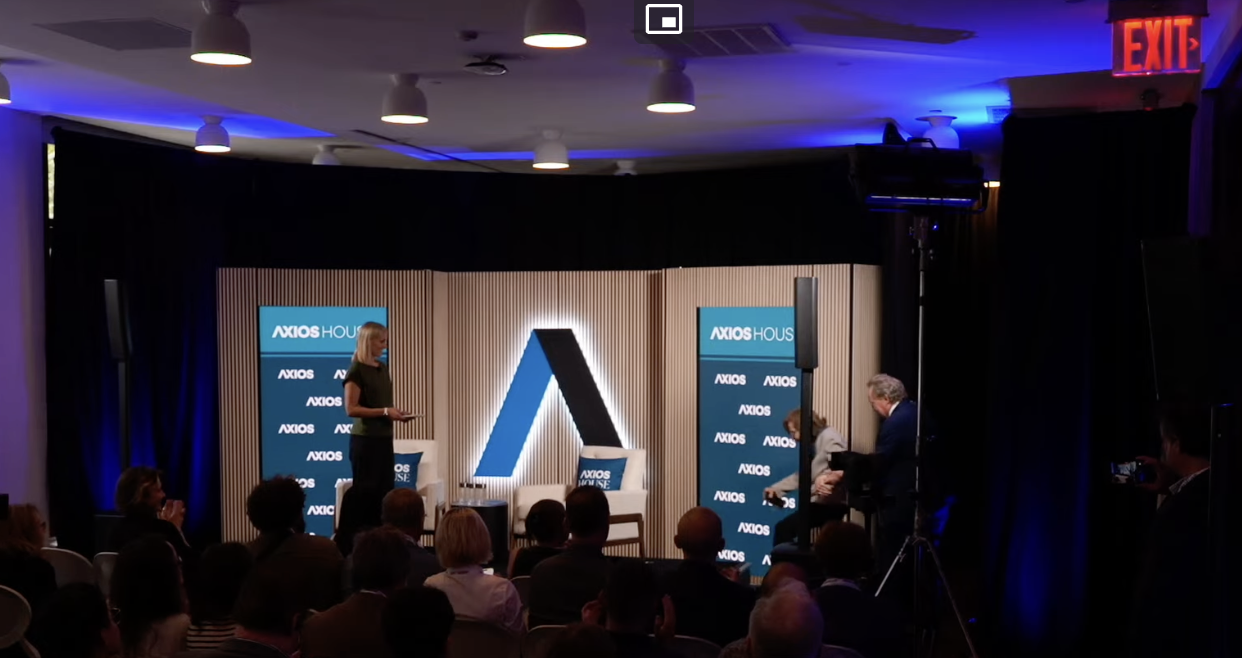
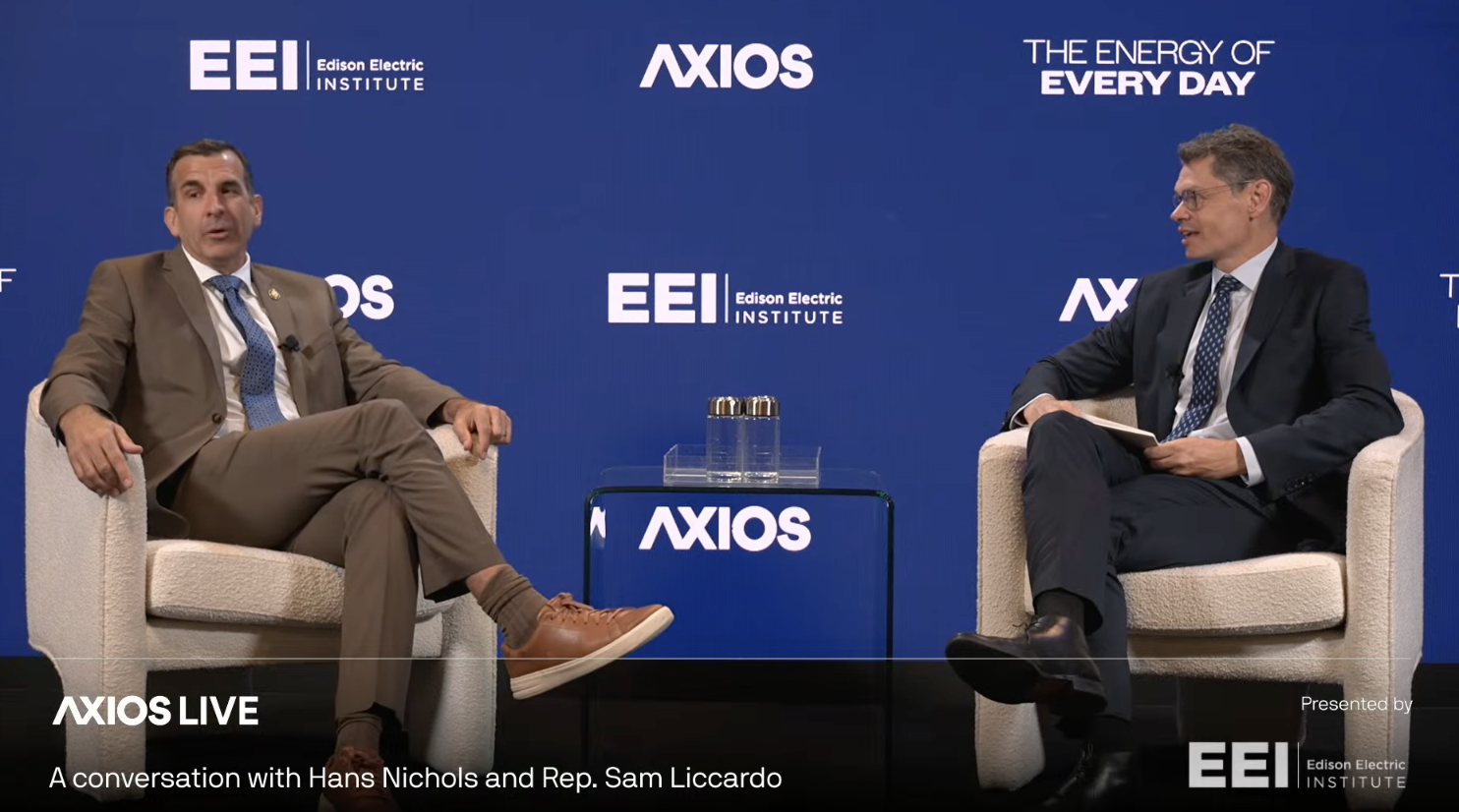
Axios' live interview and discussion series held alongside major global gatherings, including Climate Week NYC and the UN General Assembly. Sessions bring together leaders from government, business and civil society to examine energy, climate, technology and international affairs.
Location not listed
Schedule not listed
Locunity is an independent informational service and is not an official government page for this commission. All information is sourced from public footage and an analysis of official agendas with the aid of responsible, fact-checked AI. to report an error or omission.
Medicare Drug Price NegotiationAxios House21d agoSeptember 23, 2026
HLC Opposes Medicare Drug Price Negotiation, Warns It Would Inhibit Innovation
The Healthcare Leadership Council argues that Medicare drug price negotiations and most-favored-nation pricing would undermine the investment environment needed for US biotech leadership.
Why it matters: With China accelerating its biopharma ambitions, policies that reduce incentives for private R&D investment could push capital overseas at a critical competitive moment.
HLC CEO Calls Health Coverage Foundation for Access to Breakthrough Medicines
Maria Gozold argued that ensuring insurance coverage—through government programs, employer plans, or ACA exchanges—is the prerequisite for patients to access expensive biotech treatments.
Why it matters: Breakthrough medicines are meaningless if patients cannot afford them; coverage decisions in H.R. 1 and ACA exchange policies will determine real-world access.
United Nations
National Security Commission On Emerging BiotechnologyAxios House21d agoSeptember 23, 2026
Over Half of 49 Biotech Security Recommendations Now Law, But Key Gaps Remain
Sen. Young says the commission has enacted over half its 49 recommendations into law, but the top priority—a central biotech strategy coordinator—remains unimplemented.
Why it matters: Without a single person owning biotech strategy across all federal agencies, the US risks fragmented responses as China advances a coordinated national plan.
United Nations
GenentechAxios House21d agoSeptember 23, 2026
Genentech's AI 'Lab in the Loop' Compresses Drug Discovery From Years to Months
Genentech CEO Ashley Magary described how AI-driven iterative lab experiments are already accelerating early-stage drug development and expects AI to enable earlier disease diagnosis.
Why it matters: Drug development currently costs $2–3 billion per molecule with a 90% failure rate; AI could dramatically improve success rates and compress timelines, getting treatments to patients faster.
United Nations
FDAAxios House21d agoSeptember 23, 2026
Calls to Modernize FDA From Static Documents to Data-Driven Real-Time Reviews
Both Rep. Delaney and Genentech's CEO called for FDA modernization, including platform-based approvals and data-driven review processes to keep pace with biotech innovation.
Why it matters: The current sequential, document-based FDA approval process takes 10–15 years per molecule; failure to modernize risks slowing the benefits of AI-accelerated drug discovery.
United Nations
ChinaAxios House21d agoSeptember 23, 2026
Speakers Warn US Risks Losing Biotech Race to China Without Urgent Action
Multiple panelists warned China is closing the biotech gap through massive government investment, standard-setting presence, and biological data collection at scale.
Why it matters: China is attempting to genetically sequence 1% of the world's population and leads in biomanufacturing, creating potential leverage over US drug supply chains and warfighter capabilities.
United Nations
SCALE ActAxios House21d agoSeptember 23, 2026
Bipartisan SCALE Act Would Fund NIST to Set Biotech Data Standards
Rep. Delaney's bipartisan SCALE Act would empower NIST to create trusted biotech measurement standards, estimated at $350 million over five years.
Why it matters: Without reliable, standardized biotech data, US companies and regulators cannot leverage AI effectively, risking ceding global standard-setting to China.
Fusion Startup Approaches 'Kitty Hawk Moment' as Prototype Nears Completion in Massachusetts
Commonwealth Fusion Systems CEO says a working fusion prototype will demonstrate significant energy production within a year, with a commercial plant planned for Virginia.
Why it matters: If fusion proves viable at commercial scale, it would provide virtually unlimited, zero-emission, dispatchable power—fundamentally reshaping the global energy system within decades.
United Nations
Published Reports
Track this commission to get the latest reports in your inbox