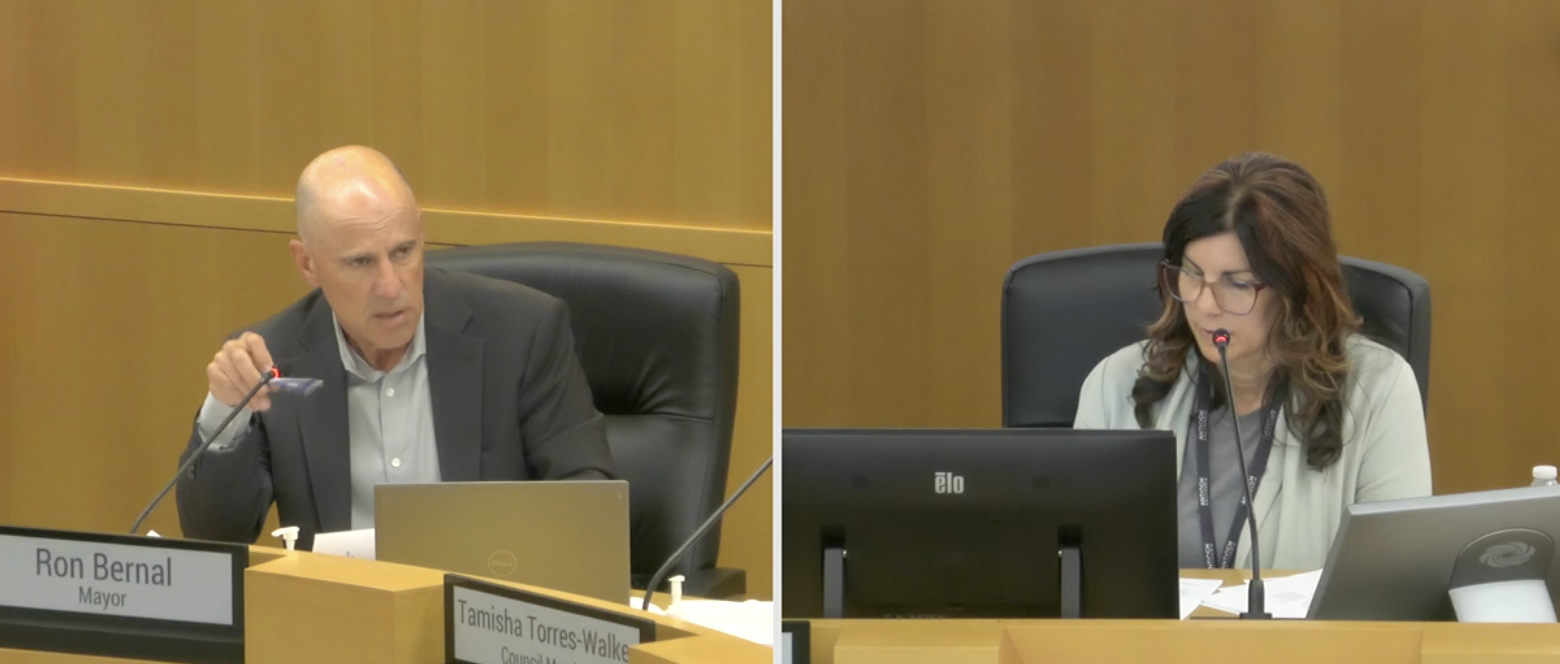
City Council - May 13, 2026 - Special Meeting

City Council - May 13, 2026 - Special Meeting

City CouncilAntiochMay 13, 2026

Sources:

Locunity is a independent informational service and is not an official government page for this commission.We use AI-assisted analysis and human editorial review to publish information.

Antioch Confronts $18M Deficit as Council Freezes Positions, Demands Answers on Animal Services

Antioch's City Council spent more than four hours last Tuesday in a special budget session that laid bare the city's fiscal reality: a general fund deficit projected to balloon from $11.5 million this year to $18.4 million next year, driven largely by personnel costs and an ambitious plan to add 12 police officers the department cannot yet recruit. Council responded by freezing a half-dozen positions, establishing a new policy requiring council approval before any future vacancy is filled, and pressing staff on everything from a three-year-old animal services leadership vacuum to a boat launch pay station removed during COVID.

  • General fund deficit projected at $11.5M for FY26-27, rising to $18.4M by FY27-28 as 12 new police officers reach full salary and reserves approach the 20% floor

  • Council freezes 6+ positions and requires approval before any future vacancy is refilled, establishing a new hiring-control mechanism as personnel costs climb toward $80M

  • Animal services manager vacancy hits three years; council directs public records request to Contra Costa County — and threatens legal action — to determine what taxpayers are owed

  • Police department at 85 of 117 authorized officers, with 40–50% academy attrition making the staffing goal years away

  • Up to $800K in CDBG funds eyed for Homekey Plus property purchase, potentially saving general fund dollars ahead of a May 26 deadline

  • Economic development marketing budget slashed from $430K to $200K; travel and training spending flagged for tighter oversight


The Budget Cliff: $11.5M Deficit Today, $18.4M Tomorrow

The basics: Finance Director Dawn Merchant presented revised general fund projections for the Antioch City Council's second day of budget study sessions, showing a FY26-27 deficit of $11.5 million that shrinks to $6.5 million only after a $5 million transfer from the budget stabilization fund — a one-time fix that cannot be repeated indefinitely.

Why it matters: The numbers get worse quickly. FY27-28's projected deficit jumps to $18.4 million, assuming full staffing plus 12 new police officers at $3.3 million. These projections exclude cost-of-living adjustments because bargaining-unit negotiations are still underway — meaning the real gap could be larger. Personnel costs are projected to grow from $61 million to $80 million over three to four years, a 33% increase that forms the structural core of the problem.

Where things stand: Merchant warned that by FY29-30, the city would breach its 20% reserve target. "You can see by fiscal year 29-30, we're below the 20% reserve level and a very unsustainable balance of just about $12 million," said Merchant.

To offset the bleeding, the vehicle replacement fund set-aside of $1.7 million was removed for one year, drawing on the $8 million-plus fund balance — another one-time maneuver. A user fee study could add approximately $1.79 million in new revenue once adopted at the May 26 council meeting. "Adding in the revenue projections from the user fee study, the 1.8 million, that's going to take a big chunk out of that," Merchant noted.

The other side: Mayor Ron Bernal acknowledged progress even as the hole remains deep. "We started with a $54 million deficit and now it's down to 13, down to 28 million. So it's been cut in half, basically, which is great," he said. But Mayor Pro Tem Donald Freitas was less sanguine, warning that the trajectory could lead to state intervention. "I'm going to tell you, in 2027, maybe 2028, there's going to be a crash. The money just isn't going to be there," he said.

What's next: Budget adoption is scheduled for May 26. The council's willingness to freeze positions and impose hiring controls signals that personnel costs — the dominant expenditure category — will be the central battleground going forward.


Police at 85 Officers, With No Quick Fix in Sight

Why it matters: The gap between the police department's 117 authorized positions and the 85 officers currently on the force represents both a public safety shortfall and a budget distortion. Budgeting for officers who cannot be hired inflates spending assumptions and obscures the true deficit.

Where things stand: Captain Bittner gave the council a sober rundown: one officer is in the academy graduating in July, four more graduate in October, and four start at month's end. Best case, the department reaches roughly 94 officers by calendar year end. But academy-through-field-training attrition runs 40–50%, making even that projection optimistic.

"As right now we're at 85 still, we have one currently in academy graduating in July, four others in academy graduating at the end of October, and then four starting the academy at the end of this month," Captain Bittner reported.

No lateral officer applicants have shown interest recently, though there has been some lateral activity at supervisor and lieutenant levels. The budget assumes 12 new trainees entering the academy in January 2027 at a cost of $631,460, but Captain Bittner indicated getting 12 into the academy simultaneously would be challenging given limited local academy spots of four to five per class. A COPS grant was previously received and returned because the match requirements and supplemental staffing mandate were infeasible when the department cannot even reach its baseline.

Mayor Bernal pushed for honesty in projections. "We don't want to go into a budget with a huge salary savings built into it if we're not going to actually achieve — we want to be realistic with our numbers," he said.

Captain Bittner also made the case for the community service officer program, explaining that CSOs handle jail transports, reports, and registrations so sworn officers stay on patrol. "If an officer makes an arrest and they need to go to county jail in Martinez, rather than having an officer drive 30 minutes there, wait 30 minutes for the intake, drive 30 minutes back, that's an hour and a half, sometimes two hours where an officer's off the street," he said.

Decisions: Council directed staff to develop realistic staffing projections that maintain the 117 authorization as a goal but budget based on achievable numbers. The discussion also flagged AB 2561, a state law requiring cities to report vacant positions and explain to unions why vacancies exceeding 20% have not been filled — adding a new layer of transparency pressure.


Council Freezes Positions, Seizes Control of Hiring

Why it matters: In the most consequential governance shift of the session, the council established a new policy: every position that becomes vacant must be frozen until council affirmatively approves refilling it. Combined with immediate freezes on more than six positions, the move gives elected officials direct authority over headcount in a city where personnel costs are the primary driver of structural deficits.

Where things stand: Acting City Manager Ana Cortez presented a comprehensive vacancy report covering all general fund positions. Council walked through them one by one:

  • Assistant city manager: Frozen for an additional six months (nine months of total vacancy savings).

  • City manager's administrative analyst: Frozen pending evaluation of a purchasing officer position.

  • Public records coordinator (city clerk): Six months of vacancy savings.

  • One code enforcement officer: Frozen.

  • One animal control officer: Frozen, while the technician position was kept open.

  • Assistant city engineer: Frozen.

  • One economic development program manager: Six months of vacancy savings.

  • Recreation positions: Deferred to the director for prioritization between coordinator and supervisor.

Police and public safety positions were explicitly left unfilled but not frozen. Councilmember Louie Rocha drew a clear line: "Anything that has to do with public safety, not going to be in favor of freezing or reducing. I'm just coming out and saying that right now."

Decisions: Mayor Bernal formalized the new vacancy-control mechanism: "I would request that as positions become vacant, that they're frozen until it's an affirmative approval by council to reauthorize." The exact dollar savings from the combined position freezes were not totaled at the meeting; staff will bring consolidated figures on May 26.

Councilmember Rocha also pressed a broader question the council will need to keep answering: "What is the operational baseline to provide public safety, streets, public works — where is that at? And then look at what we can afford."


Three-Year Vacancy, Daily Overcrowding: Animal Services Under Pressure

Why it matters: Antioch's animal shelter operates at capacity daily with four of 12 budgeted positions vacant — including the top leadership role, which has gone unfilled for three years despite three recruitment attempts. The general fund subsidy has risen from $1.7 million in FY23-24 to a projected $2.8 million, and council members signaled frustration that Contra Costa County may owe the city animal services funding through property taxes that residents are already paying.

Where things stand: The police chief, who oversees the animal services division, acknowledged the facility is outdated and too small. Mayor Bernal asked what difference filling the four vacancies would actually make: "What will that do to the level of service if those four positions were filled? Like, how are we going to see folks say, wow, this is such a better experience?"

Mayor Pro Tem Freitas was more pointed about the manager vacancy, calling it a leadership failure. "We have to make this a priority if we want accountability and transparency and proper supervision. I'm challenging staff to come back with a plan on how we recruit this position," he said.

Council members also addressed community confusion about the shelter's future. Residents had circulated concerns that the city was planning to close or sell the shelter — which council attributed to misunderstandings around exploratory discussions about potential county collaboration.

The county question: Freitas pushed for a formal public records request to Contra Costa County to determine what animal services funding Antioch taxpayers contribute through property taxes — and whether the city is receiving its share. "I would suggest that we direct staff to do that, frankly, and if we don't get the information, then I think we need to look at other legal things, which may mean sue the county for that information," he said. Council directed staff to file the request and to brief the council on the status of any county negotiations.


Measure W Stays at 70-15-15

Why it matters: The Measure W 1% sales tax generates roughly $20 million annually, making its allocation one of the most consequential decisions the council makes each budget cycle.

Where things stand: Finance Director Merchant presented the current split — 70% to police, 15% to quality of life (public safety and community resources excluding youth), and 15% to youth services — and noted the allocation is entirely discretionary. The ballot measure language specifies general services but does not mandate any particular split. Historical allocations have ranged from 80-10-10 to 60-20-20.

Councilmember Rocha asked whether incoming grant funding, such as CalVIP, should affect the ratio. Finance Director Merchant explained that grant-funded programs sit in separate special revenue funds and do not reduce the general fund allocation regardless of the Measure W designation.

Decisions: Council affirmed the 70-15-15 split for FY26-27 without change.


$800K CDBG Shift Could Ease Homekey Plus Costs

The basics: Homekey Plus is a state-supported permanent supportive housing project. The current FY25-26 budget includes $400,000 in general fund money toward the property purchase, with the state expected to provide up to $34.9–$35 million.

Why it matters: Councilmember Rocha, who serves on the CDBG subcommittee, reported that staff recommended allocating up to $800,000 from returned Hope Solutions CDBG funds toward the Homekey Plus property purchase. If approved, the move could eliminate the $400,000 general fund contribution and potentially reduce the FY26-27 commitment as well.

What's next: Council action is needed by May 26. There are unresolved questions about when the city's $1.2 million annual Homekey Plus operational commitment begins — before or after the facility is built and operational.


Parks Director Generates $37K in New Revenue, Council Proposes Teen Sports Fund

Where things stand: Director Wright reported nearly $40,000 in new revenue through creative initiatives: sponsorships ($9,000 to date versus $5,000 all of last year), senior memberships ($11,000), a park picnic program ($9,800), special event permits ($4,300), and a $3,000 Rossi Foundation grant for youth scholarships. Adult softball has grown from near-collapse to 24 teams thanks to field improvements.

"Last year, in our short run, we raised $5,000 in sponsorships for special events. This year to date, just getting started, we're at 9,000," said Director Wright.

Why it matters: Council identified a gap in programming for the 14-to-24 age group — too old for youth programs, too young or unconnected for the public safety community resources division's at-risk services. Council directed staff to explore a $10,000 teen recreational activities fund, potentially partnering with Deer Valley High School for after-school programs and three-on-three basketball tournaments.

Councilmember Rocha made the case for investing in youth sports as more than recreation. "One of the things that often gets overlooked is the value that high school, secondary school athletics provides to students because they have an experience where they are partnering up with classmates who come from different socioeconomic situations," he said.


Minor Items

  • Economic development marketing budget cut from $430K to $200K pending hiring of new department staff; the remainder will be evaluated once an economic development team is in place.

  • Travel and training spending flagged for review across all departments. Mayor Pro Tem Freitas questioned whether five APOC commissioners attending the same out-of-state training could create Brown Act concerns, and pushed for tighter travel policies.

  • Landscape enhancement funding not carried forward into FY26-27. Council requested a list of completed projects with photos, cost estimates for improving city entrances at Buchanan Road, Summersville, and Lone Tree, and an update on the landscaping master plan. A consultant is on board for a potential Prop 218 assessment.

  • Marina enterprise fund continues running a $700K+ annual general fund deficit. Loans do not pay off until 2039. Council asked staff to report back on loan balances and interest rates and to evaluate whether a pay station removed during COVID from the boat launch needs to be reinstated for grant compliance.

  • Downtown maintenance district receives no local assessment revenue and is entirely general fund subsidized.

  • Juneteenth and special events: Council will continue funding Fourth of July, Juneteenth, and National Night Out from the general fund while directing other events to secure external funding. Councilmember Rocha and Mayor Bernal volunteered to convene divided community organizer groups to try to restore community-funded models for Juneteenth. The $50,000 community civic enhancement grants program was paused.

  • Water fund revenues projected to increase from $47 million to $53 million due to approved rate increases and an estimated 200 new service connections per year. The sewer master plan update costs over $600,000.

  • Townsend legislative advocacy contract flagged for potential reduction if the city hires a dedicated grant writer, per Mayor Pro Tem Freitas.

Antioch Confronts $18M Deficit as Council Freezes Positions, Demands Answers on Animal Services | City Council | Locunity