Board of Supervisors - Jun 02, 2026 - Regular Meeting
Board of Supervisors • Alameda CountyJune 2, 2026
Locunity is a independent informational service and is not an official government page for this commission.We use AI-assisted analysis and human editorial review to publish information.
Board Approves $37M Bridge to Rescue Behavioral Health Programs From Prop 1 Cuts
The Alameda County Board of Supervisors marshaled tens of millions in local dollars to prevent the collapse of community mental health services, cleared the last debt on the Oakland Coliseum, and mounted a unified attack on a state bill they called a politically motivated assault on county authority. The June 2 meeting stretched across more than five hours of public testimony, staff presentations, and fiery board debate — a session that revealed how deeply the county is relying on its own voter-approved tax revenue to absorb shocks from Sacramento and Washington alike.
$37M bridge funding plan approved to keep dozens of behavioral health programs running through the Prop 1 transition, drawing on Measure W and internal health department funds
Supervisors unanimously condemn SB 1193, a state bill restricting discretionary funding to nonprofits, calling it political retaliation targeting only Alameda County
Controversial $149,100 Measure D polling contract delayed to June 4 after conservation groups and residents challenge competitive bidding and use of public funds
Coliseum freed of all bond debt as board terminates final lease and trust agreements, clearing the path for redevelopment
Child welfare vacancy rate drops to 25.6% but over 1,500 referrals remain open as state weighs additional oversight
Measure W surplus redirected to essential services, funding affordable housing, emergency shelters, and food security amid federal cuts
$37 Million Buys One Year for Behavioral Health Programs
The basics: California's Proposition 1, the Behavioral Health Services Act, restructured how counties fund mental health and substance use programs — eliminating the prevention and early intervention category that sustained $52.7 million in Alameda County contracts. The board approved a one-year, $36.9 million bridge funding plan to keep most of those programs alive through FY 2026–27.
Why it matters: Without this stopgap, dozens of community organizations serving deaf, immigrant, Filipino, Chinese, South Asian, Afghan, and other underserved populations would have closed or drastically reduced services by July 1.
Where things stand: Health Director Anika Chowdhury, Alameda County, presented the funding breakdown: $18 million from the Measure W Essential County Services Fund, $7.8 million from the Home Together Fund, and $11 million in internal AC Health dollars. She confirmed that 11 of 13 underserved ethnic language population (UELP) prevention providers opted into an early intervention Medi-Cal billing model to sustain funding at current contract levels.
"Filipino Advocates for Justice is restored and should be on that list. So our apologies for that," said Chowdhury, acknowledging a typo had omitted the organization from the board letter.
Deaf Community Counseling Services, operated by the Felton Institute, was also confirmed as restored after extensive testimony.
The other side: Providers in the Prevention Matters Collaborative warned the transition fundamentally changes their work. Chris, Filipino Advocates for Justice, listed 10 UELP organizations initially missing from the bridge funding roster. Preet, Hume Center, said providers retain only 10% of their outreach capacity under the new early intervention model. Pysay Phinith of Maru (formerly Korean Community Center of the East Bay), representing the Prevention Matters Collaborative, argued the early intervention opt-in requires Medi-Cal enrollment and clinical diagnosis — excluding undocumented residents and the uninsured from the very services designed to reach them.
Five speakers rallied to save Deaf Community Counseling Services. Margo Simpson, a deaf educator and foster parent, described how DCCS provided ASL-based therapy for her deaf daughter who came through the foster system from Guatemala. Alyssa Lamont, a clinical case manager at DCCS, said the program is one of the few places where deaf clients feel seen, heard, and supported. Dr. McBride cited statistics showing deaf individuals are two to three times more likely to experience serious mental health conditions.
Decisions: Passed unanimously (For: Miley, Tam, Haubert, Márquez, Fortunato Bas; Against: none; Absent: none).
What's next: Staff will issue provider notifications and bring contract amendments in July, with advance payments to avoid service gaps. The broader question of how prevention work survives under the state's new framework — which shifts that funding from counties to the state public health department — remains unresolved.
Supervisors Blast SB 1193 as Political Retaliation
Why it matters: SB 1193, authored by State Senator Aisha Wahab, passed the State Senate 37–0 with two abstentions and now heads to the Assembly Local Government Committee. If enacted, it would impose new restrictions on how supervisors direct discretionary funds to community nonprofits — a tool the county calls critical for responding to crises like federal HR-1 cuts.
Where things stand: Supervisor Nate Miley requested the status update. Amy Costa, Founder and CEO of Full Moon Strategies, traced the bill's origins to Orange County corruption scandals but noted SB 1193 targets only Alameda County. The bill defines discretionary funding broadly, requires majority board approval for awards, mandates public logging, and prohibits supervisors from voting on discretionary items within 90 days of their election.
"1193 is an overreach on the part of the state. Alameda County is a charter county. We have certain responsibilities as elected officials," said Miley, calling the bill "unconscionable."
Board President David Haubert went further:
"The language of this bill was added after members of this board endorsed another candidate. Then this comes out. Then this targets Alameda County. Then this ties to an election cycle."
Vice Chair Lena Tam called the definition of discretionary funding "increasingly problematic," describing it as "a solution in search of a problem."
County Administrator Susan Muranishi confirmed the senator never contacted the county before introducing the bill. Auditor-Controller/Clerk-Recorder Melissa Wilk described existing compliance processes already in place.
Community organizations testified about the real-world stakes. Mitch Sigmund, co-founder of School of Imagination, described how discretionary funds saved their autism therapy program when grant cycles could not reach them in time. Susan Munkner, Board President of Tri Valley Partners and a pastor from the Oakland Private Industry Council, also spoke in support of the county's discretionary funding authority.
What's next: The board directed continued advocacy as SB 1193 moves to the Assembly. CSAC (California State Association of Counties) is also tracking the bill.
Measure D Polling Contract Pulled After Bipartisan Outcry
The basics: Item 62 proposed a $149,100 contract with Team Civics of Orinda to poll voters and develop campaign strategy regarding potential amendments to Measure D, the voter-approved open space and agricultural land protection measure originally passed in 2000 and amended in 2022.
Why it matters: The battle over Measure D pits agricultural interests seeking regulatory flexibility against conservation groups defending voter-approved open space protections in eastern Alameda County — and the question of whether public funds should bankroll political polling sharpened the conflict.
Where things stand: The item drew the largest volume of public comment, with sharp divisions. Opponents from Sierra Club Tri Valley, Friends of Open Space and Vineyards, and Mission Peak Conservancy raised three main objections: the contract exceeds the county's $100,000 informal bidding threshold and received only one bid; public funds should not finance political campaign strategy; and the traditional stakeholder working group process should be used instead.
Kelly Abreu, co-founder of Mission Peak Conservancy, argued the contract violates the county's own procurement rules. Dick Schneider, co-author of the original Measure D in 2000, urged consensus-building over polling and provided historical context on how the measure's stakeholder processes have worked.
The other side: Griffin B. Miller, a rancher and wine grower, urged a yes vote, arguing the poll is simply due diligence to gather public opinion before deciding on any changes. Other agricultural operators echoed the view that Measure D has not helped agriculture.
Decisions: The item was continued to a June 4 special meeting because the contract was not attached to the agenda — a procedural issue that gave opponents additional time to organize.
What's next: The board will take up the item at its June 4 special meeting.
Coliseum Complex Cleared of All Debt
Why it matters: Clearing the final lease and bond trust agreements removes the last legal encumbrances on the Oakland-Alameda County Coliseum complex, opening the door for potential redevelopment of the storied site.
Where things stand: The board terminated the Coliseum Ground Lease, Master Lease, and Defeased Arena Bonds Trust Agreement, completing a process that began in fall 2025 with the stadium parcel. County Administrator Susan Muranishi confirmed the arena bonds were defeased on Feb. 1, 2026, and termination documents would be recorded shortly.
Supervisor Nate Miley, who has served since before the 1986 bonds were issued, called the milestone "a champagne moment."
"This is a big deal. We have paid off the mortgage basically on the arena and the Coliseum in the city of the county. Own it outright," said Miley,
Decisions: Approved as part of the mass motion (For: Miley, Tam, Haubert, Márquez, Fortunato Bas; Against: none; Absent: none).
Child Welfare Audit: Progress and Persistent Pressure
Why it matters: Alameda County's child welfare system remains under state scrutiny following a September 2024 audit that exposed systemic staffing shortages. The state auditor has created a staff complaint hotline and is considering a return visit this summer.
Where things stand: Assistant Agency Director at Alameda County Social Services Agency, Michelle Love delivered the ninth DCFS status update. Key metrics:
the vacancy rate is 25.6%, down 10 percentage points since the audit
7 of 15 recommendations are fully implemented
1,734 open referrals remain, including 375 pending closure
March 2026 saw a 47.6% increase in investigated referral volume
the department has hired 48 bachelor's-level workers since 2023 and continues aggressive recruitment
CDSS conducted an on-site review on March 26 that included focus groups with 26 workers and 15 individual interviews. A staff survey also showed 77% felt workplace connection.
Board President Haubert pressed on whether State Senator Wahab's DCFS task force meetings were productive. Director Love was blunt:
"It's directed by the senator and her staff. So I would say it's a one way street."
Haubert responded that the task force felt like "nothing more than a political stunt".
Supervisor Elisa Márquez pushed to keep the updates before the full board rather than referring them to the Social Services Committee:
"Anything that has to do with safety, well-being, especially of children within Alameda County, we have to continue to give it the time and energy that it deserves," Márquez argued.
Supervisor Nate Miley withdrew his motion to refer the matter to committee.
What's next: The state auditor may return for additional on-site reviews. Future updates will remain on the full board's agenda.
Measure W: The County's Emergency Toolkit
Multiple agenda items directed tens of millions in Measure W sales tax revenue across the county's most pressing needs. The board amended the excess revenue policy (Item 86) to redirect surplus to the Essential County Services Fund — a move that gives the county flexibility to absorb federal HR-1 cuts and state budget shortfalls rather than reserving surplus solely for housing.
Supervisor Nate Miley highlighted $4.7 million for Liberation Park, a 119-unit permanently affordable housing development on a former Goodyear tire site in East Oakland's Black Cultural Zone, noting the Measure W funds helped "close the funding gap." The mass motion also included $13.1 million for emergency shelter stabilization and a boost of the Food Bank contract to $20 million.
Food security advocates turned out in force. Allison Pratt, Alameda County Community Food Bank, reported that partners are seeing increased demand and Measure W funding supports hundreds of organizations. Maria Alderete, Co-Executive Director & Co-Founder of Community Kitchens, said demand has doubled since November and warned that SNAP work requirements begin in October. Caronica Puni, Saba Grocerious Initiative, asked for continued support for Market Match programs providing fresh produce to corner stores.
Supervisor Marquez requested a comprehensive overview of Measure W expenditures to correct public misperceptions about how the funds are used.
Minor Items
Fireworks ban ordinance adopted for unincorporated Alameda County ahead of July 4 (Item 101; For: 5, Against: 0, Absent: 0).
County management employee MOU and salary ordinance amendments adopted (Item 74; second reading waived).
Traffic regulations ordinance adopted for county highways (Item 122; second reading waived).
PAL Committee recommendations approved supporting three state bills: AB 2081 (Medi-Cal), AB 1575 (disabilities), and AB 1924 (homelessness prevention) (Items 152–155).
Five public hearing items approved for FY 2026–27 special tax and assessment rates: vector control services, EMS ($42.42 per benefit unit), supplemental paramedic tax (2.48% CPI increase), clean water protection fee, and flood control district assessments (no rate change).
Timber Senior Apartments celebrated: Supervisor Marquez noted the grand opening of 79 affordable senior apartments in Newark, funded with $5.4 million in Measure A1 bonds.
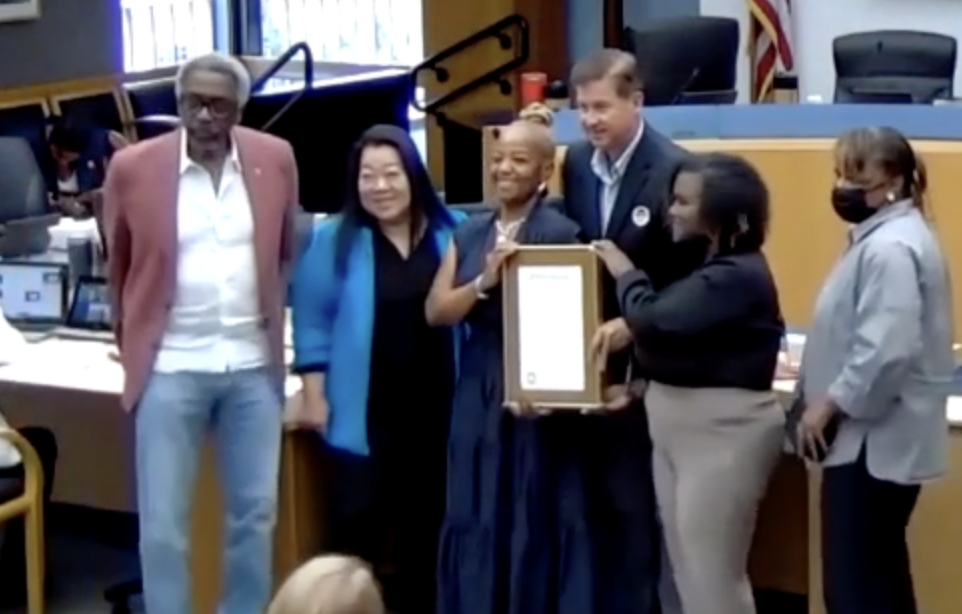
Proclamations issued for Elder Abuse Awareness Month, Jewish American Heritage Month, and LGBTQIA+ Pride Month.