Board of Supervisors - Aug 06, 2026 - Special Meeting

Board of Supervisors - Aug 06, 2026 - Special Meeting

Board of SupervisorsAlameda CountyAugust 6, 2026

Sources:

Locunity is a independent informational service and is not an official government page for this commission.We use AI-assisted analysis and human editorial review to publish information.

Alameda County Board Sets Six Strategic Priorities in Wide-Ranging Retreat

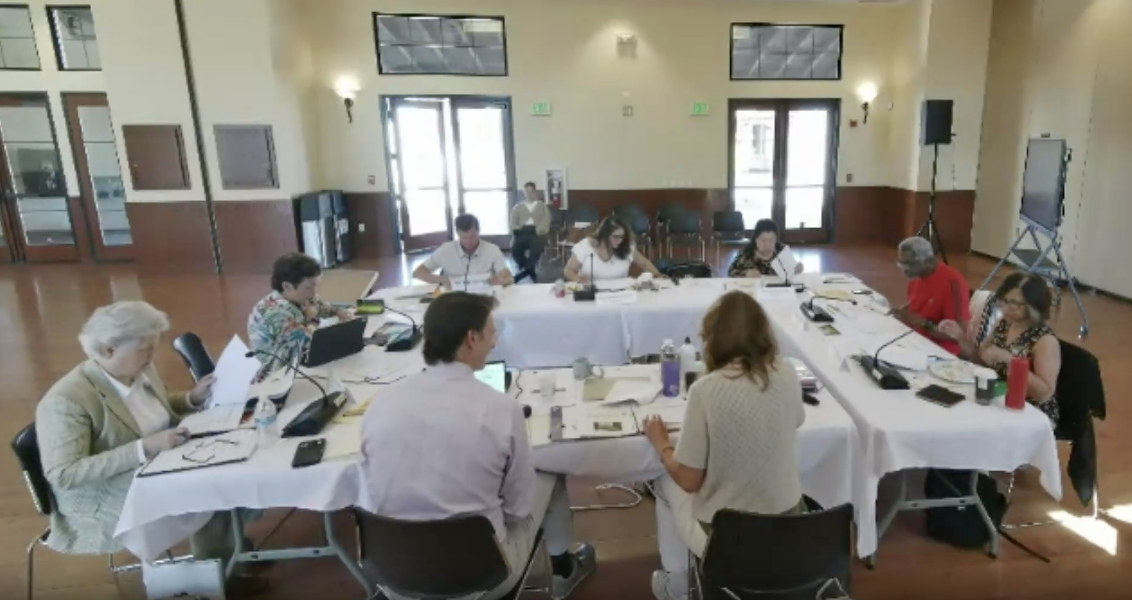
The Alameda County Board of Supervisors used Day 2 of its special retreat to narrow more than 20 competing initiatives down to six top priorities — immigrant affairs, EMS, child welfare, reparations, Alameda Health System and homelessness — while agreeing to eliminate joint committee meetings and begin culling its sprawling roster of 116 boards and commissions.

  • Board names six priorities and assigns champions through a dot-voting exercise covering the next 12–18 months

  • Joint policy committee meetings eliminated, with cross-cutting issues rerouted to full board work sessions starting in September

  • Supervisors Tam and Marquez tasked with recommending which of the county's 116 boards and commissions to cut by December

  • President Haubert demands urgency on homelessness, calling for outcomes-based contracts; Supervisor Marquez fires back that cities must do their part on housing

  • Reparations work transitions from study to action as standing committee replaces ad hoc body, with appointments due Sept. 15

  • St. Rose Hospital birthing center restoration identified as top priority alongside broader AHS financial sustainability concerns

Editor's Note: Due to a technical bug, the August 5th retreat was missed by Locunity's reporting agent. The issue has been corrected. Apologies for the delay.


Six Priorities, Six Champions

The centerpiece of the retreat was a priority-setting exercise in which each supervisor identified their top initiatives on flip chart paper before the full board converged through dot voting. County Administrator Susan Muranishi had presented a "wheel" of more than 20 active board initiatives — from Coliseum negotiations to climate action to child welfare — and warned the board that staff capacity was finite.

"We just don't have the bandwidth to do an excellent job on everything," said County Administrator Muranishi.

Why it matters: With over 20 initiatives competing for staff time, the exercise gives Muranishi clear marching orders on where to focus discretionary resources — and, implicitly, what to deprioritize.

Where things stand: The six priorities that emerged, along with their board champions:

  1. Office of Immigrant and Refugee Affairs — championed by Supervisor Elisa Marquez, with plans to hire a director and second position by year-end. An implementation study has already been distributed.

  2. EMS Redesign — championed by Supervisor Nate Miley with Vice Chair Lena Tam as supporter. Options are to be presented to the health committee before year-end, with urgency driven by the existing Falck contract extension deadline.

  3. Improved Child Welfare — championed by Vice Chair Tam with Supervisor Nikki Fortunato Bas supporting. A corrective action plan is underway in response to the Sophia Mason case, with state monitoring ongoing. Supervisor Marquez was blunt about the failures: "It just highlights how we missed the mark not once, not twice, but like 30 times. And that is absolutely unacceptable."

  4. Reparations — championed by Supervisor Miley with Supervisor Marquez supporting. A new standing committee will review the action plan delivered by the citizens' advisory commission (see below).

  5. Alameda Health System — championed by Supervisor Miley and Supervisor Fortunato Bas. The AHS budget is scheduled to go before its Board of Trustees in September (see below).

  6. Homelessness — shared across all five supervisors, with Supervisor Fortunato Bas volunteering to take the lead. A Home Together 2030 plan update is expected this fall (see below).

Second-tier priorities included food security, East County and wine region development, ballot measure renewals for Measures A, C and W, the Coliseum and arena negotiations, a county efficiency initiative starting with an environmental health audit, and wildfire prevention.

What's next: Staff will organize work around the six priorities, with champions expected to drive timelines through their respective committees. The board agreed to schedule its next full retreat in the first quarter of 2027 under the incoming board president, with a commitment to meet at least twice per year.


Haubert Pushes Panic Button on Homelessness

Homelessness was the one priority every supervisor claimed — but the discussion exposed sharp disagreements over pace, accountability and who deserves the blame.

Board President David Haubert delivered the session's most impassioned remarks, expressing deep frustration that years of plans had not translated into visible results, particularly in his East County district where point-in-time counts increased even as they declined elsewhere. "If our hair is on fire, that plan would already be implemented and people would be saved. I just don't see the progress in it," he said. Haubert called for outcomes-based contracts rather than performance-based ones, a designated "czar" approach, and work sessions formatted as genuine working discussions rather than staff presentations. He also criticized the disconnect between county plans and city-level implementation, noting Livermore had its own ideas that had not been reconciled with the county's framework.

The other side: Supervisor Marquez offered a pointed counterargument, noting that the bulk of Measure W funding was only released in the last six months after the ballot measure was held up in litigation for four years. She turned the accountability lens toward cities: "Every city that's complaining to you, ask them what they're doing to approve affordable housing and strengthen tenant protections. Because a lot of the cities in your district don't want to do anything."

Supervisor Fortunato Bas volunteered to champion the issue, emphasizing staff partnerships with cities and engagement of people with lived experience. Supervisor Miley suggested a pilot program in East County and proposed a homelessness dashboard similar to one used during the pandemic.

What's next: The Home Together 2030 comprehensive plan update is expected this fall. Haubert's push for outcomes-based contracts and a more hands-on governance posture could reshape how the county measures and funds its service providers.


AHS and the Fight to Bring Babies Back to Hayward

The Alameda Health System's interconnected crises — financial sustainability, governance reform and the suspended birthing center at St. Rose Hospital — emerged as a top-tier priority backed by multiple supervisors.

Supervisor Marquez made reinstating labor and delivery at St. Rose her number one personal priority: "Number one priority is reinstating the birthing center at St. Rose Hospital. We've already identified $4 million for capital improvements through our Measure C pediatric fund." The hospital suspended labor and delivery when it became an AHS affiliate, meaning no babies are currently born in Hayward.

Vice Chair Tam framed the issue in system-wide terms: "The first and foremost is preserving access to health care by having a financially sustainable and viable Alameda Health System. Whether it's St. Rose, Alameda Hospital, Highland Hospital, John George, all of that."

Supervisor Miley noted the AHS ad hoc committee — which he and Fortunato Bas lead — had been meeting almost monthly with AHS management and labor unions, improving communication and transparency. Supervisor Fortunato Bas identified three key threads: financial sustainability, governance and the birthing center. A pending state senate bill on AHS governance is expected to require further board discussion.

What's next: The AHS budget goes before its Board of Trustees in September, with a health committee update around the same time.


From Study to Action: Reparations Standing Committee Takes Shape

The board confirmed the transition of its reparations work from an ad hoc committee to a standing committee, as authorized by a June 30 board action. The ad hoc body was deemed to have completed its mandate by producing a comprehensive draft action plan.

Supervisor Miley, who championed the effort, praised the citizens' advisory committee's work, saying it did "a marvelous job, more than I would have anticipated." The new standing committee, chaired by Miley with Marquez as supporter, will sort the action plan's recommendations into three categories: initiatives the county is already undertaking, those needing enhancement, and entirely new recommendations. Miley noted that some recommendations carry fiscal implications requiring careful analysis.

Separately, the board discussed the Russell City Redress Fund, where Supervisor Marquez and Supervisor Miley had publicly pledged an additional $250,000 each from their district office equity funds, with an action to formalize that commitment in September. Marquez emphasized keeping the Russell City work distinct from the broader reparations committee, as its MOU governance structure with the City of Hayward was already in place.

What's next: Board President Haubert is tasked with appointing standing committee members by Sept. 15.


Trimming the Bureaucracy: 116 Boards in the Crosshairs

The county currently maintains 116 boards, commissions and committees — up from 62 in 1992, with six new bodies created since January alone. The roster includes 27 joint powers agencies, 27 outside boards, eight policy committees and 54 other advisory bodies. County Administrator Muranishi presented the historical growth data, and the board expressed near-unanimous commitment to cutting the number.

Vice Chair Tam illustrated the burden: "The reason it's a five for me is because I have staff. One person dedicated to filling 160 boards and commissioners and she has to go through interviews." She volunteered herself and Marquez to develop initial recommendations: "Elisa and myself work with the county administrator and start with the elimination of the low hanging fruit committees and then make a recommendation to the full board."

Supervisor Marquez called the inconsistency across boards "embarrassing" when recruiting commissioners. She also urged the board to temper its ambitions, warning that past reform efforts had been derailed by crises: "Every time we get started, there's something that eclipses that."

Interim County Counsel Andrea Weddle noted her office had already prepared a spreadsheet identifying mandated, dormant and redundant bodies during its SB 707 compliance review — a ready-made starting point. The board declined to set a specific percentage reduction target, preferring to let data drive decisions. Key issues flagged included the lack of clear stipend policies, staffing costs, and the need to categorize bodies as mandated versus discretionary.

What's next: Supervisors Tam and Marquez will bring initial reduction recommendations to the full board by December.


Joint Committee Meetings: Done

In a structural change that could save hundreds of staff hours annually, the board agreed to stop holding joint policy committee meetings — sessions that typically involved three or more supervisors and effectively constituted a board quorum, requiring staff to present the same material multiple times.

Going forward, cross-cutting issues will be routed to the full board as set matters, informational items, or work session topics. The change takes effect in September.

The board also sunset the Public Safety Community Relations ad hoc committee, established during the George Floyd era, which had not met in years. The Together for All ad hoc committee, addressing impacts of federal policy changes, was retained with a planned 2028 review. Supervisor Fortunato Bas described its value: it had heard from community members and staff "on the impacts on health care, food security, the LGBTQ community, immigrants and refugees" and helped inform budget recommendations. The AHS ad hoc was retained with a January 2027 review, and the surplus property authority ad hoc continues as-is.


Haubert Sounds Alarm on Wine Region and County Permitting

Board President Haubert used the priority-setting exercise to spotlight two issues unique to his East and South County district. On the Livermore Valley wine region, he warned: "If we don't do something, we're going to lose our wine region. You heard it here first. I heard it from the wine people two years ago. So I'm sounding the alarm." He said wineries were going out of business and acreage was not being replanted.

Haubert also took aim at the county's permitting apparatus: "It is so hard to do anything in our county. Whereas people that do business in a lot of other counties say it is not that difficult. We need to fix that." He noted the county's land use code runs 300 pages compared to 50 in Contra Costa County.

He also advocated for a fairer geographic distribution of resources: "I'm not saying that we need the same resources as north county, but east and south county needs to get its fair share."


Minor Items

  • No public comments were received during the closed session public comment period.

  • Closed session: Interim County Counsel Andrea Weddle reported no reportable action taken.

  • Supervisor Miley identified the Coliseum as a longstanding priority, noting he had pushed for 26 years to get the county out of the sports business. He also championed the county's disparity study for procurement equity.

  • The board discussed improving communications and public messaging, with multiple supervisors noting a public misconception that the county is "sitting on a billion dollars."

  • Food security was flagged as a second-tier priority. Supervisor Fortunato Bas highlighted her office's Food Sovereignty Roundtable.

  • Wildfire prevention was identified as a second-tier priority, with the East Bay Wildfire Coalition mentioned as an area of ongoing work.