
Supervisors Widen CALICO Child Interviews to Physical Abuse After Sophia Mason Review
Board of Supervisors • Alameda CountyOctober 6, 2026
Locunity is an independent informational service and is not an official government page for this commission. All information is sourced from public footage and an analysis of official agendas with the aid of responsible, fact-checked AI. to report an error or omission.
Alameda County will now send every child physical-abuse allegation, not just sexual abuse cases, to the CALICO Center for a single, recorded, trauma-informed interview. The $5.3M sole-source contract carries out a recommendation from the independent investigation the board commissioned after Sophia Mason's death. In the same Oct. 6, 2026, meeting, supervisors also adopted a legislative slate that a health care union says includes backing a billionaire wealth tax to offset Medi-Cal losses.
$5.3M CALICO contract expands forensic interviews to physical abuse, adding an estimated 60–90 interviews a month with automatic referrals.
Consent calendar passes 5-0, including a legislative slate that SEIU-UHW says includes support for Proposition 40's one-time wealth tax.
Eight Arts Leadership Awards bring the county's total honorees to 133, from Hayward's Sun Gallery to Oakland's Chapter 510.
CALICO Takes On Physical Abuse Cases
The basics: CALICO, the Child Abuse Listening, Interviewing and Coordination Center, is the county's only accredited child advocacy center. A forensic interview is a structured, recorded conversation with a child. It is designed to gather evidence once so the child doesn't have to repeat the story to multiple investigators.
Why it matters: Until now, county referrals to CALICO covered only sexual abuse. The new three-year agreement, running Oct. 1, 2026, through Sept. 30, 2029, for $5,329,484, extends that model to physical abuse. It responds directly to the Sophia Mason review.
"This is one of the recommendations from the independent investigation that this board commissioned, due to the loss of Sophia Mason," said Supervisor Elisa Marquez, District 2.
Where things stand: Social Services Agency Director Andrea Ford tied the item to Dr. Miranda's report, released in July 2026, and to her Sept. 22 child-welfare presentation to the board. Because the contract waives competitive bidding, the board also adopted a resolution authorizing the sole-source award.
The contract funds a director, a deputy director, two forensic interviewers and a family advocate. CALICO says it also covers a full-time referral coordinator. Ford estimated 60 to 90 additional physical-abuse interviews a month, on top of existing sexual-abuse cases. She said referrals will not need to pass through layers of supervisory approval.
"Now it will be automatically referred when it's allegations of physical abuse as well," Ford said in response to Marquez.
Pressing for details: Marquez asked about the minimum age for interviews, how referrals work and how quickly interviews happen. On timing, Ford said, "I don't have that information with me, but I can find out for you," though she noted a 24-hour process exists.
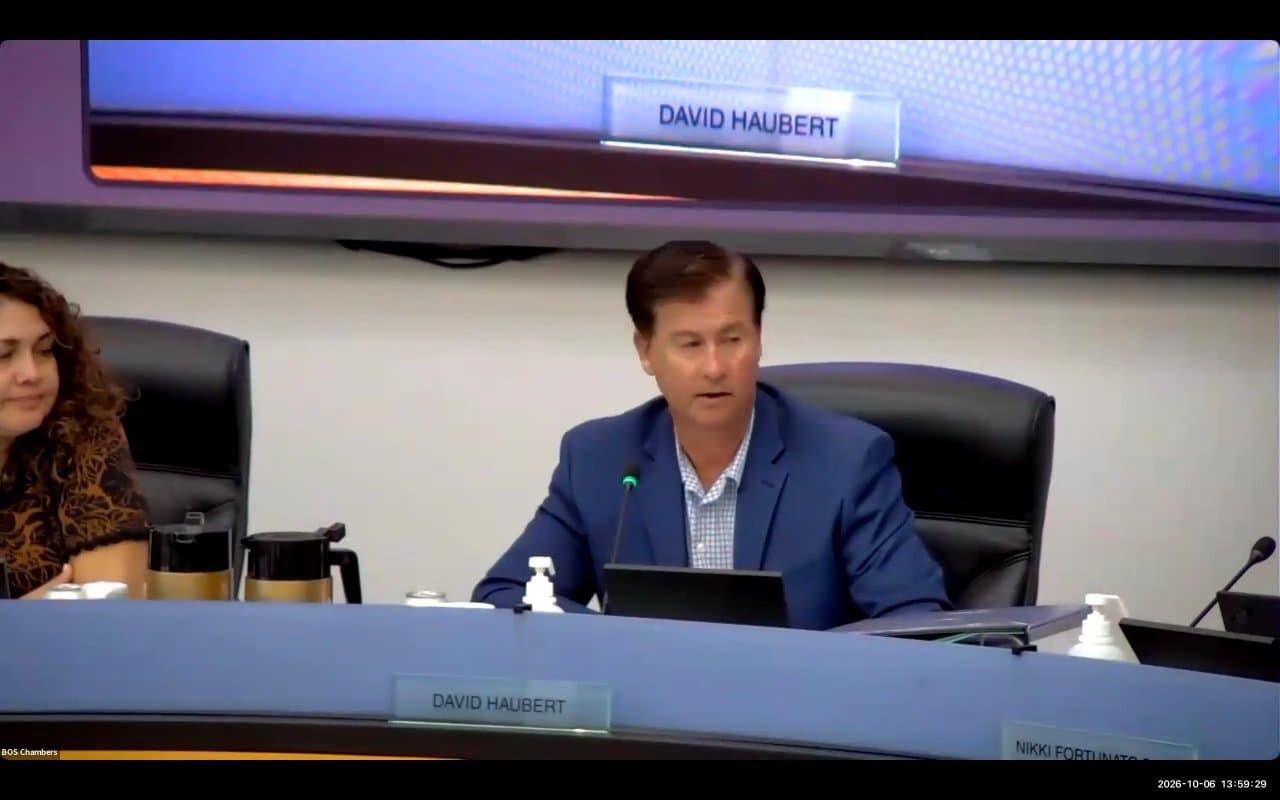
Interim Executive Director Holly Fleming of CALICO said the center serves the whole county from San Leandro and the Family Justice Center, and could add a third site if volume grows. Board President David Haubert had asked how CALICO reaches the Tri-Valley and South County. Fleming described phone-based triage with an after-hours line, and neutral, recorded interview rooms.
"Children interviewing in unsafe spaces like the home or in the back of a police car or in a park might lead children to recant, not because it did not happen," Fleming said. On age, she said interviews are adjusted to a child's development: "I myself have interviewed 2-year-olds."
Board Vice President Lena Tam pointed to CALICO's standing in the courts: "Even judges would often ask, has this child been Calico'd?" Supervisor Nate Miley, District 4, recalled touring the facility.
Decisions and stakeholder impacts: No one opposed the contract. It passed within the bundled mass motion, which Tam moved and Miley seconded. Only three yes votes were recorded during the roll call, from Marquez, Tam and Haubert. No responses were recorded for Miley or Supervisor Nikki Fortunato Bas, District 5. Children and families gain a single interview in place of repeated questioning. The District Attorney's Office and law enforcement gain more consistent evidence. SSA takes on a larger referral pipeline.
What's next: Ford committed to report back on interview timelines. Residents can read the staff report in Attachment 3 – CAO Recommendation.
County Slate Backs Wealth Tax, Union Says
Why it matters: Item 48 sets the county's official positions on state, federal and ballot measures, which shape its lobbying in Sacramento and Washington. Doug Jones, political organizer with SEIU United Healthcare Workers, said sub-item 48E puts the county behind Proposition 40. He framed it as a lifeline for local health care.
Where things stand: Jones said federal HR 1 and the recently passed state budget will strip Medi-Cal from more than 3.4 million Californians starting Jan. 1. He said the cuts will fall hardest on undocumented county residents and put St. Rose Hospital at risk.
"We know that the county has already ponied up about $15 million to prevent AHS from cutting behavioral health and other services along with 188 jobs," Jones said. He noted that the Alameda Health System backstop lasts only through year-end.
"This is necessary to pass Proposition 40, which is a one-time 5% wealth tax on just the state's 200+ billionaires," he said. Jones estimated the tax would raise about $100B over five years. He noted that Santa Clara County has endorsed it and credited Fortunato Bas and the subcommittee for advancing it.
The other side: No speakers opposed the item, and supervisors did not discuss it. The board did not read the full list of positions aloud. They are in Attachment 48, which the PAL Committee recommended at its Sept. 21 and Sept. 28 meetings.
Decisions and stakeholder impacts: The consent calendar, Items 43–49, passed on a motion by Tam, seconded by Miley (For: 5, Against: 0, Absent: 0). Health care workers, AHS and safety-net patients have the most at stake if Medi-Cal cuts land. The county's own budget is also exposed once its $15M bridge runs out.
Arts Honorees: Galleries, Literacy and Healing
Where things stand: Each supervisor presented 2026 Arts Leadership Awards during National Arts and Humanities Month. The Arts Commission founded the awards in 2023. With this year's eight recipients, the total reaches 133.
The honorees:
- District 1 (Haubert): Margaret Thornberry, a Fremont arts advocate.
- District 2 (Marquez): Doris Diaz and Carl Gorringe, who stabilized Hayward's Sun Gallery. Gorringe also founded Hayward Lit Hops.
- District 3 (Tam): Choreographer Tamara Atkins and Chapter 510 co-founder Janet Heller.
- District 4 (Miley): Randolph Bell of Evoke RBA Creative.
- District 5 (Fortunato Bas): Eritrean-born artist and mental health advocate Adeyam of Storytelling for Healing, and vocalist Faye Carroll.
"And art does save lives emotionally, spiritually, mentally," said Doris Diaz, board president and interim co-executive director of Sun Gallery.
Dorothy Lazard, a Chapter 510 board member, accepted on Heller's behalf. She said of the youth writing center's students: "Their test scores in schools are improving."
"I firmly believe that art and culture is critical to our society, our economy, our quality of life," said Supervisor Nikki Fortunato Bas, District 5.
Decisions and stakeholder impacts: No public commenters spoke, and no formal vote was recorded. Arts Commission Director Rachel Osajima closed the presentations. Separately, the bundled vote approved a California Arts Council grant of $74,250 a year, with a corrected term of Oct. 1, 2026, through Sept. 30, 2028.
Minor Items
Bundled spending: The mass motion included a $49.5M indigent care transfer to AHS and a $1.3M HEPPAC harm-reduction contract funded partly by opioid settlement money. Only three yes votes were recorded, and several items require 4/5 approval.
Homelessness staffing pulled: Item 14, nine unfunded Housing and Homelessness Services positions, was withdrawn at the department's request. It will return at a later date; no reason was given.
Violence prevention: District 3 allocated $100,000 in Vision 2036 grants to five providers. Lejon Loggins of the Khadafy Foundation urged funding for trauma victims' burial costs.
Pay and code enforcement: Code Enforcement Technician I and II jobs were adopted, effective Oct. 11 (For: 4; Fortunato Bas recorded "present"). Separately, 5% raises for deputies and ACMEA units were introduced on first reading.
Traffic safety: New no-parking zones in Fairview, Ashland and Castro Valley passed 5-0. The Sheriff's Office accepted a $326,500 Office of Traffic Safety grant, its first, Miley said.
Looking Ahead
The board's regular calendar now has a 1:30 p.m. time certain after closed session, though Haubert said the exact time could shift. "The goal is to be more effective, transparent, and allow for public engagement and predictability," Marquez said. Item 25's raises return for a second reading. Fortunato Bas's Alameda County Together for All ad hoc committee meets at 3 p.m. on an upcoming Thursday. It will hear a one-year food sovereignty update and speakers from the Electronic Frontier Foundation and Secure Justice on surveillance and data sharing. Tam's emergency preparedness forum is Oct. 17 at College of Alameda.
In Memory
The board adjourned in memory of Travis Foster, a Hayward firefighter since February 2018, Air Force veteran and member of Hayward Firefighters Local 1909, who struggled with PTSD. "His death is being recognized as a line-of-duty death," Marquez said. She led a moment of silence and urged first responders "to encourage anyone who is in need of help to please speak up."