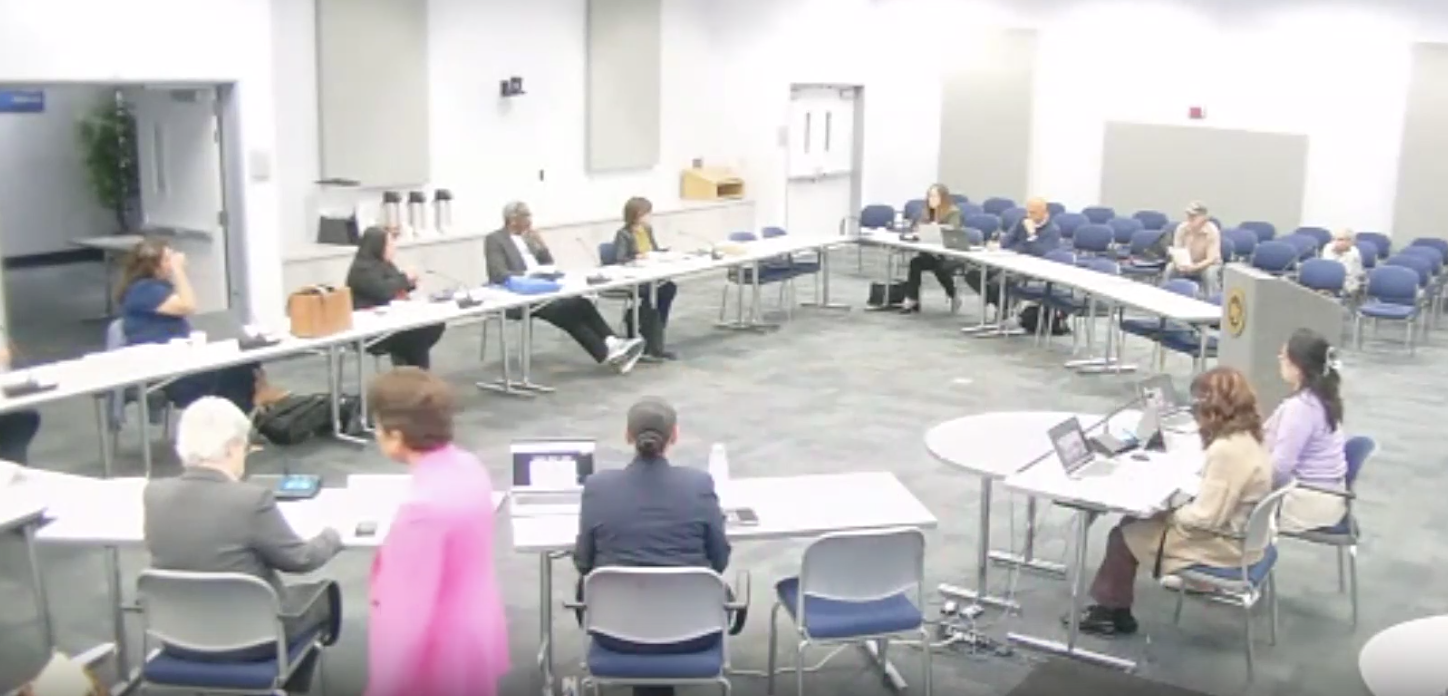
Board of Supervisors - Jun 04, 2026 - Special Meeting
Board of Supervisors • Alameda CountyJune 4, 2026
Locunity is a independent informational service and is not an official government page for this commission.We use AI-assisted analysis and human editorial review to publish information.
Board Approves Controversial $149K Poll on Measure D Changes
The Alameda County Board of Supervisors took the first formal step in 26 years toward potentially reshaping the county's foundational open-space and agriculture initiative, voting 3-1-1 to fund countywide polling on Measure D amendments — over sharp objections from environmental advocates and one supervisor who called it a misplaced priority. In a separate work session, staff laid out sweeping new hybrid-meeting mandates under SB 707 that the county must implement by July 1.
- Board approves $149,100 sole-source contract for countywide Measure D polling, the first in the initiative's history (3-1-1)
- Agricultural community turns out to argue Measure D has hurt the farms and wine region it was meant to protect
- Environmental and open-space advocates push back, calling public-funded polling an inappropriate effort to undermine voter protections
- SB 707 Brown Act overhaul will require mandatory Zoom/Teams meetings, new ADA remote-participation rights, and a technology disruption policy by July 1
- Budget update postponed — federal, state and county fiscal briefing continued to a future meeting
$149K Poll Could Set Stage for First Measure D Ballot Overhaul Since 2022
The most contentious item on the special meeting agenda was a $149,100 sole-source contract with TeamCivX LLC to conduct countywide polling, feasibility analysis and strategy reports on potential amendments to Measure D — the voter-approved initiative that has governed development in rural unincorporated Alameda County since 2000.
The basics: Measure D established urban limit lines, restricting development in agricultural and open-space areas across east and south Alameda County. Since its passage, the measure has been amended only once — in 2022 — after roughly a decade of stakeholder engagement. That amendment addressed floor area ratios for agricultural buildings and covered horse arenas. The current contract aims to gauge voter appetite for further changes before the county commits substantial resources to a potential ballot measure.
Why it matters: This is the first time the county has commissioned its own poll on Measure D in the initiative's 26-year history. Staff from the Community Development Agency told the board that while Measure D has succeeded in preserving open space, it has also produced unintended consequences for the agricultural community — including restrictions on agritourism, employee housing, farm succession and parcel subdivision. Planning Director Albert Lopez explained the contract would fund a countywide poll to identify areas of potential consensus before pursuing any ballot measure.
Wine Region's "Death" vs. Voter Guardrails
Board President David Haubert, who championed the contract, framed the poll as an efficient, data-driven alternative to years of stakeholder process. "The wine region of east county is dying, and I will not have the death of the wine region on my hands because we can only have one restaurant that predates Measure D in all of east county, and that's not enough to sustain the wine region," he said. Haubert characterized the effort as incremental: "We can do things the hard way or we can do things the smart and efficient way. And I'd say this is more of just getting it done faster."
Supervisor, District 4 Nate Miley provided historical context, noting the original 2000 campaign in which voters rejected the county's own competing measure while approving Measure D by a wide margin. "People are very protective of Measure D. Extremely, extremely protective. Trust me, I know this for a fact," he said. But Supervisor Miley signaled he would support funding the poll while drawing a sharp line: "I'm going to support the funding for this, but I'm not going on record that we'll actually do a ballot measure in November because it might not be."
Stakeholder Pushback — From Both Sides
The other side: The item drew nine public commenters, split roughly along agricultural-versus-environmental lines.
Agricultural stakeholders urged the board to move forward. Chuck, a 12-year member of the county's Agricultural Advisory Committee and equestrian center operator in Castro Valley, argued Measure D was passed 25 years ago with many unintended consequences negatively affecting agriculture. Griffin, a family farmer in south unincorporated Alameda County, emphasized that protecting open space and supporting agriculture should not be competing goals, noting the 2022 amendment passed with an even higher vote share than the original. Gerald B. Miller, a small agricultural business owner, described Measure D as a hindrance on floor area ratio and employee housing. Larry Gosselin, a long-term farmer and conservationist, said the agricultural ecosystem has "crashed" over 25 years and urged the board to listen to those supposedly protected by the initiative.
Environmental and open-space advocates pushed back forcefully. Glenn Kirby, speaking consistent with Sierra Club and Mission Peak Conservancy positions, called the use of public funds "highly inappropriate" and criticized the board for circumventing competitive procurement through a self-imposed time constraint. Shirley Lewandowski, a Dublin resident, called the contract an attempt to "wear down the guardrails of Measure D" and advocated for the 2022 approach of convening a constituent working group. Kelly challenged staff's claim they anticipated bids under $100,000, citing a nearly identical $209,800 CDA contract from 12 months prior, and argued that a statement in the contract's appendix claiming the board is "completely unable" to amend Measure D misrepresents the law. Mark Ebenoff demanded full disclosure of polling methodology and questioned the rush for a November ballot.
Process Concerns and the Vote
Supervisor, District 5 Nikki Fortunato Bas raised pointed questions about the contract's scope — specifically language in Exhibit A regarding re-establishing the board's authority to amend the general plan. "This specifically seems to be looking at taking that authority or parts of that authority away from voters and giving it to the board," she said, requesting more information about the poll's intent. She ultimately abstained, explaining: "I would be much more comfortable if there were some sample questions or sort of general themes so that I would have more information about what questions would be asked."
Board Vice President Lena Tam cast the lone no vote, questioning the urgency given a recent independent Tri-Valley poll showing 76% support for open-space preservation. "Unfortunately, I don't see this as an urgent priority in light of the number of priorities that the county is facing," Supervisor Tam said. "We're dealing with a number of countywide issues at the moment which could better use some of these funds."
County Counsel Donna Ziegler confirmed the legality of publicly funded polling: "As a pre-ballot measure, the polling of the potential electorate or various members of it is more than authorized by both statute in the election code as well as in various Supreme Court cases."
Decisions: The motion passed 3-1-1 (For: Haubert, Marquez, Miley; Against: Tam; Abstain: Fortunato Bas). At the request of Supervisor, District 2 Elisa Marquez — "Would the maker and the seconder of the motion be amenable to explicitly stating that the information will be shared with the public?" — the motion was amended to require public disclosure of all shareable poll results.
What's next: TeamCivX LLC will conduct the countywide poll; results will be shared publicly. Multiple supervisors emphasized that no decision has been made about placing a ballot measure before voters, and the tight timeline makes a November 2026 ballot unlikely.
County Faces July 1 Deadline for Hybrid Meeting Overhaul Under SB 707
County Counsel Donna Ziegler and Assistant Deputy County Administrator Anisa Bassoko Villarreal delivered a detailed work-session briefing on Senate Bill 707, which modernizes the Brown Act effective Jan. 1, 2026, fundamentally restructuring how the county conducts public meetings.
Why it matters: The law mandates two-way audio and video (Zoom or Teams) for all meetings of counties with more than 30,000 residents. It also codifies ADA reasonable accommodations, allowing disabled board members to participate remotely and count toward quorum with no usage limits. New "just cause" teleconference provisions — covering caregiving, illness, travel on official business and emergencies — allow up to seven remote uses per year for boards meeting three or more times monthly, though remote members under this provision do not count toward quorum.
Where things stand: The county must adopt a technology disruption policy requiring at least one hour of good-faith restoration efforts before the board can vote to continue without remote access. "You must approve at a noticed public meeting in open session, not on the consent calendar, a policy regarding disruption of the telephonic or Internet service that might occur during your meetings," County Counsel Ziegler explained. Staff identified approximately 25 to 30 of the county's 117 boards and commissions as potential "eligible subsidiary bodies" — fully advisory, non-decision-making panels that could be authorized to meet entirely remotely if the board adopts a resolution renewed every six months.
Supervisor Marquez advocated for broadly authorizing all eligible advisory bodies for remote participation rather than selecting a handful. Supervisor Tam asked about multi-jurisdictional bodies like ACTC and BCDC, which have separate rules. Board President Haubert noted the benefit for paratransit committees serving people with disabilities.
What's next: Staff was directed to return before July 1 with the required technology disruption policy and a comprehensive list of eligible subsidiary bodies for board consideration.
Minor Items
- Closed session: No reportable action on labor negotiations, CIO recruitment, two potential litigation matters, two existing lawsuits, or three Coliseum real property negotiations.
- Budget update postponed: Federal, state and county budget/financial update (Item 3) was not taken up and continued to a future meeting.
- Adjournment in memory: Supervisor Marquez led a moment of silence for former Union City Councilmember Pat Kokoskos, who passed away May 22. Kokoskos served three terms on the Union City Council beginning in 2010, founded the Union City Friends of Sister Cities nonprofit, and was active in the Chabot Community Foundation.