
City Council - Jul 21, 2026 - Meeting

City Council - Jul 21, 2026 - Meeting

City CouncilAlamedaJuly 22, 2026

Sources:

Locunity is a independent informational service and is not an official government page for this commission.We use AI-assisted analysis and human editorial review to publish information.

Council Deadlocks on Cutting Two Elected Financial Watchdog Offices

Alameda's City Council spent two hours debating whether to ask voters to eliminate the city's independently elected auditor and treasurer — offices created after a 1936 corruption scandal — before the mayor declared there was no "meeting of the minds" and moved on. In a meeting that also placed an infrastructure bond on the November ballot and bid farewell to a nationally honored city attorney, the council showed how deeply it divides over the question of who watches the city's money.

  • Proposal to eliminate elected auditor and treasurer stalls after passionate defense from both officeholders and unanimous public opposition; no vote taken
  • Infrastructure bond headed to November 2026 ballot on 4-1 vote to fund storm drains, shoreline protection, and deferred capital projects
  • New ordinance bans parking in all bike lanes citywide, closing a state law enforcement gap with a $79 fine
  • City waives $2.3M in impact fees at Alameda Marina in exchange for 21 very low income housing units at the Foundry
  • Council honors departing City Attorney Eben Shen, winner of a national ABA award, with proclamation and tributes from all five members
  • Water shuttle "Woodstock" extended two years; bike share pilot targeting March 2027 launch approved

Who Watches the Money? Charter Fight Exposes Deep Council Divide

A subcommittee proposal to place a charter amendment on the November 2026 ballot eliminating the elected city auditor and city treasurer dominated the evening — consuming roughly two hours of debate, six public commenters (all opposed), and impassioned testimony from both officeholders before dying without a formal vote.

The basics: Alameda's 1937 charter created the elected auditor and treasurer after a municipal corruption scandal that rocked the city in 1936. The charter review subcommittee — Mayor Marilyn Ezzy Ashcraft and Vice Mayor Michele Pryor — recommended asking voters whether to abolish both offices, arguing they are redundant given modern state accounting standards, 18 finance staff positions, and independent third-party audits by Mays and Associates. The estimated annual savings: at least $84,000.

Why it matters: Eliminating the offices would shift all financial oversight to staff and outside auditors, removing the only financial watchdogs directly accountable to voters. Both officeholders framed the stakes in blunt terms.

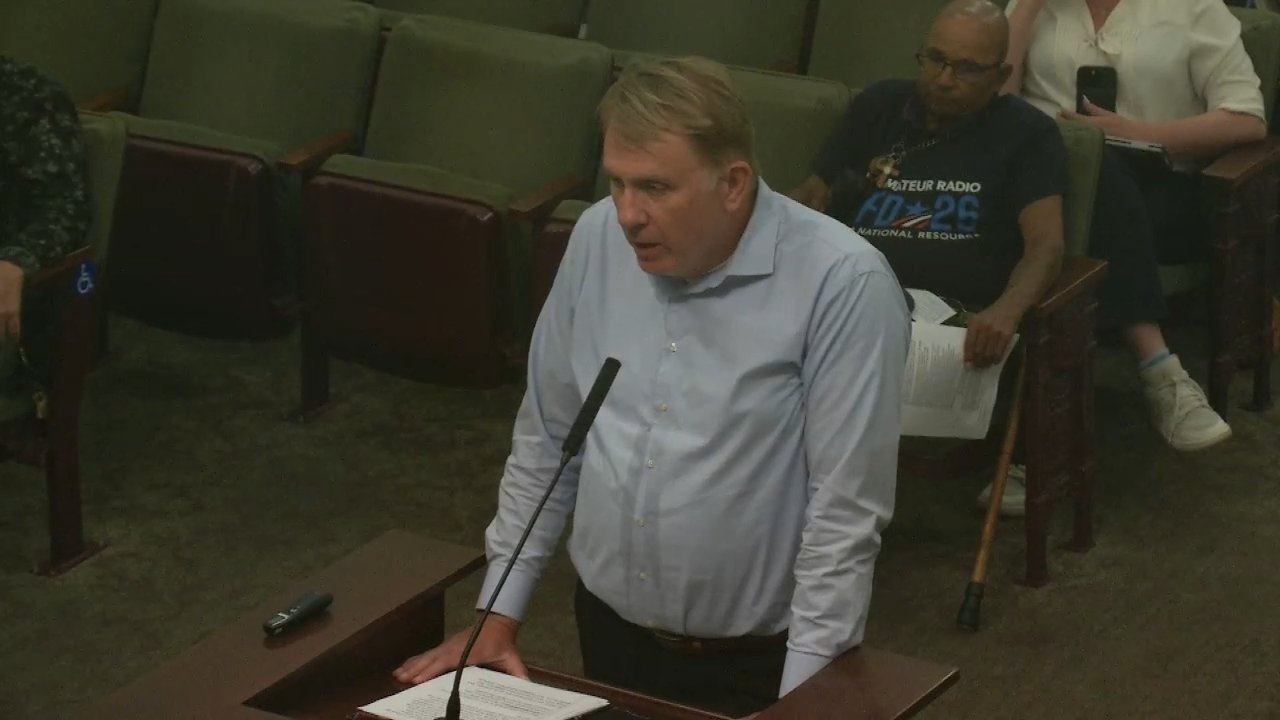
Where things stand: City Treasurer Kevin Kennedy, who has served 26 years in office, told the council he was "shocked and dismayed" by the proposal. "This proposal does the exact opposite" of what citizens want, he said. "It blindfolds the public."

Kennedy cited concrete examples of the value independent oversight provides: blocking a $7 million general fund loan to a failing telecom venture at Alameda Municipal Power, deploying idle city cash to generate millions in interest, and initiating contingency budgeting when COVID hit. "What I've spent my time on are things that, quite honestly, I don't trumpet publicly," he said, describing work on cash flow models and OPEB trust consulting that goes far beyond his charter job description.

He drew a sharp line on the nature of the office: "There's a huge difference between independents accountable to the voters and independents accountable to the city manager or to the council."

City Auditor Kevin Kearney, who has held the position since 1991, was equally forceful. "I'm the elected auditor. I don't answer to anyone in this building. I answer to the people of Alameda. I cannot be fired for finding the truth," he said. Kearney described serving as a confidential whistleblower resource for city staff and providing institutional continuity through a revolving door of city managers and finance directors. He zeroed in on the dollar figure: "You're eliminating an independent office for 30 grand a year. Come on. Come up with a really good reason."

Both officeholders announced they will not seek re-election.

The other side: Mayor Ashcraft and Vice Mayor Pryor argued that modern financial controls — GASB standards, independent third-party audits, and a robust finance department — make the positions redundant. Finance Director Ross McCarthy outlined the scope of staff resources already dedicated to financial oversight.

Councilmember Greg Boller explored a middle path, proposing to consolidate the two offices into a single elected city auditor, let the current treasurer complete his term, and allow the council to expand the auditor's role by ordinance. His motion died for lack of a second.

Councilmember Tony Daysog delivered a detailed history of the 1936 corruption scandal, arguing the positions remain essential safeguards. "I do believe that the situation that we have now serves Alameda well," he said. "I would not support placing this on the ballot this November, nor would I support tabling the matter for future discussions."

Councilmember Tracy Jensen criticized the subcommittee's process, contrasting it with a prior 2019-2020 subcommittee that held five public meetings and found 53% of respondents opposed elimination. "Not only is this poor governance completely lacking in transparency," Jensen said. "The positions have not been proven to be redundant or unnecessary."

All six public commenters opposed the proposal. Amos White, executive director of 100K Trees for Humanity, urged the council not to strip voters of oversight power "at a time when checks on power are being dismantled at the federal level." Paula Rainey recalled how the auditor and treasurer raised the alarm about pension underfunding years ago at minimal cost. Kathy Long urged the council to focus on more pressing issues.

Decisions: No motion carried. The mayor acknowledged the council was divided and moved to the next item without a vote.

What's next: Both offices remain intact. The debate revealed a clear split: the mayor and vice mayor favored letting voters decide, while Jensen, Daysog, and — through his unsuccessful compromise — Boller effectively blocked the proposal. With both officeholders announcing they will not run again, the next election cycle will bring new occupants regardless of whether the charter changes.


Infrastructure Bond Headed to November Ballot

Why it matters: Alameda voters will decide whether to authorize general obligation bonds for storm drains, shoreline protection, and deferred capital projects — critical infrastructure for an island city facing sea level rise.

Where things stand: The council gave final passage to the ordinance and adopted the resolution placing the bond measure on the Nov. 3, 2026 ballot on a 4-1 vote (For: 4 — Ashcraft, Pryor, Boller, Jensen; Against: 1 — Daysog). The measure required four affirmative votes to advance. Mayor Ashcraft noted a comprehensive presentation was given at the prior meeting. Councilmember Jensen raised concerns about transparency in drafting the bond language and limited public outreach, though the mayor pushed back, citing extensive mailer campaigns, online surveys, and consultant feedback that Alameda's engagement response was unusually robust.

Decisions: Mayor Ashcraft and Councilmember Boller were designated to author the ballot argument in favor and any rebuttal. The ballot argument deadline is Aug. 4; the rebuttal deadline is Aug. 13.


Alameda Bans Parking in All Bike Lanes, Closes State Law Gap

The basics: State Vehicle Code Section 21211 only covers Class 1 shared-use paths, leaving no clear authority to ticket vehicles parked in Class 2, 3, or 4 bike lanes — a gap that forced enforcement staff to rely on workaround citations. Alameda has over 60 miles of bikeways, and 40% of the city's schoolchildren bike or walk to school.

Why it matters: The new ordinance adds Section 8.8.10 to the municipal code, establishing consistent citywide enforcement with a $79 fine matching existing double-parking penalties.

Where things stand: Parking Manager Ricardo de La Torre presented the ordinance. Mayor Ashcraft asked how delivery trucks on Park Street would be accommodated. Public Works Director Erin Smith explained that yellow commercial loading zones exist adjacent to curbs along commercial corridors and that trucks traverse the bike lane to reach them rather than stopping in the lane.

Cindy Johnson of Bike Walk Alameda spoke in support and urged the city to also pursue state legislative action to amend the vehicle code for consistent statewide enforcement and potential camera-based ticketing.

Decisions: Approved unanimously on first reading (For: 5 — Ashcraft, Pryor, Boller, Daysog, Jensen; Against: 0). Final passage is scheduled for Sept. 1, with the ordinance taking effect Oct. 1, 2026.


$2.3M Fee Waiver Unlocks 21 Affordable Units at Alameda Marina

Why it matters: The unanimously approved settlement with the Alameda Marina's Foundry project resolves a development impact fee dispute that had stalled construction, trading $2,318,399 in waived park and transportation impact fees for 21 very low income housing units under the city's new inclusionary housing ordinance.

Where things stand: Under the terms, the Foundry must pay remaining fees of $770,520 by Oct. 31, 2026, and waive all claims against the city. If the developer does not pull building permits by Oct. 31, 2026, the entire fee waiver becomes void.

Decisions: Approved 5-0. The Theater real property negotiations (item 4A) passed 4-1 (For: 4 — Ashcraft, Pryor, Boller, Daysog; Against: 1 — Jensen). Building 43 at Alameda Point negotiations (item 4B) passed unanimously. A separate lawsuit, Miller v. City of Alameda, was settled for $235,000 involving injuries from a city vehicle at a city park.


Council Bids Farewell to City Attorney Who Won National ABA Honor

Mayor Ashcraft read an extensive proclamation honoring City Attorney Eben Shen's eight-year tenure, highlighting accomplishments that include shepherding the city through COVID-19, creating the Prosecution and Public Rights Unit after voters approved Measure AA, establishing the Police Auditor role, pioneering the city's annual housing conference, winning the American Bar Association's Hodson Award for extending rent control to Barnhill Marina residents, and prevailing in the Admiral's Cove appellate case — a decision that set statewide legal precedent for regulating converted institutional housing.

Matt Senecarimian delivered remarks on behalf of Attorney General Rob Bonta. All five council members offered personal tributes. Councilmember Daysog praised the institutional systems Shen built: "What you have left behind in the systems that you have put in place, in bringing the prosecutorial unit to your office in ways that many cities across California simply do not do — you've put in systems that will last hopefully another 150 years in the life of Alameda." Councilmember Boller presented a piece of his late mother's art.


Minor Items

  • Water shuttle extended: The Oakland-Alameda water shuttle, operated by the 32-passenger vessel "Woodstock," was extended two more years on the consent calendar. Mike Goherdy of San Francisco Bay Ferry noted it carried over 1,000 passengers in a single day in May. "We've had other cities already come up to us and said how do we get that deal?" he said.
  • Bike share pilot approved: Funding for a bike share program targeting a March 2027 launch was approved as part of transportation demand management for the Oakland-Alameda Access project.
  • Board and commission appointments: Ten new and reappointed members were sworn in across five citizen advisory bodies — Civil Service Board, Historical Advisory Board, Housing Authority, Library Board, and Recreation and Park Commission.
  • Oak tree advocacy: Three public commenters — Damian Mason of the CASA Oakland Alameda Adaptation Committee, Carolyn Mason, and Amos White of 100K Trees for Humanity (which has planted over 300 trees in Alameda since 2020) — urged the council to preserve young coastal live oaks along the Harbor Bay shoreline trail slated for removal, arguing the trees provide deep-root shoreline stabilization critical to sea level rise adaptation.
  • Housing Authority update: Josh Altieri reported the Housing Authority serves over 3,000 residents and 1,800 low-income households, partners with 350+ landlords, and recently generated over 9,000 applications across five property interest lists.
  • Consent calendar item 5D: Councilmember Daysog voted no on item 5D specifically; the remainder of the consent calendar passed unanimously.
  • League of Cities delegate: Mayor Ashcraft was designated voting delegate and Vice Mayor Pryor as alternate for the League of California Cities Annual Conference. Approved unanimously.