City Council - Sep 15, 2026 - Meeting
City Council • AlamedaSeptember 16, 2026
Locunity is a independent informational service and is not an official government page for this commission.We use AI-assisted analysis and human editorial review to publish information.
Alameda Adopts First Short-Term Rental Rules as Housing Debate Heats Up
Alameda's City Council introduced three housing ordinances in a single night — regulating Airbnbs for the first time, opening a new path to homeownership through ADU condos, and closing a loophole that left illegally evicted tenants without relocation pay. The session also delivered a sobering warning from AC Transit: without voter-approved funding, Alameda could lose an entire bus line and see service slashed across the island by mid-2027.
- First-ever short-term rental ordinance restricts Airbnbs to primary residences, grandfathers existing operators, and passes 3-0 with one abstention and one recusal
- ADU condo conversions approved unanimously, creating an affordable homeownership entry point under state law AB 1033
- AC Transit warns of 16% service cuts and elimination of Line 19 if the Connect Bay Area Act (SB 63) fails at the November ballot
- Rent ordinance tightened to guarantee relocation payments when landlords issue illegal eviction notices
- Vacancy fee study launched targeting anchor-store vacancies at shopping centers like Harbor Bay Landing, with a March 2027 staff report
Alameda's First Short-Term Rental Ordinance Draws Support, Skepticism
The basics: Alameda had no regulations governing platforms like Airbnb despite years of statewide pressure to protect rental housing stock. Staff planner Tristan Sweer told the council the ordinance emerged from the city's 2022 housing element update and a series of Planning Board sessions beginning in January 2025, with an estimated 250 to 300 short-term rentals currently operating citywide.
Why it matters: The new Section 30-19 requires hosts to use only their primary residence for short-term rentals, prohibits STRs in accessory dwelling units, deed-restricted affordable units, and properties with Ellis Act eviction histories, and creates a ministerial permitting process with progressive enforcement. A key carveout — the "legacy operation exception" — allows hosts who have operated for at least one year to continue even if the property is not their primary home, though limited to one grandfathered unit per owner.
Where things stand: Four public speakers shaped the debate. Donna Fisher, who has operated three Airbnbs in a six-unit building near Alameda Hospital for more than a decade, warned the primary-residence rule would eliminate over $14,000 in annual transient occupancy tax from her properties alone and remove lodging used by traveling nurses, military families, and residents in transition. "We've been paying transient occupancy tax for years," she said, arguing the ordinance penalizes responsible operators.
Kevin Jordan called the ordinance a burden on middle-class families with one or two investment properties rather than large-scale commercial operators. "This targets middle-class families," he said, comparing it to regulations that spare corporate landlords.
The other side: Sophia DeWitt, chief program officer at East Bay Housing Organizations and an Alameda resident, supported the ordinance, noting EBHO has advocated for STR regulation for a decade. "We should be directing TOT revenue to an affordable housing trust fund," she said, adding that the ordinance lacks provisions holding platforms like Airbnb accountable for compliance.
Vice Mayor Michele Pryor offered the evening's most direct framing: "I do believe that housing is more than an investment. It is a human right."
Mayor Marilyn Ezzy Ashcraft drove at the ordinance's core rationale: "I run into nurses and teachers all the time who say they would love to live here, but they can't find a place to rent."
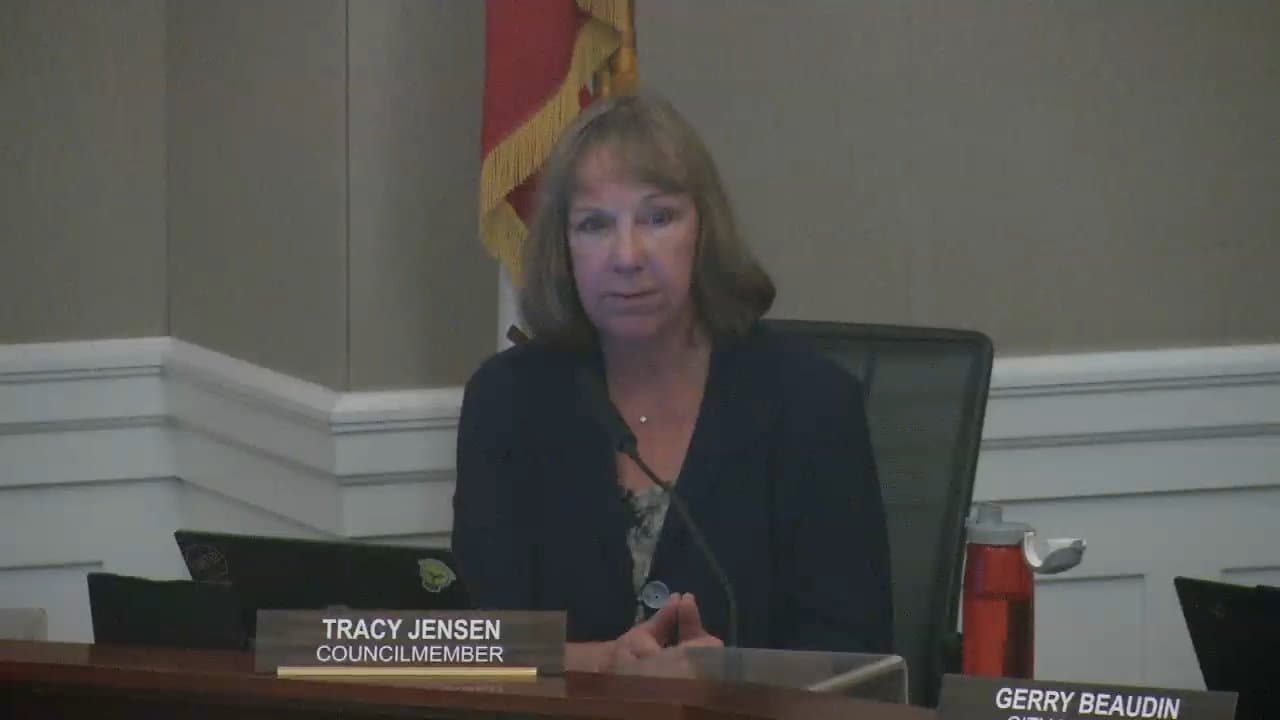
Decisions: The ordinance passed 3-0 with Councilmember Tracy Jensen abstaining and Councilmember Greg Boller recused due to a financial interest in residential property. Jensen cited insufficient data on impacts to Alameda property owners: "I'm just abstaining because of the lack of data about the impact on Alameda property owners that have STRs." She expressed interest in starting with good-neighbor policies before moving to restrictions.
Councilmember Tony Daysog seconded the motion with an amendment directing staff to report back on the ordinance's effects. The amnesty period for existing operators to come into compliance was extended from 60 to 90 days to avoid the holiday season.
What's next: This was a first reading; a second reading and final adoption will come at a future meeting. Staff is directed to report back by January 2028 on the ordinance's impacts on property owners, tax revenue, and housing stock.
AC Transit's $200M Deficit Puts Alameda Bus Routes on the Chopping Block
Why it matters: AC Transit is staring at a $200 million deficit over four years — a $50 million annual gap beginning in 2027 — and Alameda's bus network is directly in the crosshairs. A state bridge loan of $55 million provides temporary breathing room but must be repaid.
Where things stand: AC Transit Executive Director Salvador Llamas laid out the stakes bluntly: "AC Transit faces a projected $200 million deficit over the next four years. That translates to an annual funding gap of at least $50 million beginning in 2027."
He emphasized who bears the cost: "65% of our riders are transit dependent. So service cuts would not be an inconvenience. They would upend the lives of those who rely on AC Transit the most."
Under the contingency plan, Line 19 would be eliminated entirely, Lines 30 and 31 would drop to 40-minute frequencies, Line O would lose weekend service, and Line W would lose some trips. A new East End line with 60-minute service would partially offset the losses. Agency-wide, the cuts amount to roughly 16% of service and 300 jobs.
The only off-ramp is passage of the Connect Bay Area Act (SB 63) — a half-cent regional sales tax going before voters in November. AC Transit planner Owen Christopherson detailed the route-by-route impact for Alameda, and the agency currently carries more than 140,000 weekday riders and supports 5,100 jobs.
Councilmember Tracy Jensen pressed on what service cuts would mean for the city's development pipeline. "My question is how this potential reduction in service would impact Alameda's development priorities, especially with regard to the Mariner Square project," she said, noting that transit-oriented developments at Alameda Point and Mariner Square depend on reliable bus connections. She also raised the fate of Transportation Demand Management Associations that subsidize transit passes for residents — programs that lose their value if service disappears.
City Manager Bowden acknowledged the tension between state housing laws pushing density near transit stops and the possibility that the transit itself could vanish.
Public commenter Mitch Ball, a volunteer signature collector for the ballot measure, supported the funding campaign but urged elimination of Line 19 regardless, calling it a low-ridership, circuitous route. He suggested extending Line 30 to cover Alameda Point and connect to ferry terminals.
Mayor Ashcraft promoted Public Transit Month, noting she rode the 51A to and from her Alameda County Transportation Commission meeting the previous day.
What's next: AC Transit holds a public hearing on its contingency service plan on Oct. 14. The fate of Alameda's bus network hinges on the SB 63 ballot measure this November.
ADU Condo Conversions Gain Unanimous Support
Why it matters: With median home prices far beyond what many working families can afford, Alameda's council moved to create a new affordable entry point: allowing accessory dwelling units to be sold as condominiums under state law AB 1033.
Where things stand: Planner Tristan Sweer said the city already issues about 50 ADU permits per year, and the conversion option is expected to produce "single-digit annual increase to the number of ADUs." The ordinance also includes clarifications to existing ADU standards and a new rooftop deck design criterion.
Vice Mayor Michele Pryor grounded the debate in personal experience: "I'm like, we all have the same profession and I could barely afford rent and you are building a pool for your house," she said, reflecting on how dramatically housing affordability has shifted even among people in the same line of work.
Councilmember Tracy Jensen shared a constituent letter from a local business owner with three children: "He was just asking to please adopt this policy for him, for his family, so that he can be a homeowner in our city."
Councilmember Tony Daysog initially proposed a five-year sunset clause, concerned about unknown impacts on neighborhood character, but withdrew the idea after Mayor Ashcraft pushed back firmly: "I will not vote in favor of any amendment that uses the term sunset. Sunset implies — doesn't imply. It means that a future council could vote to just end this." Staff noted the upcoming housing element review cycle would provide a natural checkpoint.
Decisions: The ordinance passed 4-0 (For: Ashcraft, Daysog, Jensen, Pryor; Recused: Boller). This was a first reading; second reading to follow at a future meeting.
Rent Ordinance Closes Loophole on Illegal Evictions
Why it matters: About 10 to 20 invalid eviction notices are issued annually in Alameda. Until now, when tenants vacated before the invalid notice was caught, the rent ordinance did not expressly require landlords to pay relocation — even though the city's rent program had enforced that policy in practice.
Rent Program Director Bill Chapin explained the gap: when a landlord issues a termination notice on grounds not permitted by the ordinance, the rent program directs them to rescind. An April 2026 update already required landlords to offer units back. But for tenants who had already moved on, the ordinance was silent on relocation payments. The amendment codifies existing practice: landlords must rescind invalid notices, offer units back, and pay permanent relocation if the tenant has already found new housing or declines to return.
Councilmember Tony Daysog noted the change simply clarifies original intent. Vice Mayor Pryor moved adoption with no public comment received.
Decisions: Passed 4-0 (For: Ashcraft, Daysog, Jensen, Pryor; Recused: Boller). First reading; second reading to follow.
Council Launches Vacancy Fee Study After Harbor Bay Frustration
Why it matters: The prolonged vacancy at Harbor Bay Landing shopping center has alarmed hundreds of residents, and the council wants a new tool to fight commercial blight. Councilmember Tony Daysog, drawing on his economic development consulting background, introduced the referral targeting large anchor stores — grocery stores, pharmacies — whose closures create cascading vacancies among smaller retailers.
Daysog described the mechanism as rooted in "urban decay" theory from CEQA case law: when foot-traffic-generating anchors go dark, neighboring businesses lose customers and close in turn.
Mayor Ashcraft asked whether a vacancy tax could apply retroactively. The city attorney representative said constitutional limitations generally prevent that. She also questioned whether vacancy taxes have proven effective; City Manager Bowden noted anecdotal evidence suggests limited results elsewhere.
Councilmember Greg Boller referenced Harbor Bay Landing specifically, noting he had met with hundreds of concerned residents. Councilmember Jensen pointed out the council's existing strategic plan already included a completed vacancy tax item whose current status was unclear, and asked staff to clarify.
Decisions: Passed 5-0 unanimously. Staff directed to return by March 2027 with findings and recommendations. A separate, sooner update on the strategic plan's existing vacancy tax reference was also requested. Any tax would likely require voter approval.
Minor Items
- $186,000 contract approved with Action Research for community-based social marketing to boost multi-family use of bulky pickup services and reduce illegal dumping; Councilmember Jensen pulled the item from consent for questions about the methodology, and Public Works Coordinator Liza Cord explained the research-backed behavior-change approach also builds staff capacity for SB 1383 organics compliance outreach. Approved 5-0 on the consent calendar.
- Six residents appointed to the Civil Service Board, Planning Board, and Transportation Commission. Approved 5-0.
- National Hispanic Heritage Month proclaimed (Sept. 15–Oct. 15), with library events citywide. Hispanic Americans comprise 12% of Alameda's population.
- Closed session: Council gave direction on labor negotiations with IAFF Local 689 (firefighters union) by a 5-0 vote. No details disclosed.