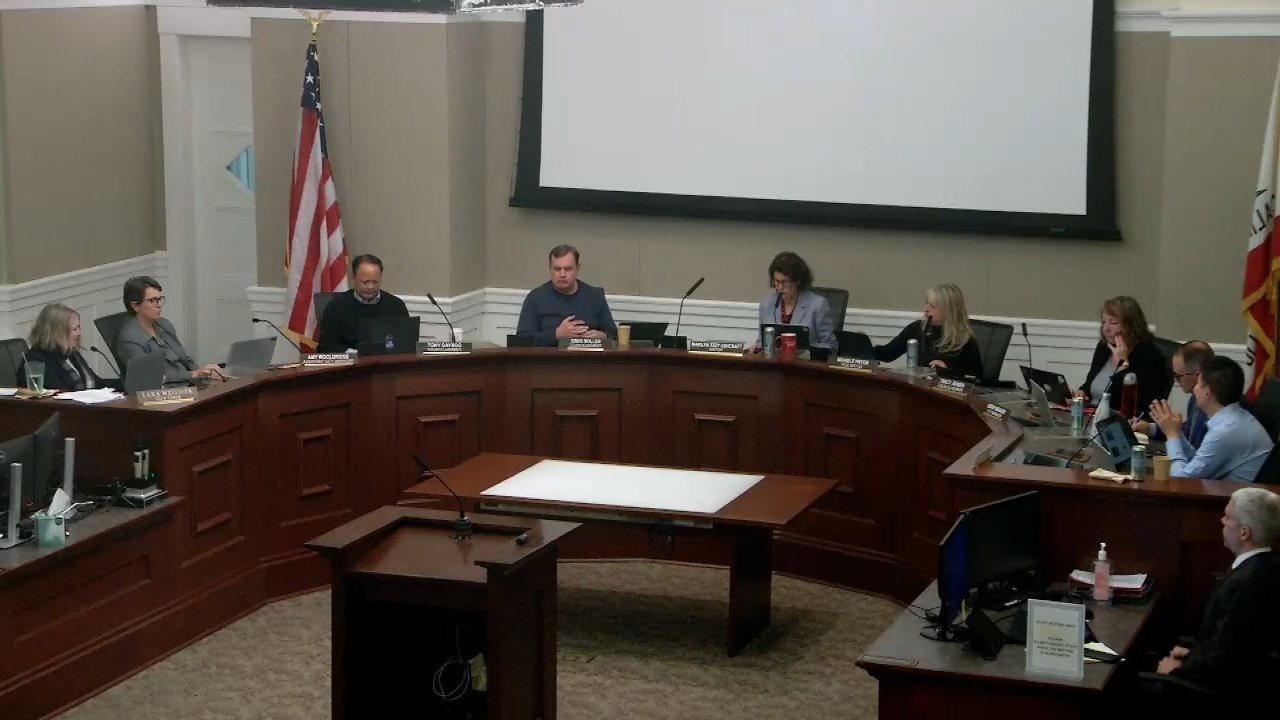
City Council - Jul 07, 2026 - Meeting

City Council - Jul 07, 2026 - Meeting

City CouncilAlamedaJuly 8, 2026

Sources:

Locunity is a independent informational service and is not an official government page for this commission.We use AI-assisted analysis and human editorial review to publish information.

Council Advances $300M Infrastructure Bond to November Ballot

Alameda's City Council took its biggest swing at the island city's mounting infrastructure crisis Tuesday night, voting 4-1 to place a $300 million general obligation bond on the November 2026 ballot — a measure that would fund sea level rise protection, fire station upgrades, and road repairs at a cost of $49 per $100,000 of assessed property value. The vote came after the council accepted a sobering facilities plan documenting $342 million in deferred needs, unanimously approved a $32.3 million contract to finally build a city pool, and placed two charter amendments before voters.

  • $300 million infrastructure bond advances to November ballot on a 4-1 vote, with Councilmember Daysog dissenting over lack of a specific project list
  • $342 million facilities plan accepted unanimously, revealing fire stations that fail modern seismic standards and an animal shelter graded F
  • $32.3 million construction contract awarded for long-awaited Aquatic Center at Gene Sweeney Park, bringing the total project to $40.5 million
  • Ratio utility billing ban finalized for rental properties over landlord group objections about water conservation
  • Two charter amendments placed on ballots: omnibus cleanup for 2027 and property lease streamlining for November 2026
  • Firefighters, labor, environmental advocates, and residents turn out overwhelmingly in support of the infrastructure bond

Alameda's Big Bet: $300M to Shore Up an Island

Why it matters: Alameda sits on an island facing more than $800 million in deferred infrastructure needs — crumbling fire stations, rising seas, and roads that can't be fixed with existing revenue. This bond would be the city's largest-ever infrastructure investment, and it needs two-thirds voter approval to pass.

Where things stand: Sustainability and Resilience Manager Danielle Mueller laid out the scope: the city's unmet needs span facilities, shoreline protection, and street paving. Consultant Kurt Bello of FM3 Research presented polling showing 62% initial voter support, rising to 66% after hearing arguments in favor — right at the edge of the required two-thirds threshold. Voter priorities centered on flood prevention, emergency response, and road repair.

Public Works Director Erin Smith explained that gas tax revenues have declined and are insufficient for street maintenance. Bond funds would supplement, not replace, existing revenue. The proposed tax rate: $49 per $100,000 of assessed value. The deadline to qualify the measure for the November ballot is Aug. 7, with final adoption of the ordinance scheduled for July 21.

Public comment ran overwhelmingly in favor. Mike DeWint, president of Alameda Firefighters Local 689, framed the stakes plainly: "Tonight's vote is not about approving a $300 million bond. It's about whether the people of Alameda should have the opportunity to decide the future of their city."

Andreas Kluver, executive secretary of the Alameda County Building and Construction Trades Council, pledged labor's support to help pass the measure. Ruth Abbey of Community Action for Sustainable Alameda (CASA) argued the bond would serve as leverage for state and federal matching grants. Former Vice Mayor Malia Vella cited her firsthand experience with flooding and urged unanimous support. Cindy Johnson called deferred maintenance a false economy, citing research showing deteriorated roads cost California motorists $800 per year in vehicle expenses.

The other side: Mitch Ball criticized the Prop 13-style property tax structure as regressive and anti-housing, urging the council to consider a lot-area parcel tax with a revenue bond instead.

Councilmember Tony Daysog cast the lone no vote — repeating his 2024 objection. "What it really is is letting future city councils decide how to spend the $300 million," he said, arguing the bond lacked a specific project list for voters. "If it was about letting the Alameda voters decide how to spend the $300 million, you would have had a very specific list."

Councilmember Tracy Jensen voted yes but flagged concerns: "There are more ways and there may be more revenue options that could be considered and that would be less regressive and perhaps even more robust. Those options were not considered." She supported the measure in part because it includes a bond oversight committee giving voters a check on spending.

Mayor Marilyn Ezzy Ashcraft responded sharply, noting Daysog had refused meetings with consultants and that two years of delay since 2024 had only increased costs: "The voters elected us to make decisions, not to just sit in a chair and kick a can down the road."

Councilmember Greg Boller called it "a really important moment in this city's history," citing the existential threat of sea level rise and public safety needs.

Decisions: The resolution was adopted and ordinance introduced 4-1 (For: Ashcraft, Pryor, Jensen, Boller; Against: Daysog). Final adoption is scheduled for July 21.

What's next: The ordinance returns for second reading July 21. If adopted, the $300 million bond appears on the November 2026 ballot, requiring two-thirds voter approval.


The Report Card Behind the Bond: $342M in Failing Infrastructure

Why it matters: The facilities plan — pulled from the consent calendar by Councilmember Jensen for fuller discussion — provides the needs assessment underpinning the bond measure. Its findings are stark: most city fire stations fail modern seismic and safety standards, and the animal shelter received the only F grade in the assessment.

Where things stand: Prepared with consultant RRM, the plan assessed eight key city facilities. Assistant City Manager Amy Wooldridge presented recommendations including a new Fire Station 5 at Alameda Point, remodels of existing stations, and consolidating the animal shelter, fleet services, and recreation parks yard into a single Alameda Point campus. Total estimated cost: $342.4 million in 2029 construction dollars.

Fire Chief Nick Luby described the conditions firsthand: "Station 1 is small, does not meet modern day standards for decontamination for the workforce, decontamination corridors, storage issues, constricted space issues for living conditions." Station 2 is 105 years old and recently had mold issues. He noted potential for value engineering to reduce some costs.

Jensen highlighted that the plan's timeline shows no construction beginning before 2029 — and some sites at health and safety risk wouldn't see improvements until 2031-2033. That timeline, she argued, underscores why the bond matters.

City Manager Jerry Bowden — at his first meeting since being promoted from assistant city manager — placed the plan in context: "We are a full service city, and trying to find ways to get the funding started to address some of these needs is where we are."

Decisions: Accepted unanimously, 5-0. The plan now serves as the framework for prioritizing bond-funded projects.


Council Greenlights $32.3M Contract for City Pool

Why it matters: Alameda has lacked a year-round, city-controlled pool for years, relying on shared school district facilities that frequently close. The new Aquatic Center at Gene Sweeney Park (800 Atlantic Avenue) will serve an estimated 15,000 users annually.

Where things stand: Recreation and Parks Director Justin Long presented the contract award. The facility includes a 30-meter competition pool, activity pool, locker rooms, community room, and parking for more than 100 bikes. Originally budgeted at $30 million when discussions began in 2019, rising construction costs, soil conditions requiring ground improvement for a 7.8-magnitude earthquake, groundwater dewatering needs, and electrification requirements pushed the total to $40.5 million.

The construction contract to Wickman Construction is $32.3 million, including a 10% contingency ($3 million) to cover unknowns such as potential contaminated groundwater during dewatering. Long noted the facility is engineered to withstand major earthquakes, avoiding an estimated $3-4 million in post-seismic repair costs. Annual operating subsidy is estimated at $400,000, typical for public aquatic facilities.

Councilmember Boller asked about environmental and financial risks. Vice Mayor Michele Pryor confirmed no grass inside the facility perimeter.

Decisions: All three aquatic center items (construction contract, project management amendment with Griffin Structures, and architect amendment with ELS Architects) passed unanimously in a single motion, 5-0.


Two Charter Amendments Head to Voters

Omnibus Cleanup: November 2027

Why it matters: The charter still references qualifications like "mining engineer" for the Public Utilities Board. This measure consolidates roughly 15 cleanup amendments — modernizing outdated references, conforming city attorney litigation authority to existing practice, and updating Historical Advisory Board requirements to match municipal code.

The other side: Public commenter Carmen Reed warned about legal risks of bundling amendments into one ballot question, arguing some changes are substantive, not cleanup, and recommending separate ballot questions. City Attorney Yibin Shen dismissed the concern, noting courts have not enforced the single-subject rule against charter amendments.

Councilmember Daysog voted no, contrasting the process unfavorably with the 2019-2020 charter reform effort: "I believe the process that we had adopted and implemented back in 2019 and 2020, when Vice Mayor John Knox White and myself were a charter reform committee, is something that should have been done in this case."

Decisions: Adopted 4-1 (For: Ashcraft, Pryor, Jensen, Boller; Against: Daysog). Placed on the November 2027 ballot.

Property Lease Streamlining: November 2026

Why it matters: The current charter requires a supermajority vote and a two-reading ordinance process for any city property lease — a timeline that has cost Alameda Point prospective tenants, particularly VC-funded companies needing rapid occupancy.

Base Reuse and Economic Development Director Abby Thorne-Lyman explained the real-world impact: "When we have three versus four votes, I am trying to channel the politics of this body when I am communicating to prospective tenants." The amendment would allow leases under 10 years to be approved by simple majority resolution.

After debate, the council amended the measure to include Tidelands in the supermajority requirement — reversing an initial exemption that had raised concerns. Councilmember Boller and Vice Mayor Pryor were designated to write ballot arguments for both charter measures.

Decisions: Adopted 4-1 (For: Ashcraft, Pryor, Jensen, Boller; Against: Daysog). Placed on the November 2026 ballot.


Renters Win: RUBS Ban Gets Final Passage

Why it matters: The ordinance banning ratio utility billing systems affects how roughly half of Alameda's population — renters — pays for water and other utilities, shifting billing control from landlords to tenants.

Anil Babar of the California Apartment Association urged the council to reject the ban, citing a documented 40% increase in water consumption after San Jose enacted a similar ban seven years ago. He also flagged operational problems with petition deadlines and legally vulnerable relocation payment provisions.

Tenant advocates countered. Tony Grimm argued renters deserve control over utility costs just as homeowners have. Laura Woodard of the Alameda Renters Coalition supported the ban and called for a full ban on capital improvement plan pass-throughs, citing unequal power dynamics between tenants and landlords.

Decisions: Passed 3-1. Councilmember Boller recused himself due to a financial interest in residential rental property. Councilmember Daysog voted no. Vice Mayor Pryor, Councilmember Jensen, and Mayor Ashcraft voted yes.


Minor Items

  • Surf park at Enterprise Park: In closed session, the council unanimously directed staff to schedule a fall 2026 community workshop on a proposed surf park at Alameda Point with Neptune Beef Surf Club Development Partners. Ruth Abbey of CASA opposed private commercial development on public park land, urging nature-based alternatives.
  • Miller v. City of Alameda: Council provided unanimous direction in closed session on the ongoing litigation.
  • Salary range adjustments: The consent calendar included a 7% adjustment to salary ranges for the city manager and city attorney positions — adjusting the range only, not actual pay, per HR Director Noel White.
  • Auditor-treasurer charter amendment (7D): Continued to July 21.
  • Jensen's motion to continue charter items 7B and 7C to July 21 died for lack of a second.
  • New city manager recognized: Jerry Bowden, promoted from assistant city manager, was acknowledged at his first meeting leading staff.
Council Advances $300M Infrastructure Bond to November Ballot | City Council | Locunity