
CCTA Committee Tests Private Money for $720M Mobility Hub Network
Administration and Projects Committee • Contra Costa Transportation AuthoritySeptember 3, 2026
Locunity is an independent informational service and is not an official government page for this commission. All information is sourced from public footage and an analysis of official agendas with the aid of responsible, fact-checked AI. to report an error or omission.
Contra Costa's transportation authority wants to know whether private partners can help build and run a countywide network of mobility hubs with $720 million in capital needs. On Sept. 3, 2026, the Administration and Projects Committee voted 4-0 to release a request for proposals for a federally funded feasibility study. Members also approved signal upgrades, a creek restoration and a revamped advisory panel, while state and federal funding signals came back mixed.
- Mobility hub P3 study advances 4-0, backed by a $1M federal grant with no local match.
- $2M Galindo Creek restoration in Concord will offset I-680/SR-4 interchange impacts.
- $3.32M smart signal buy approved for 56 Lamorinda intersections.
- Bike-pedestrian panel gets a new name, more seats and a three-term limit.
- Sacramento restores $373M in transit programs, and SB 1408 heads to Gov. Gavin Newsom.
Can Private Partners Pay for Mobility Hubs?
The basics: A P3, or public-private partnership, shares the cost and risk of building and operating public infrastructure with private firms. The county's draft integrated transit plan calls for three tiers of hubs: regional transfer hubs, regional access hubs and community hubs.
Why it matters: The plan carries "$720 million worth of capital costs," said Ryan McClain, Deputy Executive Director for Projects and Operations, and that figure doesn't include ongoing operations. The study tests whether private money can close that gap.
Where things stand: A $1M Build America Bureau IFAC grant, which requires no match, funds the study. Consultants will examine public and private outreach and a countywide network of vendors. If the model holds up, an RFP for P3 procurement would follow. Staff chose 12 locations in public right-of-way. The list excludes BART stations and Caltrans right-of-way.
McClain stressed that a hub has to sustain itself financially. "Business model aspect of this is going to be really key for this," he said.
The other side: Commissioners asked whether anyone has done this before. Tim Haile, Executive Director, said the closest models are transit-oriented development RFPs. He added that the Build America Bureau saw the network as "definitely kind of trailblazing." Members also asked whether the agency's P3 work on East County glideways could apply.
Chair Chris Kelley raised the sharpest caution. He warned that smaller community hubs could saddle the agency with land ownership questions and maintenance liabilities.
Decisions and stakeholder impacts: The motion by Commissioner Sue Noack, seconded by Vice Chair Newell Arnerich, passed with For: 4 (Gee, Noack, Arnerich, Kelley), Against: 0, Absent: 1 (Banales). The vote approves a study, not construction of the $720M network.
Mobility vendors and private operators gain a potential new market. Cities hosting hub sites in public right-of-way will have a stake in how maintenance is assigned.
What's next: The full board takes up the item later this month. Staff is targeting a consultant award in December.
Concord Park Becomes Freeway Mitigation Site
Why it matters: Phases 2A and 4 of the I-680/State Route 4 interchange project affect Grayson Creek and Walnut Creek. Under the project's federal Section 404 and state Section 401 water permits, CCTA owes 0.153 acres of offsite mitigation at a 3-to-1 ratio. The fix will now be a restored creek in a public park rather than an unseen mitigation bank credit.
Where things stand: "There was no mitigation banks available," said Brandon Hays, Director of Construction. Options with the Flood Control District, Solano Land Trust, Ducks Unlimited and Martinez also fell through.
The Walnut Creek Watershed Council identified Galindo Creek at Newell Community Park in Concord but lacked the resources to deliver the project. The Contra Costa Resource Conservation District (RCD) will take it on, with the firm WRA handling design, construction and monitoring.
The project adds 0.36 acres and 290 feet of creek improvements, more than the permits require. The RCD will maintain the site for three years. The City of Concord then takes over for seven years.
The other side: Commissioners praised the visible mitigation. Chair Kelley asked how fish and wildlife would be relocated. "They're going to have to design and look into all that, but there will certainly be some actions like that," Hays said. Kelley also suggested signage crediting the RCD and CCTA.
Decisions and stakeholder impacts: Agreement 768, capped at $2M, passed with For: 4 (Gee, Noack, Arnerich, Kelley), Against: 0, Absent: 1 (Banales). Noack moved the item and Commissioner Darlene Gee seconded. Concord residents gain a restored park creek, and the city takes on long-term upkeep. Approving the agreement does not by itself satisfy the permit requirements.
What's next: Construction is expected from May to October 2028.
Lamorinda Signals Get a Tech Upgrade
Why it matters: Adaptive signals and video detection promise shorter travel times, less idling and data-driven safety fixes, and a federal earmark covers most of the cost.
Where things stand: Jay Zhang, Associate Engineer, Projects Department, outlined upgrades at 56 intersections: 18 in Orinda, 30 in Lafayette and eight in Moraga. The scope also covers four Caltrans ramp intersections. The corridors are Camino Pablo, Moraga Way, Moraga Road, Mount Diablo Boulevard and Pleasant Hill Road.
The total project costs $5.196M. A $4.185M federal earmark covers most of it, with about $1M in local match. Including contingency, "the equipment and services cost about $3.32 million," Zhang said. That covers controllers, video detection and cloud-based traffic management software. Resolution 26-45-P also lets the executive director shift money between procurement allowances and construction.
Decisions and stakeholder impacts: Gee moved and Arnerich seconded. The resolution passed with For: 4 (Gee, Noack, Arnerich, Kelley), Against: 0, Absent: 1 (Banales). Commuters in the three cities are the main beneficiaries.
What's next: Federal E-76 construction authorization arrived Aug. 5, 2026. Bids open Sept. 18, 2026. A construction award is expected next month, with construction running from January to summer 2027.
Bike Panel Rebrands for Active Transportation
The basics: The Countywide Bicycle and Pedestrian Advisory Committee (CBPAC) formed in 2001 to oversee the first countywide bike and pedestrian plan. It reviews Complete Streets checklists and recommends Measure J Program 13 funding. Its bylaws were formalized in 2011 and set no term limits.
Where things stand: Staff member Matt Kelly recommended that the committee "change the committee name from CBPAC to the Countywide Active Transportation Advisory Committee, or CADAC." The package also:
- Moves meetings one hour earlier
- Adds a county staff seat focused on health and sustainability
- Adds a public member representing students, caregivers and adaptive device users
- Caps service at three consecutive terms, with exceptions allowed by majority vote
- Ties member compensation to ethics and harassment training
Why it matters: This is the first bylaw rewrite since 2011. It widens the panel's scope to micromobility and adaptive devices ahead of the renewal of the transportation expenditure plan. Arnerich said the new title "changes the philosophy."
Decisions and stakeholder impacts: Arnerich moved and Gee seconded. The update passed with For: 4 (Gee, Noack, Arnerich, Kelley), Against: 0, Absent: 1 (Banales). Disability and caregiver communities gain a dedicated voice. Long-serving members face new term limits.
Sacramento Restores Transit Cash; D.C. Leaves Gaps
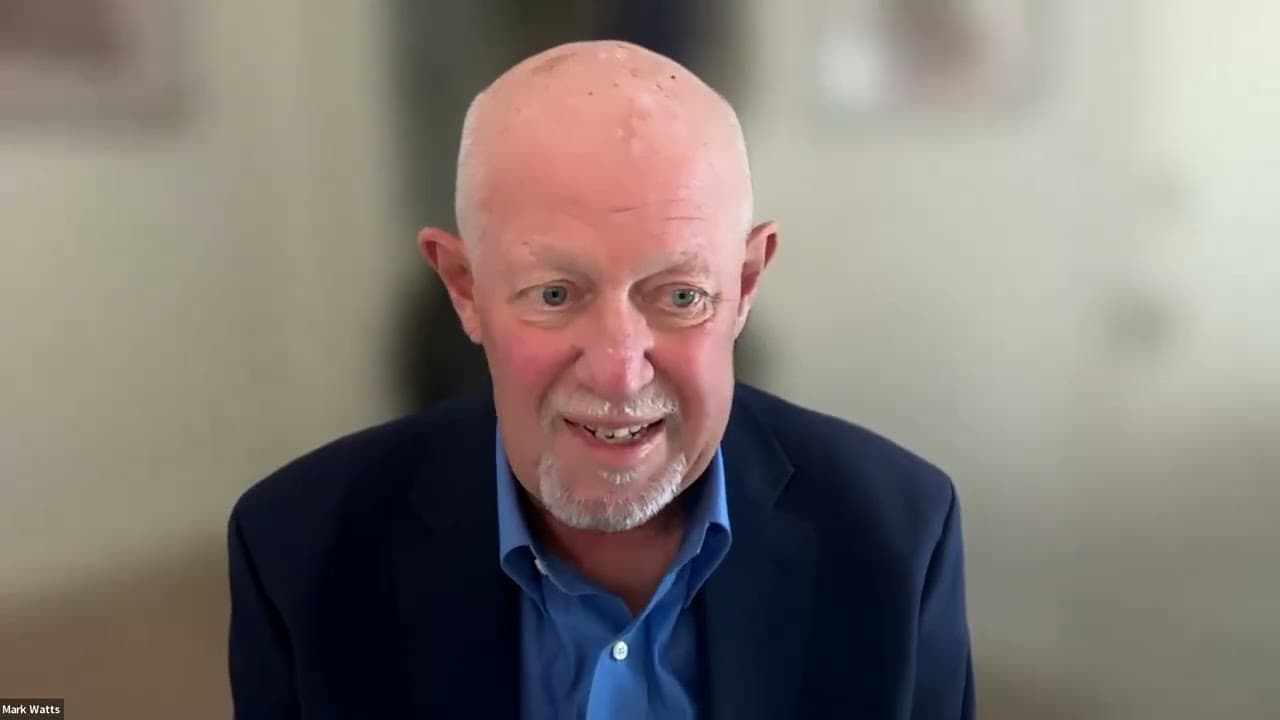
State: SB 1408, which gives CCTA authority to pursue a future sales tax, cleared the Assembly floor. "The bill was passed and is on to the governor," said state legislative consultant Mark Watts. Staff is drafting support letters.
The final state budget restored $230M for the Zero Emission Transit Capital Program. It also restored $95M for the Transit and Intercity Rail Capital Program (TIRCP) and $48M for the Low Carbon Transit Operations Program (LCTOP). Earlier proposals would have zeroed out all three.
Lawmakers also:
- Redirected Greenhouse Gas Reduction Fund interest back into the fund
- Added $135M each for medium- and heavy-duty and light-duty zero-emission vehicle incentives
- Extended farebox recovery relief by one year
Chair Kelley asked for the California Transit Association's chart on the restored funding.
Federal: A continuing resolution keeps the government funded through Dec. 11, 2026, and extends federal surface transportation authorities to the same date. However, "this did not include the advanced appropriations that were originally included in the IIJA," said federal legislative consultant Madeleine Pike. Those appropriations total roughly $39 billion a year. Pike expects no immediate disruption but anticipates pressure on Congress. She predicted a year-end omnibus or another extension rather than 12 separate spending bills.
Haile said CCTA's federal mega grant awaits legal sign-off at headquarters before moving to the Secretary's office, with no red flags. "It's just purely bureaucracy at this point," he said.
Minor Items
- Consent calendar passed 4-0, with Arnerich moving.
- Sales tax warning: Before the consent vote, Arnerich noted a third straight quarter of lagging county sales tax growth. Growth is about 2.7%, versus more than 4% statewide and inflation of 3.2% to 3.6%.
- Reserve risk: Arnerich said program costs track labor agreements. He warned that several years of weak revenue could trigger the reserve policy.
- Autonomous vehicles: NHTSA is updating federal safety standards, including dropping the foot-operated brake requirement. CCTA will join a USDOT autonomous vehicle peer exchange and host the NHTSA administrator at GoMentum Station.
- Bill 1087: A commissioner reported that a bill numbered 1087 also passed and is on the governor's desk.
Looking Ahead
The next regular committee meeting is proposed for Oct. 1, 2026. Watch for Newsom's action on SB 1408, the full board's vote on the mobility hub RFP and Congress's Dec. 11 deadline.