
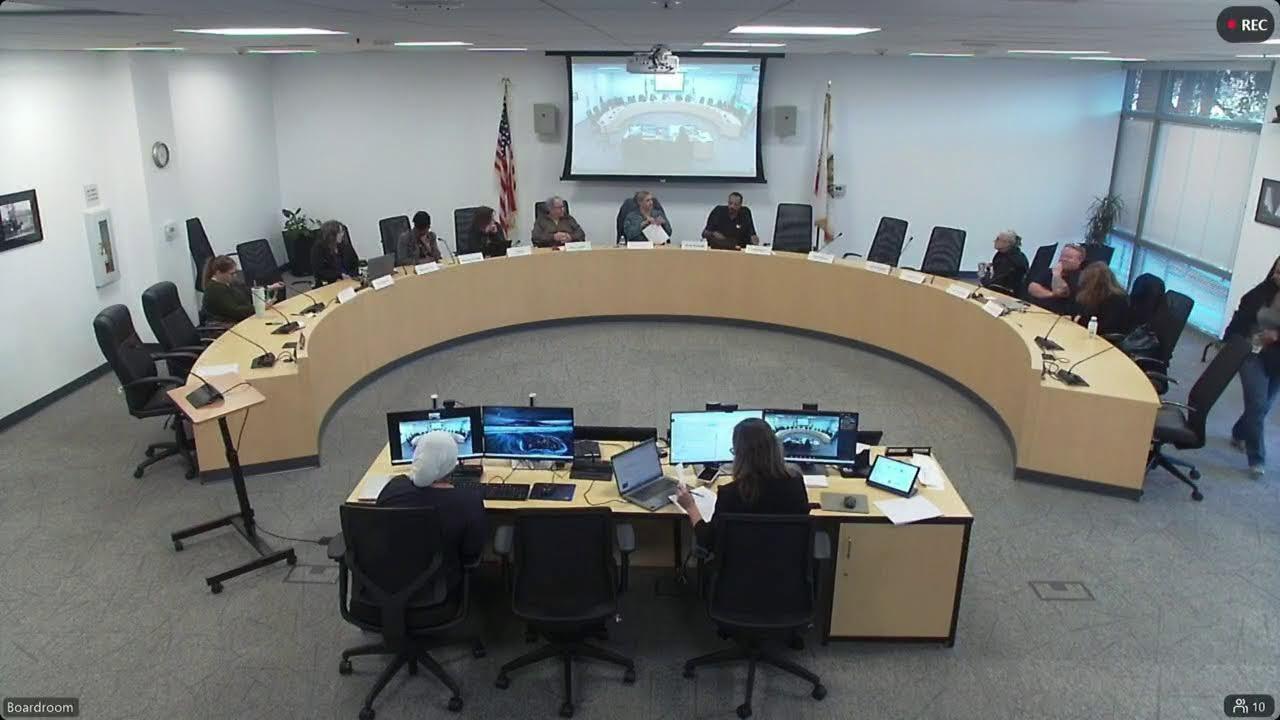
Wheelchair Users Take Center Stage in $1.7M Rideshare Grant Debate
Accessibility Advisory Committee (AAC) • Contra Costa Transportation AuthorityNovember 16, 2026
Locunity is an independent informational service and is not an official government page for this commission. All information is sourced from public footage and an analysis of official agendas with the aid of responsible, fact-checked AI. to report an error or omission.
The Contra Costa Transportation Authority's Accessibility Advisory Committee spent its longest stretch Monday, Nov. 16, 2026, on who should benefit from $1.7 million in rideshare fees. Several members pressed staff to make wheelchair users the top priority, or the only eligible riders. No vote was taken on the item. Staff will fold the feedback into a scoring rubric ahead of a February 2027 call for projects. The committee also heard plans for a second year of adaptive cycling pop-ups and a leaner Measure J claims process.
- $1.7M in TNC Access for All funds heads toward a February 2027 call; members push wheelchair-first eligibility
- Adaptive cycling pilot seeks renewal with up to four 2027 pop-ups after survey shows cost is the top barrier
- Measure J claims overhaul cuts reporting metrics from 46 to 26 and adds a written conflict-of-interest protocol
- Accessibility office annual review reports more than 500 people reached at 21 outreach events
$1.7M Rideshare Fund: Who Gets to Ride?
The basics: TNC Access for All funds wheelchair-accessible on-demand service from a state fee on rideshare trips. TNC stands for transportation network company. CCTA acts as a local fund administrator under the California Public Utilities Commission (CPUC).
"10 cents is taxed on every Uber and Lyft trip in this county," said Halima, staff, CCTA Office of Accessibility and Equity.
Why it matters: The fee has built up $1.7 million in one-time money. The rules staff write now will decide which operators can compete for it and which riders gain same-day accessible trips.
Where things stand: The last call, in 2023, funded three vehicles for Tri-Delta Transit's Tri MyRide at a cost of $400,000. Staff proposed these priorities for the new round:
- Filling geographic gaps in East County, Bethel Island, Rodeo, Crockett and San Ramon
- Covering time gaps and offering fast response
- Serving riders who are not on paratransit, plus their companions
- Multilingual outreach and coordination among providers
- Cross-county work with Alameda CTC
Applications would pass a pass/fail screen, then be scored on a 100-point rubric by a review panel. Partial awards are possible. Administrative costs for the TNC fund are capped at 15%.
The other side: Members questioned whether the broad priorities dilute the fund's core purpose. Non-voting Committee Member Drennen Shelton noted that some services do not prioritize wheelchair users. "The whole point of the service is for wheelchair users to be able to access the service," Shelton said.
Committee Member John Sanderson urged that wheelchair users be "incorporated as a very, very high priority." Committee Member Kevin McDonald went further. "I'd like to recommend that the criteria strongly favor, if not outright explicitly, only include passengers in wheelchairs," McDonald said.
Members also suggested discounts for paratransit riders and a focus on trip purpose. During public comment, Committee Member Bryan Harris asked for written eligibility criteria covering motorized-chair users and first- and last-mile needs. He also urged outreach to Richmond Moves and La Merienda Spirit Van.
Decisions and stakeholder impacts: This was an informational item, so no vote was taken. A wheelchair-only rule would focus the money on the riders the program was built for. It could also narrow the field of applicants and conflict with staff's goal of serving companions and riders outside paratransit. Operators in the gap areas staff named, along with community providers such as Richmond Moves, stand to gain if they can meet the timeline.
What's next: Staff will build the rubric, consult the CPUC and report back to members by email. The proposed schedule:
- January: CCTA board authorization
- February 2027: call for projects released
- March: proposals due
- April: panel review
- May: committee review
- June: board action
- July 1: service begins
Adaptive Cycling: Interest Is High, Options Are Few
The basics: Adaptive cycling uses bikes modified for riders with disabilities. The pilot is Strategy 22 of the Accessible Transportation Strategic Plan (ATSP) and is funded through Measure X.
Why it matters: "Right now, there are no opportunities in this county for people to do it," said Halima. Today, Contra Costa residents must travel an hour or more to Berkeley to ride.
Where things stand: This summer, staff ran three pop-ups with BORP Adaptive Sports and Recreation:
- Pittsburg
- Bay Point Regional Shoreline
- El Cerrito Plaza BART
The pop-ups drew six survey responses. A countywide survey drew 58 respondents. Free drop-in events were the preferred format, and cost was the top barrier, cited by about 45% of respondents. Staff proposed up to four pop-ups in 2027, each paired with an anchor organization.
The other side: Members raised several practical questions:
- E-bike speed policy
- Carrying the bikes on buses and BART
- Insurance
- Whether the program is recreation or transportation
Staff said the program is introductory for now. Storage, bollards and other infrastructure still stand in the way of everyday use.
Leo, of BORP, addressed the speed concern directly. "None of our electric bikes have a throttle or can go over 13 miles an hour," he said. He added that BORP follows local park and trail rules.
Sanderson argued the pilot matters even before it becomes practical transportation. "If you don't bake accessibility in from the get-go, it's next to impossible to come back and graft it on later," he said.
Decisions and stakeholder impacts: No vote was taken. Disabled residents would gain their first local riding option. BORP would extend its reach into the county. Bike planners would face pressure to design for adaptive riders from the start. Public commenter Kyra Dixon suggested the Down Syndrome Connection of the Bay Area and its I Can Bike event as a possible anchor partner.
What's next: Staff plans to recruit anchor organizations for the 2027 pop-ups.
Measure J Claims Get a Diet
Why it matters: Providers that claim Measure J paratransit money face new reporting rules in the FY27-28 cycle. That money is roughly 5% of the measure, under Programs 15 and 20B. The data collected will also help build the evidence for a possible Measure J renewal.
Where things stand: The claims process had run largely unchanged since 2009. Staff and the Claims Subcommittee set three goals: accountability for public funds, evidence for renewal and light-touch compliance.
"We had 46 metrics that we were asking in the claims process. We have brought that down to 26," Halima said.
The redesign includes these changes:
- Metrics are reorganized into four sections
- Claimants submit through a single software platform; Airtable is under consideration
- Subcommittee members receive data summaries
- A written conflict-of-interest protocol is added
- Discussion of unmet needs moves to quarterly operator meetings
The other side: Subcommittee members called the new process more user-friendly and transparent. Committee Chair Jean Clark, who runs a small provider, relayed concerns from large providers about duplicating federal and state reporting.
What's next: Staff will send the revised metrics to claimants and hold a webinar. There was no public comment on this item.
Accessibility Office Maps Its Money
Where things stand: Staff reviewed progress on the 22-strategy ATSP. Work in progress includes:
- The LIFE base fare program
- Travel training, with more than 114 attendees
- Adaptive cycling
- A wheelchair breakdown service
- One Call One Click/OptiMap
Why it matters: Each funding source carries its own caps and reporting duties:
- Measure J Program 15: 5% of the measure
- Measure X: about $1.5M a year, with a 20% administrative cap
- TNC fund: 15% administrative cap
- A USDOT SMART grant
Outreach reached more than 500 people at 21 events, and staff identified 220 organizations.
McDonald asked whether LIFE program enhancements fit the fare integration strategy. Staff said the program remains under means-based fare subsidy.
Gabino Arredondo, City of Richmond, a Measure J-funded provider, praised CCTA's technical support, its convening of providers and its presence at community outreach.
What's next: A February ATSP workshop will follow.
- Consent calendar: The prior meeting's summary of actions was approved by roll call with a wording fix (For: majority, tally not announced; Absent: 3, Rashidi Barnes, Chalo Buckman and Debbie Toth). Staff will clarify Toth's future-agenda item on the physical constraints of paratransit rules.
- BART Aira pilot: The navigation pilot for blind riders runs Oct. 6 through Jan. 3, McDonald reported.
- One-seat ride: The East Bay Paratransit and Santa Clara VTA pilot began Oct. 1. Ridership is low, but on-time performance is 100%.
- Joint paratransit RFP: The County Connection and LAFTA solicitation drew several proposals, Sanderson said.
- EBPAC vacancy: The East Bay Paratransit advisory committee has an open seat for an AAC member.
Looking ahead: The committee next meets Dec. 14, with Vice Chair Sarah Birdwell presiding.